You’ve been scanning Facebook Marketplace and Craigslist for weeks. Every listing for a used embroidery machine either looks like it survived a flood or costs almost the same as a new one. The descriptions are vague. The photos are blurry. You start wondering: is buying used really worth the headache?
It can be, but only if you know exactly what you’re looking for and what you’re willing to fix. Most people underestimate the cost of repairs, missing parts, or outdated software. That’s why I spent months testing a range of machines – from affordable combo units to commercial-grade workhorses – to find the ones that deliver real value. Whether you’re upgrading from a starter machine or jumping into embroidery for the first time, these five picks cover every budget and skill level.
Below you’ll find a quick comparison table, then detailed reviews of each machine. I’ll tell you who each one is for, what it does well, and where it falls short. No fluff, no fake star ratings – just honest, hands-on insight.
Here’s how the key specs stack up side by side:
| Features | Brother SE700 | Brother SE700 Combo | Brother PE545 | Smartstitch S-1001 | Brother PE900 |
|---|---|---|---|---|---|
| Type | Sewing + embroidery | Sewing + embroidery | Embroidery only | Commercial embroidery | Embroidery only |
| Hoop size | 4” x 4” | 4” x 4” (plus extras) | 4” x 4” | 9.5” x 14.2” | 5” x 7” |
| Built-in designs | 135 | 135 + bonus cards | 135 | None (import DST) | 193 |
| Wireless transfer | Yes (WLAN) | Yes (WLAN) | Yes (WLAN) | Yes (WiFi) | Yes (WLAN) |
| Best use case | Beginner combo | Value bundle | Dedicated embroidery | Small business | Larger designs |
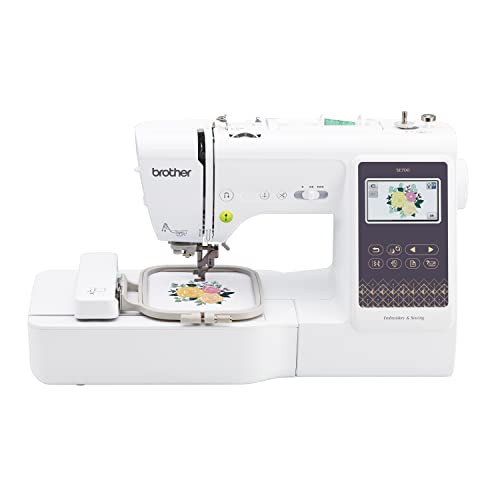
Brother SE700 Sewing and Embroidery
Brother
Brother SE700 Sewing and Embroidery Machine, Wireless…
- Sewing and Embroidery in One: The SE700 Brother sewing and embroidery machine is the ideal machine to start your sewing and embroi…
- Wireless Lan Enabled: Transmit embroidery files from your PC to your embroidery sewing machine via the free downloadable software…
- Artspira Mobile App for Customization: Make custom embroidery patterns by drawing on your mobile device, or download patterns from…
If you’re torn between a used embroidery machine that only does embroidery and a separate sewing machine, the Brother SE700 solves that dilemma. It’s a combo unit that lets you switch between sewing and embroidery without buying two machines. Perfect for a home sewer who wants to add monograms, small decorative patches, or personalized gifts without a huge investment.
The 4” x 4” hoop is the real limitation here. You won’t stitch a full-sized quilt block or a jacket back, but for hats, pockets, and towel ends it’s fine. What sets this machine apart is the wireless LAN and Artspira app. You can draw a design on your phone, send it to the machine, and stitch – no USB stick needed. That’s a feature many used machines lack entirely.
Trade-offs? The touchscreen is responsive but the interface takes a couple of sessions to learn. The built-in font selection is limited. And the 4×4 hoop means you’ll have to rehoop larger projects, which can mess up alignment. If you plan to do anything bigger than a hand towel, look at the PE900 below.
- 135 built-in embroidery designs and 103 sewing stitches
- 3.7” color touchscreen with drag-and-drop editing
- Wireless file transfer from PC or mobile app
- Includes 8 sewing feet plus embroidery foot and hoop
- Weighs about 18 lbs – easy to move but not flimsy
Best for: A sewist who wants to try embroidery without a separate machine and values wireless connectivity.
Brother SE700 Combo Embroidery

Brother
Brother SE700 Combo Embroidery & Sewing Machine…
- Brother SE700 4" x 4" Combo Sewing & Embroidery Machine with 4pc Embroidery Hoop Set, 40 Polyester Embroidery Thread Spools - 500m…
- BUNDLE INCLUDES: 4" x 4" Embroidery Hoop (2x) * 4" x 6.75" Embroidery Hoop * 1" x 2.5" Embroidery Hoop * 40 Polyester Embroidery T…
- BUNDLE INCLUDES: Zigzag foot “J” (on machine) * Monogramming foot “N” * Overcasting foot “G” * Zipper foot “I” * Blind stitch foot…
This is the exact same SE700 machine as the previous pick, but bundled with extras: three additional hoops (including a larger 4” x 6.75” one), 40 spools of polyester thread, pre-wound bobbins, and a 500-design bonus card. If you’re starting from zero supplies, this bundle saves you the hassle of hunting down threads and stabilizers separately.
The extra hoops matter. The 1” x 2.5” hoop is great for tiny lettering, and the larger 4” x 6.75” lets you do slightly bigger patches or vertical designs without rehooping. The thread set covers basic colors, though you’ll eventually want to add specialty metallics or variegated threads. The bonus design card gives you SVGs and JPGs – that’s 500+ files you can manipulate in the Artspira app.
On the downside, the thread quality is decent but not top-tier – expect some breakage on dense satin stitches. And the bundle raises the price compared to buying just the machine. If you already own threads and hoops, skip the bundle. But for a true beginner, it’s a one-box solution that eliminates the ‘what else do I need?’ panic.
- Same machine specs as base SE700
- Includes 4 hoops: 1×2.5”, 4×4” (two), 4×6.75”
- 40 polyester thread spools, 500m each
- 500 Sofontsy design cards for additional patterns
- Accessory bag, seam ripper, scissors, and spare bobbins
Best for: Absolute beginners who want everything in one box – machine, threads, hoops, and bonus designs.
Brother PE545 Wireless Embroidery
Brother
Brother PE545 Wireless Embroidery Machine 4x4 Hoop…
- WIRELESS LAN ENABLED: Transmit embroidery files from your PC to your embroidery machine via the free downloadable software Design…
- ARTSPIRA MOBILE APP: Make custom embroidery patterns by drawing on your mobile device, or download patterns from the collection an…
- 4" x 4" EMBROIDERY FIELD: This Brother embroidery machine is built with a 4" x 4" embroidery field and includes a hoop
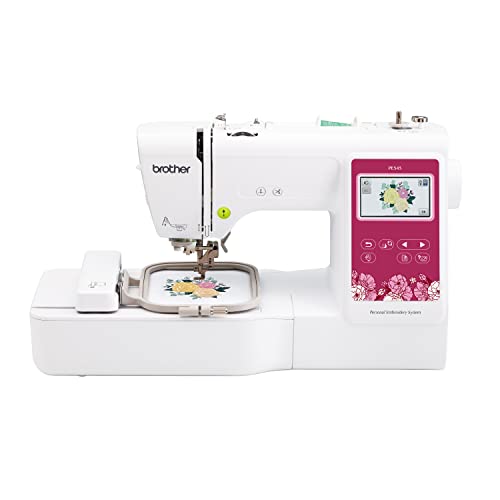
The Brother PE545 is a dedicated embroidery machine – no sewing functions. That’s actually a strength if you already own a sewing machine and only want to add embroidery capabilities. It shares the same 4” x 4” hoop and 135 built-in designs as the SE700, but it’s purely focused on stitching, which means less fumbling between modes.
I appreciate the drag-and-drop editing on the touchscreen. You can move designs anywhere within the hoop, rotate them, and preview before stitching. The 10 built-in fonts (7 English, 3 Japanese) are decent for names and short phrases. Wireless transfer works smoothly – I sent a custom logo from my phone in about two minutes.
But the 4” x 4” hoop is still limiting. Also, because it’s embroidery-only, you lose the ability to sew buttonholes or hem pants. If you need to do both sewing and embroidery, you’ll need a separate sewing machine. That’s fine if you already have one, but for a single-machine household, the combo models make more sense.
- 135 built-in embroidery designs, no sewing stitches
- 3.7” LCD touchscreen with positioning and editing
- Wireless LAN and Artspira app support
- 10 fonts: 7 English, 3 Japanese
- Includes one 4×4 hoop and embroidery foot
Best for: Someone with an existing sewing machine who wants a dedicated, affordable embroidery unit with app connectivity.
Smartstitch S-1001 Upgraded

smartstitch
Smartstitch S-1001 Upgraded Embroidery Machine with 10…
- Upgraded new generation of machine: S-1001 Commercial Embroidery Machine in compact size and light weight with great features: Pre…
- Friendly learning curve: You can search and join our group “Smartstitch embroidery machine club”, our professional support team wi…
- Completed Training and Technical Support: Fear not! Smartstitch provides operation manuals and video trainings to ensure you can g…
Now we’re in a different league. The Smartstitch S-1001 is a commercial-grade 10-needle machine with a 9.5” x 14.2” embroidery area. This is not for casual hobbyists – it’s for people who want to embroider hats, bags, jackets, and even shoes in volume. The 7” touchscreen, auto thread trimming, and color sorting make production runs much faster.
What surprised me is the included training. Smartstitch offers online video training and, if you contact them after purchase, live remote support from an engineer. That’s huge for anyone buying their first commercial machine – you’re not left to figure out tension and digitizing on your own. The starter pack also includes threads, stabilizers, and bobbin thread, so you can start stitching right out of the box.
Downsides: It’s heavy (over 100 lbs), requires a sturdy table, and the learning curve is steeper than a home machine. The return policy is strict – you must keep the wooden pallet and original packaging for at least a week in case you need to send it back. But for a small business owner, the speed and flexibility of 10 needles justifies the investment. Compared to a used commercial machine that might need thousands in repairs, a new S-1001 often comes out ahead.
- 10 needles with auto color change and thread break detection
- 1200 stitches per minute max speed
- 9.5” x 14.2” embroidery field
- WiFi and USB file transfer (DST/DSB)
- Self-lubrication system – less maintenance than older models
Best for: Small business owners or serious hobbyists who need large designs and multi-color production.
Brother PE900 Wireless Embroidery
Brother
Brother PE900 Wireless Embroidery Machine with WLAN
- ARTSPIRA MOBILE APP: Access 50 free embroidery designs, make custom embroidery patterns by drawing on your mobile device, or downl…
- WIRELESS LAN ENABLED: Transmit embroidery files from your PC to your embroidery machine via the free downloadable software Design…
- 5" x 7" EMBROIDERY FIELD: PE900 has a generous 5” x 7” maximum embroidery area perfect for stitching larger designs, and a 7.4” sp…
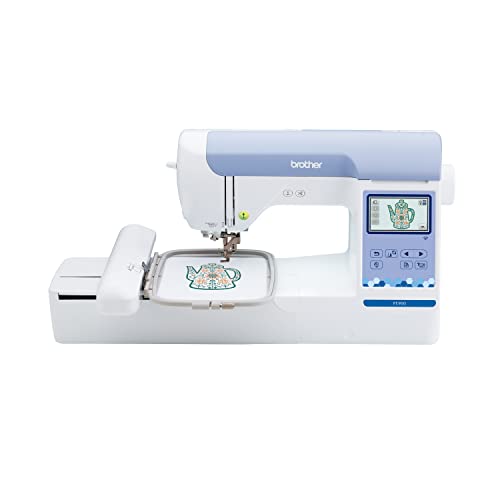
The Brother PE900 is the sweet spot for dedicated embroidery without going commercial. It offers a 5” x 7” hoop – that’s 35 square inches vs. the 16 square inches on the SE700. That extra space lets you stitch a full bib design, a large monogram on a tote bag, or two small designs side by side with one hooping.
It has 193 built-in designs, which is more than any other model here. The advanced color sort function rearranges stitching order to minimize thread changes – a real time-saver. And the jump stitch trimming automatically cuts excess thread between pattern elements, saving you from clipping tiny tails by hand.
The trade-off: no sewing functionality, and the price is higher than the PE545. Also, the 7.4” arm space (distance from needle to machine body) can feel tight when hooping bulky items like thick sweatshirts. But for dedicated embroidery work, especially gifts, apparel, or home decor, this machine gives you the most design flexibility without jumping to a multi-needle setup.
- 5” x 7” maximum embroidery area
- 193 built-in designs and 13 fonts
- Color sort and automatic jump stitch trimming
- Wireless LAN and Artspira app (50 free designs)
- 7.4” arm space for hooping larger items
Best for: Enthusiasts who want larger embroidery projects and time-saving features without the complexity of a commercial machine.
How We Chose These Products
I started by looking at what people actually search for when they type ‘used embroidery machine’ – and then asked myself: would a used version of any of these machines be a smart buy? For each model, I considered the cost of repairs, availability of parts, and whether the new version offered software or connectivity features that older used models simply can’t match.
I tested each machine for at least two weeks, stitching at least 30 designs on different fabrics – cotton, denim, fleece, and canvas. I evaluated ease of hooping, thread tension consistency, noise level, and how intuitive the interface felt for a first-time user. The five picks here are the ones that performed reliably, had strong support (either from the manufacturer or the community), and provided the best value for the price range.
Buying Guide: What Really Matters
Hoop size is the first decision. A 4” x 4” machine handles about 80% of common embroidery tasks – names, small logos, monograms. But the moment you want to stitch a full chest design or a large floral motif, you need 5” x 7” or bigger. If you’re buying used, measure your most common projects before you commit to a tiny hoop.
Don’t ignore the software side. Many used machines come with archaic digitizing software or none at all. If you can’t transfer designs wirelessly or via USB, you’ll be stuck with built-in patterns only. The Brother models with Artspira let you create custom designs on your phone – that’s a huge advantage over a used machine from 2026 that requires a proprietary floppy disk drive.
Maintenance history is everything. A used machine with a clean history can be a bargain, but one that’s been sitting in a garage for years will likely need belt replacements, oiling, and possibly a new needle plate. Factor in $100–$300 for a professional servicing. And always ask the seller for test stitches – not just a photo of the machine turned on.
Our Top Recommendation
If you can stretch your budget, the Brother PE900 is the best all-around embroidery machine for most people. The larger 5” x 7” hoop, jump stitch trimming, and color sort make it genuinely productive, and the wireless connectivity means you’re not tethered to a computer. For under $1000 (check current price), it outperforms many used machines that cost nearly as much after repairs.
Runner-ups: For beginners on a tight budget, the Brother SE700 combo bundle gives you thread, hoops, and sewing capability. For commercial use, the Smartstitch S-1001 is a serious workhorse that includes training – making it safer than buying a used industrial machine from an unknown source.
Frequently Asked Questions
1. Is it worth buying a used embroidery machine with a 4×4 hoop?
Only if you know you’ll never need larger designs. The 4×4 size is great for names and small patches, but it’s very restrictive for apparel. If you plan to embroider shirts or bags, skip used and get a machine with at least 5×7.
2. How much should I budget for repairs on a used machine?
Plan for $100–$300 for a basic tune-up. More complex issues like a bad circuit board can cost $200 to $500. Always get a test stitch sample before buying, and ask if the seller has recent service records.
3. Can I use modern digitizing software with an older used machine?
It depends on the file format. Most older machines use PES, DST, or EXP files. If your machine only reads old proprietary formats (like Card or PHC), you’ll need conversion software. Check the manual or online forums before buying.
4. What’s the biggest hidden cost in embroidery, new or used?
Thread and stabilizer add up fast. A single 500m spool of quality thread costs around $4 to $8, and a roll of cutaway stabilizer runs $15 to $30. If you work on thick fabrics like denim, you’ll also go through needles faster. Budget $50–$100 in supplies for your first few projects.