The best sewing machine for advanced sewers should remove a specific limitation in the work you already do well. More experience does not automatically require more decorative stitches or a more expensive machine. This guide compares three equipment roles and explains precision, feeding, working space, specialist functions, and service so you can choose an upgrade that improves recurring projects instead of adding complexity without a clear purpose in your workspace.
As an Amazon Associate, Practical Textile earns from qualifying purchases. Product links may earn us a commission.
Quick Answer
Consider the Janome Memory Craft 9850 when versatile sewing and hoop embroidery both matter, the Brother PQ1600S for a dedicated straight-stitch role, and the Brother XR9550 when capable general sewing remains sufficient. An upgrade should solve an observed requirement. For industrial feeding, specialized access, coverstitch, or professional longarm work, evaluate the appropriate equipment class separately.
This guide compares published specifications and project fit; it does not report hands-on testing.
Janome Memory Craft 9850
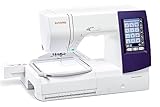
Consider when both ordinary construction and programmed decoration have recurring value.
Brother PQ1600S

A specialist to compare for a clearly defined station and project flow.
Brother XR9550
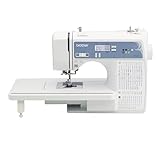
Compare a focused household role before paying for unneeded specialization.
Define the Limitation Before Defining the Budget
An experienced sewer may be limited by working space, fabric handling, repetitive setup, access to a specialist stitch, or service availability. These problems point toward different purchases. A larger decorative menu will not create coverstitch, a stronger-looking domestic frame will not establish compound feed, and an embroidery field does not describe the space available for ordinary quilting.
Write down the three situations that currently interrupt your work. Describe them concretely: changing machines for a repeated operation, supporting a large panel, controlling a difficult seam, or preparing embroidery. Then decide which limitation occurs most often and has the greatest effect on the finished project. That becomes the primary upgrade requirement.
This shortlist compares three distinct roles rather than claiming to rank every advanced machine on the US market. It is research-based and does not report a hands-on contest between these models. Use it to narrow the equipment role, then arrange an appropriate demonstration and compare support before choosing the exact purchase.
| Option | Why an experienced sewer might consider it | Why it may be the wrong upgrade |
|---|---|---|
| Janome MC9850 | Combination construction and programmed embroidery | Embroidery adds cost and setup without value if unused |
| Brother PQ1600S | A defined, repeated straight-stitch station | Cannot replace zigzag, buttonholes, or coverstitch |
| Brother XR9550 | General household operations remain the real requirement | Not a substitute for a genuinely missing specialist capability |
Janome Memory Craft 9850: Add Embroidery for a Reason
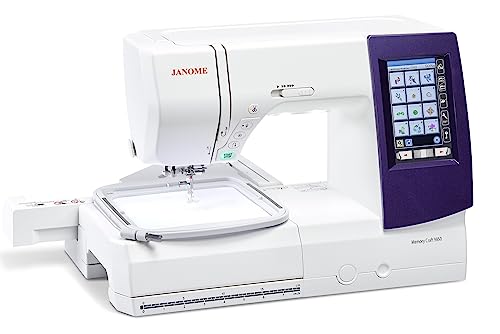
The Janome Memory Craft 9850 combines general sewing with hoop embroidery. It is a meaningful direction when you already construct garments or projects and want to incorporate compatible programmed decoration regularly. That is a clear additional operation, unlike buying a more elaborate model merely because your experience level has increased.
Its sewing controls include adjustable presser-foot pressure, a speed slider, needle-position control, and thread cutting. Consider how those functions interact with your usual work. A convenient cutter may reduce interruptions, but it is not necessarily appropriate at every point or with every thread. The manual and actual sample should determine the operating routine.
The embroidery system introduces its own field dimensions, file compatibility, stabilizer requirements, and placement process. An experienced garment sewer is not automatically an experienced digitizer. Importing a compatible file and creating stitch data from artwork are different tasks. Budget time and, where needed, suitable software or a digitizing service.
Choose this direction when ordinary sewing and embroidery both have recurring value and sharing one machine fits your workflow. If you need one person sewing while another embroiders, separate machines may be more practical. Our Janome combination-machine guide explains that distinction, and our Janome comparison adds broader brand context.
Brother PQ1600S: Build a Dedicated Straight-Stitch Station


The Brother PQ1600S is relevant when repeated straight stitching deserves its own station. It can complement a general-purpose machine that remains available for buttonholes and utility stitches. The potential improvement is workflow specialization, not the assumption that every experienced sewer should abandon a multipurpose machine.
Its knee lifter, thread cutter, table, and feeding controls are useful features to assess in a realistic demonstration. Check whether their placement and operation suit your posture and construction sequence. A feature only improves the work if it is comfortable and appropriate for the tasks you actually repeat.
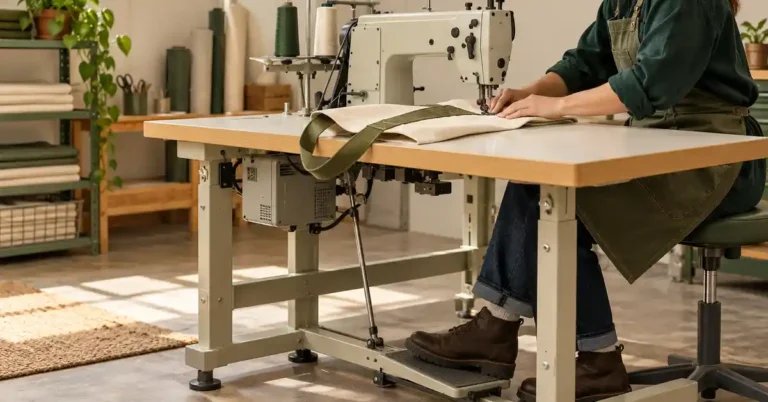
Keep the machine’s straight-only role explicit. It does not provide zigzag, an ordinary buttonhole, or a coverstitch seam. Its pin-feed feature should not be described as compound walking-foot feed. For difficult industrial materials or a seam requiring another mechanism, evaluate equipment designed for that role instead.
A separate station also requires space. Plan how projects move between machines, where thread and tools will be stored, and whether changing chairs or moving a heavy project will erase the time saved. A specialist can be valuable in an organized workspace and inconvenient when it must be unpacked for every short seam.
Brother XR9550: Experience Does Not Make General Sewing Obsolete
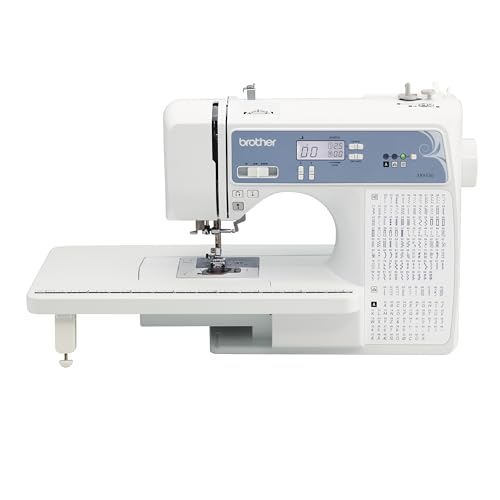
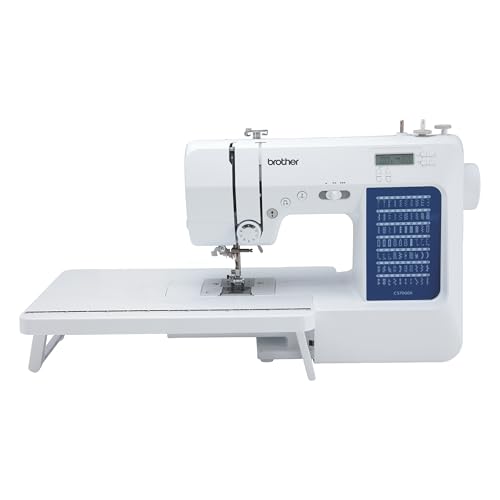
The Brother XR9550 belongs here as a reminder that advanced skill and advanced equipment are different things. If your projects require ordinary household seams, utility stitches, and buttonholes, a competent general-purpose machine may remain sufficient. Your technique can produce sophisticated results without making every project dependent on a premium machine category.
Its independent speed slider and computerized selection are relevant to a varied domestic workflow. The wide table may support appropriate larger work, while free-arm access is useful for some tubular operations. Evaluate these features against your actual projects rather than expecting a single configuration to suit every construction step.
This model is not the right answer when a specific missing specialist function is the reason for upgrading. A larger decorative menu would not supply industrial feeding or longarm working space. However, if the current problem is poor setup, worn needles, or an uncomfortable workstation, an expensive new machine may not be the most direct solution either.
Use our Brother model guide to distinguish household and specialist roles. Compare operating preferences in our computerized versus mechanical guide before deciding that electronics alone define an upgrade.
Useful Ways to Improve an Established Workflow
- Add a clearly needed embroidery operation.
- Separate repeated straight stitching from utility sewing.
- Choose controls that reduce specific interruptions.
- Retain an appropriate general machine when it still meets the work.
- Evaluate service, workspace, and accessories as part of the upgrade.
Common Upgrade Traps
- Buying decorative features to solve a feeding, access, or specialist-stitch problem.
- Underestimating the space and setup introduced by another equipment role.
Precision Comes From a Repeatable Setup
For piecing, topstitching, or garment construction, evaluate repeatability rather than one attractive sample. Sew several seams with the same setup and check whether the result meets the project’s dimensional and visual requirements. Marked guides, suitable feet, needle position, preparation, and pressing all contribute.
Do not assume that a premium label eliminates variation caused by cutting or handling. A machine can follow a consistent stitch length while the operator feeds an inaccurate seam allowance. Separate the machine’s behavior from preparation and technique so the demonstration answers the right question.
Ask to test the operations you find demanding, such as a narrow edge, a curved seam, or a bulky crossing within the machine’s limits. Use the real materials where possible. Compare the result and the effort required, because a machine that produces an acceptable seam only through an uncomfortable workaround may not improve your daily work.
Choose Feeding for the Material, Not the Feature Name
Layer movement can arise from friction, stretch, unsupported weight, foot pressure, or the construction itself. Identify the cause before treating an accessory as the solution. A compatible walking foot may help one problem, while another project calls for a different machine mechanism or better support around the needle.
For Brother attachments, our walking-foot guide provides compatibility context. Do not assume that a foot suitable for one household model fits a specialist. Check the exact part, attachment method, permitted stitches, and clearance instructions.
If a recurring job needs needle feed, compound feed, or another specialized mechanism, compare machines that actually provide it. Avoid translating a general marketing phrase such as improved feeding into a capability the model does not have. A dealer demonstration on your construction is more useful than an unrelated material sample.
Working Room Is More Than the Longest Dimension
Assess the space needed for the project at its most awkward stage. A quilt rolled through a throat, a partially assembled bag, and a long curtain panel create different handling problems. The distance beside the needle matters, but so do the surrounding table, support behind the machine, and ability to turn or reposition the work.
For embroidery, compare both dimensions of the stitch field and the compatible hoop for the design. A field with one long side does not automatically accept a large square design. Garment access and hooping position can impose further constraints even when the design’s dimensions fit the stated field.
Plan storage and setup as well. If moving the machine into position takes substantial time, that affects how often you will use it. A dedicated station can improve consistency and accessibility, but only if the room supports a comfortable, orderly arrangement rather than squeezing another machine into an unsuitable corner.
Know Which Problems Need a Different Equipment Class
A coverstitch requirement is not solved by ordinary decorative stitches. Professional longarm quilting involves a different working arrangement from domestic free-motion quilting. A cylinder-bed requirement concerns access to three-dimensional work, and industrial production may involve a particular feed and needle system. Name the missing operation precisely before shopping.
There can also be a good reason to keep the existing machine. It may remain useful for buttonholes, repairs, classes, or a second setup while a new specialist handles the demanding operation. An upgrade does not have to replace every tool already in the sewing room.
Compare outsourcing where a specialist operation is rare. Occasional professional quilting, embroidery digitizing, or difficult alterations can cost less than owning equipment that remains idle. The relevant question is the whole workflow over time, including your enjoyment and desire to learn the operation, not only the machine’s initial price.
Service and Training Matter More as Work Becomes Demanding
Ask where service is performed, what training is included, how parts are obtained, and which warranty terms apply to the intended use and sales channel. A machine with an excellent specification list can still be inconvenient if support is inaccessible. Evaluate the actual seller and local service arrangement.
For combination embroidery, check current software and transfer compatibility before buying. Confirm the computer or app requirements for the exact workflow you intend to use. Do not assume that an older software recommendation guarantees compatibility with every future operating-system version.
Keep a maintenance and sample record for the equipment you own. Needle changes, cleaning, setup notes, and recurring symptoms help distinguish an operating issue from a service problem. Our Brother tension guide supports systematic checks on relevant models without replacing professional diagnosis when needed.
Use a Short Upgrade Decision Process
First, identify one recurring limitation and define the result you need. Second, test candidate equipment on the relevant sample. Third, confirm the full station, accessory, training, and support costs. Finally, decide whether the improvement is substantial enough to justify the change. This keeps the purchase connected to observable work.
Allow yourself to conclude that the current machine remains suitable. Advanced sewing often comes from better material choices, pattern work, preparation, and technique rather than a more elaborate control panel. A new machine is valuable when it creates a useful capability or makes an established task meaningfully better.
Frequently Asked Questions
Do advanced sewers need an expensive machine?
No. Equipment should match the operations and materials involved. Experienced sewists can produce sophisticated work on a suitable general-purpose machine. Spend more when a demonstrated requirement justifies a different capability or workflow.
Is a straight-stitch machine a replacement for my general machine?
Often it is a companion rather than a complete replacement. The PQ1600S does not supply zigzag or buttonholes. Decide how those operations will be handled before building a station around straight-stitch specialization.
Should I choose a combination embroidery machine?
Consider one when both sewing and programmed embroidery will be used regularly and sharing the machine fits your schedule. Separate machines may be more practical if the two operations need to happen independently or simultaneously.
Will more decorative stitches improve garment construction?
Not automatically. Fit, accurate seams, suitable closures, feeding, and pressing usually deserve greater attention. Decorative stitches matter when your designs use them, but they do not solve unrelated construction limitations.
What should I bring to an upgrade demonstration?
Bring your usual material, the most demanding appropriate seam, a record of the limitation you want to solve, and any relevant project requirements. Ask to operate the machine yourself and inspect repeated samples rather than only watching a prepared demonstration.
Final Recommendation
Choose the MC9850 for a justified sewing-and-embroidery role, the PQ1600S for a defined straight-stitch station, or a suitable general machine such as the XR9550 when that remains enough. For genuinely specialist requirements, compare the relevant equipment class. Let the upgrade follow a clear improvement in your work rather than an assumption about what an advanced sewer ought to own.