As an Amazon Associate, Practical Textile earns from qualifying purchases.
Holiday invitations can sound similar while calling for very different clothes. A seated family dinner, a crowded restaurant and a standing work reception place different demands on warmth, coverage and freedom of movement. Start with what the evening involves, then add the seasonal detail you enjoy.
The ideas below are outfit formulas rather than a ranking of particular garments. They explain what to inspect in velvet, satin, sequins and knitwear so you can adapt something you own or judge a new listing. No outfit here has been personally worn or tested for this guide.
Match the Invitation Before Choosing the Outfit
Check whether the invitation specifies casual, cocktail, formal or a themed sweater event. Venue helps when the wording is vague, but it does not replace an explicit dress code. A formal dinner may call for a different silhouette from drinks at a neighborhood restaurant, even when both invitations say Christmas party.
For a work celebration, begin with the coverage and fit you would feel comfortable wearing around colleagues. Add a velvet jacket, a festive color or a small area of sparkle. For a family gathering, prioritize sitting, serving food and playing with children without repeatedly adjusting the outfit.
Include the journey in your plan. A lightweight evening top can work indoors with a proper coat outdoors; several bulky indoor layers may become uncomfortable in a heated room. Choose shoes for the actual walking and standing involved, and keep hems clear of the ground.
Read the Fabric Label, Not Just the Style Name
Velvet describes a pile surface, not one particular fiber. Polyester velvet, cotton velvet and silk-containing velvet can differ in warmth, stretch, drape and care. Check the composition and lining separately. A soft surface does not tell you whether the garment will feel breathable during a long indoor event.
Satin describes a weave or surface effect rather than proving that a garment is silk. A satin blouse may be polyester, viscose, silk or a blend. Look for opacity, seam tension and enough ease across the bust and upper arms. A glossy fabric can make puckering more visible under direct light.
With sequins, inspect the backing and the edges around the underarms, neckline and cuffs. Decoration may feel comfortable on the outside but rub where an unfinished edge touches skin. Knitwear needs a different check: see whether the fabric recovers after gentle movement and whether the neckline stays stable.
15 Christmas Party Outfit for Women Ideas
Use these combinations as starting points. Swap the silhouette, sleeve length and footwear to suit your body, climate and invitation. You do not need to combine every seasonal color, and an outfit does not become more useful simply because it includes more embellishment.
1. A Velvet Midi Dress with Simple Accessories
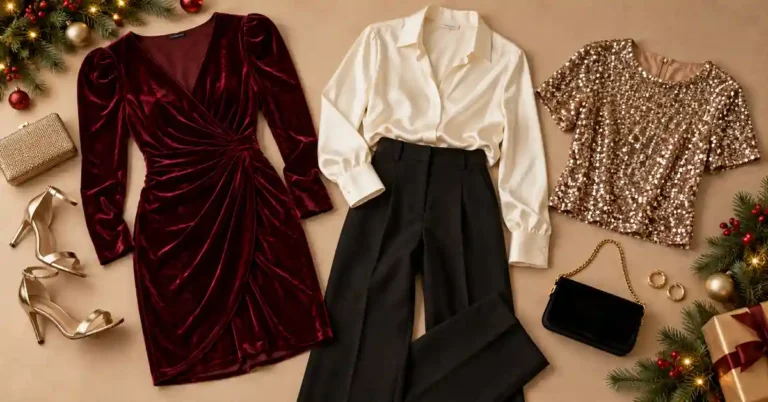
A velvet midi dress provides texture without needing several competing details. Check whether the pile changes appearance when brushed in opposite directions and view the dress in ordinary room light. Choose enough ease for sitting, especially if the fabric is woven velvet rather than a stretch knit with a velvet-like surface.
2. A Satin Blouse with Tailored Trousers
This formula suits a dinner where you want polish without wearing a dress. A fluid blouse works best when the trousers and waistband do not pull the fabric into tight horizontal lines. Sit down before deciding on a size, and check whether the blouse remains opaque when light falls across the front.
3. A Velvet Blazer over a Plain Base
A velvet blazer can make familiar trousers or a simple dress feel festive. Keep the layer beneath smooth enough that the jacket moves freely. Inspect shoulder fit and sleeve lining, then try reaching forward as though greeting someone or carrying a plate. The jacket should not force the whole outfit upward.
4. A Sequin Skirt with a Soft, Plain Top
Let the skirt provide the sparkle and keep the top quiet. Check that the skirt has a comfortable lining and that the waistband does not twist when you sit. A densely decorated skirt can be heavier than it appears in a listing, so consider whether you want that weight for the entire evening.
5. A Fine-Knit Dress with a Structured Coat
A knit dress offers a relaxed silhouette while a coat gives the outfit definition outdoors. Check the knit for transparency when stretched over the hips or knees. A dress that becomes noticeably longer during the first wear may need more support or different sizing; do not assume all knits hold their shape equally.
6. Dark Jeans with a Festive Blouse
For an explicitly casual party, dark jeans and a dressier blouse can be enough. Choose denim that allows comfortable sitting and pair it with one fabric contrast, such as satin or velvet. Confirm that jeans fit the invitation rather than relying on accessories to make an unsuitable dress code work.
7. Wide-Leg Trousers with a Refined Knit
A smooth or lightly textured knit can balance wide trousers without looking overly formal. Test the combination together: a long, bulky sweater may create more volume than you want at the waistband. Check the trouser hem with the actual shoes you plan to wear, including how it behaves on stairs.
8. A Monochrome Outfit with One Textured Layer
Choose related shades of black, cream, burgundy or another favorite color, then vary the surface through a jacket or scarf. Exact shade matching across different fibers is difficult because light reflects differently from each fabric. Aim for an intentional tonal combination instead of an almost-match that bothers you in photographs.
9. A Jumpsuit with an Easy Layer
A jumpsuit can simplify outfit coordination, but torso length matters as much as the listed size. Raise your arms, sit and bend gently when checking fit. Think through restroom access and whether the closure is manageable without help. A jacket should add warmth without making those practical steps unnecessarily complicated.
10. A Pleated Skirt with a Fitted-Enough Top
Pleats add movement, while a less bulky top keeps the waist area clear. Check whether the pleats retain their shape after sitting and whether the label requires special care. Choose a lining or suitable underlayer if the fabric is sheer; a darker color alone does not guarantee opacity.
11. A Printed Dress with a Plain Cardigan
A restrained seasonal print works well for a family meal or daytime event. Keep the cardigan plain so the pattern remains the focal point. Inspect buttons and front overlap while seated, and check whether the cardigan sheds fibers onto the dress. Contrast can make otherwise minor lint much more noticeable.
12. A Tailored Suit with a Festive Inner Layer
A trouser suit can feel celebratory with a textured blouse or a simple metallic accessory. Check the complete outfit rather than sizing the jacket alone. The trousers need comfortable seat and thigh ease, and the inner layer should not bunch beneath the jacket or pull at the neckline.
13. A Simple Dress with a Statement Wrap
Use a wrap when the dress already fits well and you mainly need an extra festive layer. Test whether the wrap stays in place without constant adjustment. Loose fringe can catch on jewelry or bag hardware, so consider a clean-edged option if you expect to be moving around frequently.
14. A Sparkling Top with an Uncomplicated Skirt
Keep the lower half plain when the top is embellished. Check the top’s inner finish and whether the decoration catches on the skirt fabric. This matters especially with delicate satin or open knits. A quick movement test can reveal snagging that is easy to miss while standing still in front of a mirror.
15. A Comfortable Sweater Outfit for a Theme Party
If the invitation specifically celebrates novelty sweaters, enjoy the theme without ignoring comfort. Check whether appliqué, embroidery or battery compartments create pressure or rough areas. Choose an underlayer that works with the room temperature, and avoid decorations that interfere with a coat, seat belt or normal movement.
Do a Five-Minute Comfort Check
Put on the full outfit with its intended underlayers, shoes and bag. Sit in a chair, walk across the room, reach forward and lift your arms. Look for a waistband that rolls, a neckline that shifts or a seam that becomes tight. Those details matter more than an attractive standing pose.
Check the fabric against your skin for a few minutes instead of judging only with your hand. Wool sensitivity, rough decoration and stiff seams vary between people. A breathable underlayer may help in some outfits, but it should not become a reason to keep a garment that remains uncomfortable.
For online orders, compare body measurements with the exact garment’s size chart and read the return conditions. Treat a size label as a starting point rather than a promise. Check the delivery date on Amazon before ordering; this guide does not promise arrival before a particular Christmas event.
How to Care for Party Fabrics
Read the label before removing tags. Avoid assuming every velvet or satin garment can be washed the same way. Decoration, lining and adhesives may determine the care method even when the main fabric seems familiar. If a label specifies professional cleaning, follow it rather than testing a home method before an important event.
For washable pieces, close fasteners and separate snag-prone decoration from delicate fabric. Use the labeled temperature and drying method. Keep direct ironing away from velvet pile and sequins unless the care instructions expressly allow a suitable method. Air the garment after wearing and deal with stains promptly using the label’s guidance.
Frequently Asked Questions
What should I wear to a casual Christmas party?
Start with comfortable trousers or jeans and add one festive element, such as a textured cardigan or dressier blouse. Check the invitation because casual does not mean the same thing at every venue.
Can I wear black to a Christmas party?
Yes, unless the invitation specifies a different theme. Texture, a colored layer or a small accessory can make black feel seasonal without requiring an entirely new outfit.
Is velvet always warmer than satin?
No. The fiber, fabric weight, lining and garment coverage all matter. Compare complete garments rather than treating the surface name as a reliable warmth rating.
How can I make a party outfit comfortable?
Choose enough movement ease and check seams, decoration and underlayers before the event. Test the complete outfit while sitting and walking, not just while standing.
Do I need to buy a new outfit for every holiday event?
No. A familiar base can work with a different jacket, knit layer or accessory. Repeat pieces that fit well and change the styling to match each invitation.
Final Thought
Choose the event-appropriate outfit that lets you sit, move and enjoy the evening comfortably. Fabric and fit should do most of the work; the Christmas detail can remain simple.