
A DMC embroidery thread color chart can help you organize a palette, but printed colors, real thread samples and independent planner books are different references. Start by checking the product format, thread range and edition. This guide explains those differences, verifies the five existing listing identities where possible, and shows how to record color choices without promising that a printed page will match every individual skein or finished stitch exactly.


This guide uses manufacturer information and actual retailer records where available. We have not tested print accuracy, card durability or comparative performance. As an Amazon Associate, we earn from qualifying purchases through the product links.
Compare the reference format before comparing the title
DMC’s general FAQ explains that printed and online charts approximate the actual color and recommends real thread swatches for comparison. That distinction matters more than a book title promising a complete chart. A printed page, an attached thread sample and a blank project-log page perform different jobs.
| Format | Useful role | Important limitation |
|---|---|---|
| Printed manufacturer card | Browse color families and locate numbers in the covered ranges. | Printed ink is a representation; check the exact edition and coverage. |
| Manufacturer card with thread swatches | Compare physical thread samples with the intended fabric. | Check which thread families and edition the card represents. |
| Independent chart or planner book | Organize a shortlist, shopping list or project record when its pages support that use. | A brand name in the title does not establish manufacturer publication or approval. |
| Screen reference or saved photograph | Identify a possible shade number before examining a physical product. | It does not establish an exact match to the thread or completed stitching. |
Also separate the thread family from the color number. Record the product line, color identifier and other specifications needed by the pattern. A familiar number alone is not a complete purchase description if you select the wrong type of thread. Check the actual label and pattern instructions rather than assuming one reference card covers every DMC line.
Five product references, with corrected identities
DMC COLORCRD: printed reference card

The actual retailer title identifies a twelve-page printed DMC colour card. DMC's own Printed Color Card page confirms that this product family uses printed colour representations, a fold-out layout and a numerical locator. It should not be described as a card containing real thread strands.
Useful features or reasons to consider it
- A printed overview helps organise a first shortlist of colour families.
- A numerical locator helps find a known thread number.
Limitations and checks
- Printed colours approximate the thread rather than guarantee a visual match.
- Check the offered edition and covered thread ranges instead of assuming every DMC product is included.
Independently published colour-chart and planner book
The retained retailer page identifies a colour-chart/planner book and explicitly lists its publisher as Independently published. It is therefore described here as an independent book reference, not as DMC's own threaded card. Inspect sample pages for its actual recording and lookup layout.
Useful features or reasons to consider it
- A planner format may combine a shopping list and project notes if its sample pages support that use.
- The retailer record identifies it as a book rather than a skein-sample card.
Limitations and checks
- Using DMC in a title does not establish DMC authorship or endorsement.
- The printed palette and current shade coverage need checking; no accuracy or paper-durability test is claimed.
Independent chart book: edition details need checking

The retailer title says 28 pages, while its product-details section lists a fifty-page independently published book. Those conflicting fields do not establish the exact edition that will be supplied. The destination remains unchanged, with the discrepancy stated instead of repeating either count as certain.
Useful features or reasons to consider it
- The reference is a printed book-format resource rather than verified real-thread samples.
Limitations and checks
- Confirm the edition and page count with the seller before relying on them.
- DMC approval, current shade coverage and print accuracy are not established by this listing.
Verification remains incomplete for reference B0932CSR43. Read the exact current offer before relying on its contents or instructions.
DMC W100B: actual-thread colour card
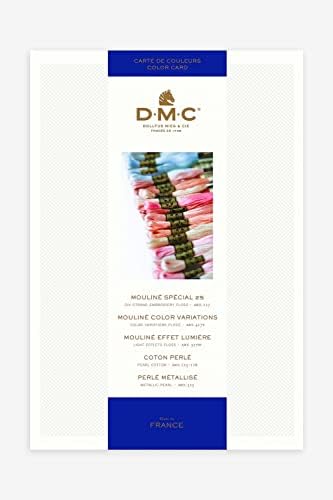
DMC identifies W100B as its Threaded Color Card, and the retained retailer title names the same model. The maker describes real thread swatches for comparing its stated ranges. This is a materially different reference format from an independently printed planner or an on-screen chart.
Useful features or reasons to consider it
- Physical thread swatches allow comparison with the intended fabric.
- The model number can be checked against DMC's own product record.
Limitations and checks
- Check the edition and thread families covered; one card is not a promise to cover every DMC line.
- A useful reference does not guarantee that every lighting condition or finished stitch will look identical.
Older chart-and-logbook reference: identity unverified

The exact retained Amazon page could not be retrieved. Its current title, publisher, contents and edition therefore remain unverified. The original image and destination are kept as a reference without repeating the earlier promises of complete colour coverage, durable construction or a confirmed project-log layout.
Useful features or reasons to consider it
- A project log is a useful format to investigate when organising thread purchases.
Limitations and checks
- This reference's actual identity and contents still need checking.
- Do not assume it is an official DMC card or that the original description is current.
Verification remains incomplete for reference B09GZJVL99. Read the exact current offer before relying on its contents or instructions.
A practical workflow for choosing and recording colors
The following is a proposed planning process, not a report of laboratory color matching or our own product tests. Use it to make your selection traceable and to identify questions before buying an entire palette.
- Start with the pattern’s requirements. Write down the thread brand, line, color identifiers, number of strands and any special instructions. If the pattern names a blend, record all of its components. Do not replace the original key with an approximate color description before you understand the stitch plan.
- Identify the reference edition. Check the card or book title, model and publication information. Confirm whether it is printed, threaded or a planner. If the listing contains conflicting fields, resolve the actual edition with the seller instead of assuming the headline is the most reliable field.
- Find the known numbers first. Use the reference’s index or locator to find colors already specified by the pattern. This is a lookup task, not a reason to substitute a nearby-looking number. Mark any number that is missing from the chosen edition for further checking.
- Build a small candidate palette. If you are creating your own design, compare the roles of the colors: outlines, large filled areas, small accents and background. A color that works as a tiny accent may dominate a large stitched area. Keep the intended scale in mind while making the shortlist.
- Compare with the intended fabric. Place the physical thread or swatch near the actual fabric when possible, and view the combination under the conditions in which the project is likely to be used. Treat the printed card as a planning aid rather than evidence that the final combination will look identical.
- Check the actual supplies. Compare the labels on the skeins or other thread formats you intend to use. Keep identifying information together with any remaining packaging. When matching an existing item, examine the actual thread rather than ordering solely from a photograph of an older chart.
- Work a representative sample if the choice is important. Use the planned fabric, strand count and stitch type. A swatch helps you evaluate that combination at its intended scale; it is not a guarantee about all fabrics, lighting conditions or future skeins.
- Save the decision. Record the final choices, any substitutions and the reference edition used. Keep an unfinished-project note separate from a general shopping list so that a temporary experiment does not become an accidental permanent replacement in the pattern key.
Use different records for three common projects
Following a numbered cross-stitch chart
Keep the original symbol-to-color key intact and mark purchases against it. Record partial skeins separately from unopened supplies so that you can assess what remains. If you choose a replacement, note the original number and the chosen alternative side by side. That makes the change visible when returning to the project later.
Choosing an original hand-embroidery palette
Start with a few clearly defined color roles rather than collecting many nearly identical shades without a plan. Place your outline, main fill and accent choices together with the actual fabric. Check whether small details remain distinct at the intended size. Photographing the arrangement may help document it, but keep the actual thread identifiers as the reliable shopping record.
Matching a partly completed piece
Gather the original pattern, packaging, remaining thread and any notes about substitutions. A chart can help locate candidates, but it cannot establish the exact history of an unlabeled piece. If the match is uncertain, label that uncertainty in the project record and sample the proposed continuation before working a large visible area.
Make a project log useful rather than decorative
A planner’s value depends on whether its layout records the information you need. Inspect sample pages before buying. The independent books in this guide are not treated as official DMC swatch cards, and their titles do not establish that every current shade is included or printed accurately.
| Field | What to write |
|---|---|
| Pattern or project | Name, version and where the original color key is kept. |
| Thread description | Brand, product line and exact color identifier from the label. |
| Use in the design | Outline, fill, accent, symbol or other specific role. |
| Purchase and supply | What is on hand, what is still needed and any identifying packaging information. |
| Substitution | Original requirement, proposed alternative and whether a sample was evaluated. |
| Reference used | Card model or book edition, plus the date of your selection. |
Leave room for notes about the fabric and stitch plan. Two projects using the same color numbers can still have different construction and care requirements. The record should help you reproduce your own decisions; it should not be mistaken for manufacturer instructions about every material in the finished item.
Check edition, coverage and care separately
Do not turn a card’s advertised color count into a claim about every DMC thread product. The manufacturer’s printed and threaded references describe particular covered ranges. Editions and product families should be checked directly. A third-party listing may also reuse an old title or contain an inconsistent page count, as the retained independent chart-book reference demonstrates.
Color selection and care are separate decisions. DMC directs users to the individual product pages and packaging for thread and fabric care information. A chart does not establish one washing rule for every embroidery project, especially when fabric, backing, transfer marks or other materials are also involved.
For a beginner, a clear and modest setup can be more useful than several overlapping charts. Decide which problem you are solving: locating a number, comparing physical samples or recording purchases. Buy the reference format that supports that task and keep its limitations visible. No current price, stock status or guaranteed saving is asserted here.
Frequently asked questions
Are all books with DMC in the title official DMC products?
No such assumption is justified. The two checked book records explicitly say Independently published. Compare the publisher and product model with DMC’s own information before describing a reference as manufacturer-issued.
Does W100B contain actual thread samples?
DMC identifies W100B as its threaded color-card model, and the retained retailer title matches it. Check the offered edition and the thread ranges represented rather than assuming every DMC product is covered.
Can a printed card guarantee an exact match?
No. DMC explains that printed and online colors are approximations. Compare the actual thread, intended fabric and a representative stitched sample when the match matters.
Why does one chart book have two page counts?
The retrieved listing title and product-details section conflict. This guide leaves the edition unresolved instead of selecting a count without evidence. Ask the seller which edition and layout the offer supplies.
Should I choose thread care instructions from a color chart?
Use the specific thread and fabric instructions on the maker’s product information and packaging. Also consider the other materials used in the finished project; the color chart is not a universal care label.
