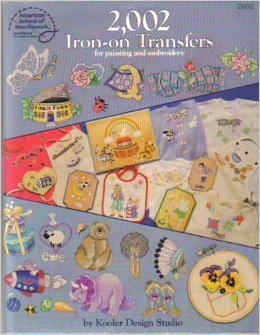

Embroidery iron-on transfers provide guide lines that you decorate with stitches or another suitable method. They do not create finished embroidery simply by touching an iron. This guide compares five existing Aunt Martha’s and Stitcher’s Revolution references, separates verified pattern identities from an unresolved kit, and explains how to plan placement, sample the fabric and finish the project using the directions for the exact transfer you choose to work with.


These are documentation-based product and method checks. We have not tested transfer weight, application success or wash durability. As an Amazon Associate, we earn from qualifying purchases through the retained links.
A transfer is the beginning of the decoration
Colonial Patterns describes its embroidery transfer patterns as designs that are moved to fabric with an iron and then decorated with hand stitches. The transfer marks show where to work; the needlework still has to be done. This is different from attaching an already embroidered patch or applying a finished printed garment graphic.
That distinction changes what you need to buy. A pattern pack does not necessarily include the fabric, thread, needles, hoop or tools shown in an illustration. A completed stitched sample demonstrates a possible finished appearance, not the complete contents of the package. Read the written offer and its directions before building a shopping list.
| Item | Role | Check |
|---|---|---|
| Pre-printed iron-on pattern | Places guide lines on fabric for subsequent decoration. | Pattern size, transfer directions and compatibility with the fabric. |
| Transfer-pencil system | Allows an appropriate drawing to be prepared on paper for transfer. | Specified paper, drawing orientation and pencil directions. |
| Fabric or ready-made item | The material that will carry the finished design. | Care label, surface, color, access and any existing finish or decoration. |
| Thread and stitching tools | Create the embroidery over the guide. | Pattern requirements, intended coverage and suitability for the fabric. |
| Finished patch or graphic | Already-made decoration attached by its own method. | Separate attachment instructions; it is not the same product as a stitch-guide transfer. |
Compare the five existing references by their actual roles
Aunt Martha's vintage-animal pattern bundle
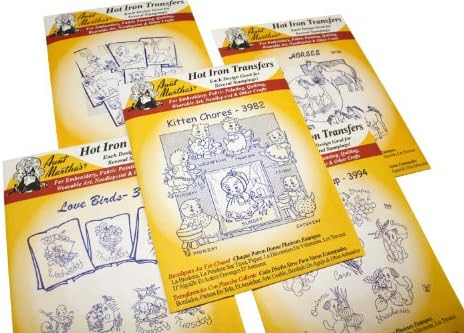
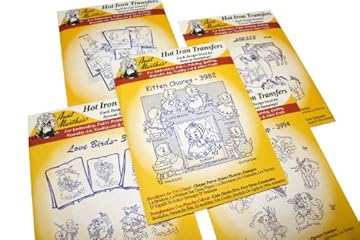
The actual retailer title identifies a set of five Aunt Martha's animal-pattern transfers for stitching, embroidery or fabric painting. Colonial Patterns' own range confirms the role of iron-on patterns as guides for later decoration. Verify the selected bundle's actual patterns before planning a coordinated set.
Useful features or reasons to consider it
- The retailer identifies a themed collection rather than a finished patch.
- A group of motifs can support planning several related fabric items.
Limitations and checks
- Individual motif dimensions and bundle contents need checking on the selected offer.
- No blanket compatibility with leather, metal, wood or every textile is claimed.
Aunt Martha's patterns for linens: set-of-five reference

The retained retailer title identifies patterns for linens in a set of five. Treat it as a different bundle from the animal and kitchen collections, even though the transfer method belongs to the same brand family. The title alone does not confirm every included motif or its finished size.
Useful features or reasons to consider it
- A linen-focused collection is relevant when planning household stitching projects.
- The bundle identity can be distinguished from the other retained references.
Limitations and checks
- Confirm the actual designs before assuming a particular monogram or flower is supplied.
- The number of transfers does not determine the thread colours available to you.
Stitcher's Revolution Farmer's Market, SR38

Both the actual retailer title and Colonial Patterns identify Farmer's Market. The maker's SR38 page describes an iron-on pattern sheet accompanied by colour and stitch guidance for subsequent hand embroidery. The retailer word white is not used here as evidence that the transfer prints opaque white lines.
Useful features or reasons to consider it
- The design name and maker's pattern number provide a clear identity check.
- The maker supplies guidance for turning the printed outline into stitching.
Limitations and checks
- Check transfer-line visibility on the intended fabric.
- No measured weight advantage or guarantee that the marks will wash away is established.
Create-your-own transfer reference: pack unverified
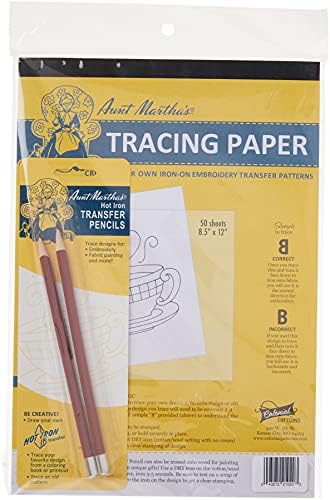
The exact Amazon page remains inaccessible, so the earlier claim of fifty sheets and two pencils is not treated as verified. Colonial Patterns separately documents transfer pencils for tracing designs onto paper. That related product information explains a method but does not establish this older reference's current contents.
Useful features or reasons to consider it
- A custom drawing can be planned with an appropriate transfer-pencil system.
Limitations and checks
- Confirm the exact pack and directions before relying on the older description.
- Do not add printer compatibility, sheet quantities or reuse counts that have not been checked.
Verification remains incomplete for reference B005VA32EK. Read the exact current offer before relying on its contents or instructions.
Aunt Martha's tea-towel and kitchen-decor collection

The actual retailer title identifies a set of five tea-towel/kitchen-decor transfer patterns. This is a pattern collection for later stitching or other compatible decoration, not a pack of completed embroidered towels. Check its named designs and scale against the item you intend to decorate.
Useful features or reasons to consider it
- The stated theme is relevant to planning coordinated kitchen projects.
- A bundle offers several pattern choices within the selected collection.
Limitations and checks
- A design title does not establish its suitability for every towel texture or surface.
- Comparative detail, quality and cost advantages over other collections have not been tested.
Plan the item before selecting a bundle
Describe the item you will decorate, the intended design location and the finished visual effect. A central motif on a tea towel, an initial on a linen panel and a repeated border need different layouts. A bundle containing several designs is useful only if the actual motifs fit those plans.
Measure the available area and include space for hems, seams, folds and later construction. Check whether you can hold the material comfortably while stitching. A motif may fit the visible surface but leave too little access for the selected hoop or stitching method. Make a paper layout before committing the transfer to the finished item.
Animal motifs for a coordinated set
Choose the actual animals and their orientation before applying them to several pieces. Decide whether the designs should be repeated at one size or intentionally varied. A set of five pattern packs does not establish that every motif has the same dimensions. Lay out the group so that the project feels coordinated without assuming every drawing is interchangeable.
Linens and monograms
Check spelling, initials, reading direction and placement on a paper mock-up. A folded napkin or pillowcase can display a different part of the design than a flat fabric panel. Plan the finished view, then decide where the transfer belongs on the unfolded item. Read any instructions concerning reversed artwork before tracing your own lettering.
Tea towels and kitchen projects
Think about the part of the towel that will remain visible when it is hung or folded. Check the surface texture and how clearly the guide can be followed. Keep the stitching plan consistent with the intended use and care of the item. A kitchen-themed pattern does not establish that its transfer process suits every towel fabric.
Use a sample-led application sequence
Colonial Patterns’ transfer-pencil directions specifically recommend trying a test design on the fabric first and warn that removal cannot be guaranteed across different materials. The following checklist is a practical planning framework; the exact product directions determine the actual application settings.
- Read both sets of instructions. Check the fabric care label and the transfer directions, including any later removal or finishing steps. Identify whether heat, moisture or another process is involved. Obtain clarification when the material or finish is not addressed rather than assuming a generic fabric recommendation applies.
- Confirm the pattern and orientation. Identify the transfer side and how the final design should read. Check letters, numbers and asymmetrical motifs carefully. Do not assume the same reversing rule applies to a prepared pattern, a traced drawing and a printer-based product.
- Make a placement mock-up. Position a paper copy or other suitable guide on the item and check it in its intended finished view. Use compatible marking or positioning methods if the instructions allow them. Decide how the layout will be repeated before beginning a coordinated set.
- Prepare a representative sample. Use the actual fabric type and the intended transfer method. Keep a note of the product and the directions followed. A successful sample on another material does not demonstrate compatibility with a coated, dark, textured or otherwise different item.
- Apply according to the exact directions. Follow the stated heat, time, pressure and movement method where specified. Do not replace missing instructions with a universal hot-iron setting. Different transfer systems should not be combined into one invented process.
- Inspect the result before stitching. Check position, reading direction, line clarity and any unwanted change to the fabric. If the sample is unsuitable, stop and reconsider the method. Adding more heat or an unapproved solvent is not a reliable general correction.
- Complete a small stitched section. Assess whether the planned stitches cover or use the guide as intended. Adjust the stitch plan on the sample if needed. Check the back of the work and the access needed for later areas before beginning the full item.
- Finish and retain the care information. Follow the product’s stated procedure for any remaining marks and use care instructions appropriate to the complete item. Keep the original directions with your project notes until the work is complete.
Separate transfer ink from embroidery color
The marks on a transfer help you follow the drawing; they do not necessarily specify the finished thread palette. Farmer’s Market includes maker guidance for colors and stitches, but you still need to identify the actual thread and materials for your chosen project. Do not describe fewer transfer-ink colors as proof that a pattern limits all creative color choices.
Use a written color key when planning several matching items. Record any deliberate changes to the maker’s suggested palette so that later pieces can follow the same plan. Our DMC color-reference guide explains the difference between a printed chart, physical thread samples and independent project planners.
Questions to investigate when a sample is unsuitable
| Observation | Useful check |
|---|---|
| The guide is faint | Confirm the transfer side, product instructions and fabric compatibility before changing the stated heat setting. |
| The image is doubled | Review whether the pattern moved and whether the application method followed the directions. |
| Lettering is reversed | Review the original drawing and whether that particular transfer system expected mirrored artwork. |
| Marks show beside the stitches | Check line placement, stitch coverage and the product’s stated removability. Do not assume washing will remove them. |
| The pattern is hard to follow | Consider line visibility, fabric color and surface texture, and whether another compatible transfer method is more suitable. |
| The design does not fit the finished item | Revisit dimensions, folds, seams and orientation before transferring another copy. |
These are investigation prompts, not diagnoses from examining your project. Avoid repeating the old unsupported claims that one transfer is thirty percent lighter or that an unnamed competing brand provides a better palette. The useful comparison is the actual pattern, method, directions and suitability for your material.
Check reuse and pack quantities carefully
Do not describe all embroidery transfers as universally single-use or promise a fixed number of repeat impressions. Read the exact maker’s reuse directions and confirm that the offered product is the same one. A pattern collection, a pencil and a printed garment-graphic sheet may have different handling requirements.
Likewise, a count of five patterns does not automatically describe the number of individual motifs, sheets or complete projects. Verify what the listing counts. For the unresolved create-your-own reference, the earlier claim of fifty sheets and two pencils remains unconfirmed; a related manufacturer pencil page cannot resolve that retailer pack by itself.
Frequently asked questions
Do these transfers create an embroidered finish without sewing?
No. The verified pattern references provide a guide for subsequent embroidery or another suitable decoration process. Finished iron-on patches and printed garment graphics are different products.
Are all transfers reusable?
A single rule is not supported. Check the directions for the exact product, including any stated number of impressions or conditions. Do not infer reuse from the general words iron-on transfer.
Can I use them on any fabric or non-fabric surface?
No universal compatibility claim is made here. Check the exact product directions against the actual material and its care requirements. The old list of leather, metal, wood and every textile has not been established for these offers.
Can I create a transfer with any printer?
Do not assume so. A transfer-pencil system and a printer-compatible sheet are different products. Confirm the paper, printer and application requirements of the selected system before attempting to print.
Will the stamping always wash away?
No guarantee is supported. The manufacturer’s pencil directions warn that removal can vary by fabric. Read the exact product’s information, plan stitch coverage and assess a representative sample first.