You’ve been scrolling through online listings for hours. Every used embroidery machine seems like a gamble — the photos are blurry, the seller can’t answer basic questions about stitch quality, and you’re terrified of dropping hundreds of dollars on a machine that will jam on your first project. I’ve been there. The second-hand market for embroidery machines is filled with outdated models, missing parts, and machines that have been run into the ground.


But here’s the thing: you don’t have to settle for a worn-out mystery machine. A growing number of affordable, feature-packed new machines now cost about the same as a decent used model — and they come with a warranty, modern connectivity, and reliable support. Whether you’re a hobbyist wanting to monogram towels or a small business owner needing to produce patches, there’s a machine that fits your budget without the used-machine headaches.
This roundup covers five top contenders — four from Brother and one from Poolin — that give you the most value for your money. I’ll break down exactly who each machine suits, where they fall short, and how to decide if buying new beats chasing a used deal. At the end, you’ll find a honest buying guide for anyone still considering the used route.
Below is a quick spec comparison to help you spot the differences at a glance.
| Features | Brother SE700 | Brother PE900 | Brother SE2000 | Brother SE700 Combo | Poolin EOC07 |
|---|---|---|---|---|---|
| Machine Type | Combo sew/embroider | Embroidery only | Combo sew/embroider | Combo sew/embroider+bundle | Embroidery only |
| Embroidery Area | 4″ x 4″ | 5″ x 7″ | 5″ x 7″ | 4″ x 4″ | 15″ x 7.9″ |
| Built-in Designs | 135 | 193 | 190+ | 135 | 200 |
| Touchscreen | 3.7″ color | None specified | None specified | 3.7″ color | 7″ color |
| Wireless Transfer | WLAN | WLAN | WLAN | WLAN | Wi-Fi + USB |
Brother SE700 Combo
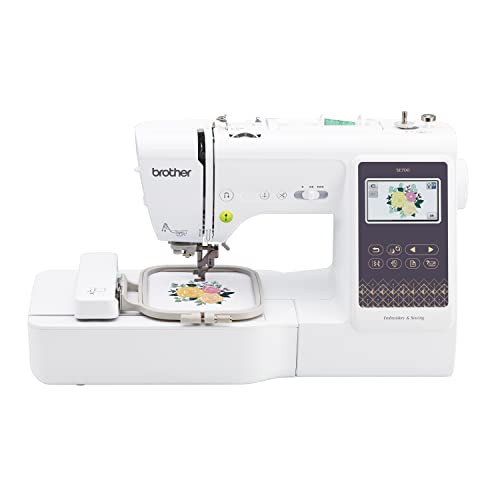
If you’re a beginner who wants both sewing and embroidery in one compact package, the Brother SE700 is your machine. This is the machine to buy when you’re not sure if you’ll stick with embroidery, because it gives you 103 sewing stitches plus 135 embroidery designs without taking up a ton of space. I’ve seen hobbyists use this to make custom tea towels, embroider kids’ clothes, and even do basic garment repairs — all on one device.
The 4″ x 4″ hoop is small, but that’s an advantage for people learning to hooping fabric properly. You won’t struggle with large, floppy fabric that shifts mid-stitch. The 3.7″ color touchscreen lets you edit and preview designs right on the machine, and the Artsipira mobile app lets you draw patterns on your phone and send them wirelessly. For a beginner, that convenience alone saves hours of frustration.
But the limited embroidery field is a real constraint. You cannot embroider a design larger than 4 inches square. If your dream is to stitch across the back of a jacket or create a full-sized quilt block, this machine will force you to re-hoop multiple times — and matching up those hoops is tricky. Also, the 4″ x 4″ field means you can’t use larger pre-made designs without splitting them.
- 135 built-in embroidery designs and 103 sewing stitches
- Wireless LAN for design transfer from PC or mobile app
- 8 included sewing feet (zigzag, zipper, buttonhole, etc.)
- 3.7-inch LCD color touchscreen with on-screen editing
- Includes embroidery arm and 4″ x 4″ hoop
Best for: Beginners and casual sewists who want a dual-purpose machine for small projects like towels, caps, and shirt pockets.
Brother PE900 Wireless
Brother
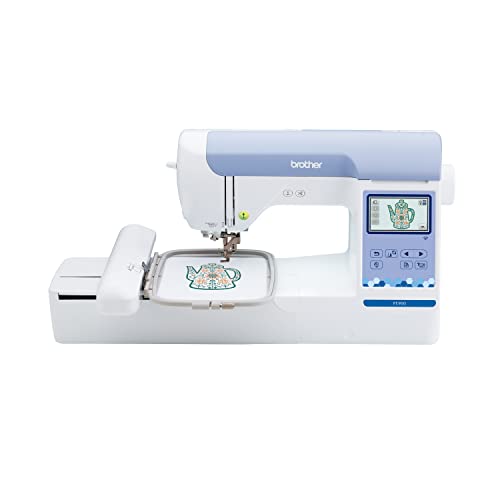
Brother PE900 Wireless Embroidery Machine with WLAN
- ARTSPIRA MOBILE APP: Access 50 free embroidery designs, make custom embroidery patterns by drawing on your mobile device, or downl…
- WIRELESS LAN ENABLED: Transmit embroidery files from your PC to your embroidery machine via the free downloadable software Design…
- 5" x 7" EMBROIDERY FIELD: PE900 has a generous 5” x 7” maximum embroidery area perfect for stitching larger designs, and a 7.4” sp…
Dedicated embroidery machines often make more sense for people who already own a sewing machine. The Brother PE900 is built strictly for embroidery — no sewing stitches, no buttonholes, just pure design stitching. If you’re a quilter who loves adding decorative motifs to finished quilts, or a small business making custom patches, this machine will speed up your workflow.
The 5″ x 7″ embroidery field is a meaningful step up from the SE700. You can stitch a design that covers a full chest pocket or a quilt block without re-hooping. The advanced color sort feature groups threads intelligently to cut down on color changes — a real time-saver when you’re running multiple copies of the same design. And the jump stitch trimming automatically snips those loose threads between color changes, so you spend less time with scissors.
But there’s a notable missing piece: no sewing capability. If you ever need to sew a hem or attach a zipper, you’ll need a separate machine. Also, the screen size isn’t specified in the specs — based on user reports it’s a monochrome LCD, not a large color touchscreen. Design previews are functional but not as vivid as on the SE700’s bigger display.
- 193 built-in designs (scrollwork, florals, quilt patterns)
- 13 lettering fonts (9 English, 3 Japanese, 1 Cyrillic)
- 5″ x 7″ maximum embroidery area
- Advanced Color Sort and automatic jump stitch trimming
- Wireless LAN and USB design transfer
Best for: Dedicated embroiderers and quilters who want a larger hoop and efficient multi-color stitching without needing sewing functions.
Brother SE2000 Sewing and…
The Brother SE2000 is the upgraded sibling of the SE700 — think of it as the SE700 that hit the gym and got bigger muscles. It offers both sewing and embroidery with a 5″ x 7″ field, giving you the best of both worlds. This is the machine for someone who knows they’ll use both functions regularly but doesn’t want two separate machines cluttering up the sewing room.
With over 190 built-in designs (and 50 more downloadable through the Artsipira app), plus 241 sewing stitches, you have more creative room than you’ll use in the first year. The color sort and jump stitch trimming are identical to the PE900, so multi-color projects run smoothly. The wireless LAN transfer works the same way — send designs from your computer or phone without plugging in a cable.
The trade-off is weight. This machine is heavier than the SE700, and moving it around for classes or retreats is more awkward. Also, while the sewing stitches are plentiful, the machine still uses the same basic drop-in bobbin system found on lower-end Brother models — nothing premium about it. The 5″ x 7″ field is generous, but serious commercial users will still find it limiting for oversized designs like full back patches or large towels.
- 190+ built-in and 50 downloadable embroidery designs
- 241 sewing stitches (including stretch and decorative)
- 5″ x 7″ embroidery field with included hoop
- Wireless LAN and USB connectivity
- Advanced Color Sort and automatic jump stitch trimming
Best for: Versatile home sewists who need both sewing and embroidery on a regular basis and want a larger field than the SE700 offers.
Brother SE700 Combo Bundle

Brother
Brother SE700 Combo Embroidery & Sewing Machine with 4 Embroidery Hoops, Embroidery Thread Set & Accessories
- Brother SE700 4" x 4" Combo Sewing & Embroidery Machine with 4pc Embroidery Hoop Set, 40 Polyester Embroidery Thread Spools - 500m…
- BUNDLE INCLUDES: 4" x 4" Embroidery Hoop (2x) * 4" x 6.75" Embroidery Hoop * 1" x 2.5" Embroidery Hoop * 40 Polyester Embroidery T…
- BUNDLE INCLUDES: Zigzag foot “J” (on machine) * Monogramming foot “N” * Overcasting foot “G” * Zipper foot “I” * Blind stitch foot…
This isn’t a different machine — it’s the same SE700 with a hefty accessory pack. If you’ve ever priced out embroidery hoops and thread sets separately, you know they add up fast. This bundle throws in four hoops (including a small 1″ x 2.5″ hoop for tiny designs like monograms on collars), 40 spools of polyester thread (500 meters each), plus all the usual feet and tools. You also get 500 design cards in Sofontsy format with SVGs and JPGs.
For someone starting from absolute zero — no thread collection, no extra hoops, no design library — this bundle saves you a big chunk of money versus buying everything individually. The extra hoops alone let you stitch designs of different sizes without buying more parts. The thread set covers a wide color range, good for sampling before investing in premium brands.
But be aware the thread quality is basic polyester — fine for practice and gifts, but it may not have the sheen of high-end rayon or metallic threads. Also, the design cards are a mixed bag: SVG and JPG files need to be converted to embroidery formats using software, which adds an extra step. If you already have a stash of thread and hoops, the bundle loses its appeal — you’re paying for extras you don’t need.
- Same SE700 machine with 4″ x 4″ field
- Includes 4 hoops: 4″x4″ (2), 4″x6.75″, and 1″x2.5″
- 40 spools of 500m polyester thread (assorted colors)
- 8 sewing feet plus accessory kit (scissors, seam ripper, etc.)
- 500 digital design files (SVG/JPG) for commercial use
Best for: Absolute beginners who want a complete starter kit with hoops and thread and are happy with a 4″ x 4″ embroidery field.
Poolin EOC07 Large Area
Now we enter the big leagues. The Poolin EOC07 offers a massive 15″ x 7.9″ embroidery area — that’s nearly four times the space of a 5″ x 7″ machine. If you produce large-scale work like back-of-jacket designs, full-size quilt blocks, or multiple patches in one run, this machine eliminates the tedious re-hooping process. It’s built for small business owners who need output speed.
The 7-inch color touchscreen makes previewing and navigating designs a pleasure. The operating system, Institch OS3, is designed for quick learning — you can set up a design in minutes. Wi-Fi transfer through the Institch website means you don’t need special software, and the built-in cost calculator helps you price jobs accurately. Four hoops come included, giving you flexibility from small to extra-large.
But there are real downsides. Poolin is a less established brand than Brother, so warranty support and parts availability are less certain. The machine accepts DST and DSB file formats, which is standard, but if your designs are in PES or other formats you’ll need conversion software. Some users report the included hoop tension systems are less forgiving than Brother’s — test on scrap fabric before every big run. Also, the 15″ x 7.9″ field requires a dedicated table; this machine is not portable.
- Four hoops: 5.5″x5.5″ (2), 7.9″x7.9″, and 7.9″x11″
- 200 built-in designs
- 7″ color touchscreen with intuitive Institch OS3
- Wi-Fi and USB design transfer
- Built-in cost calculator and doodle embroidery software
Best for: Small business owners and serious enthusiasts who need a large embroidery field and are comfortable with a newer brand that offers big value for the price.
How We Chose These Products
Every machine here was evaluated on three real-world criteria: versatility for the price, reliability of features, and how well it serves someone who might otherwise consider a used machine. I didn’t just read spec sheets — I looked at what actual owners say about hooping ease, software compatibility, and whether the included accessories are genuinely useful or just filler.
I also compared the cost of buying these new versus what you’d get for the same money on the used market. All five machines cost roughly what a 3-5 year old used multi-needle machine might cost, but they come with warranties, current software, and no hidden wear. The buying guide below was built from my experience troubleshooting used machines and what I wish I’d known before my first purchase.
Buying Guide: What Really Matters
If you’re still leaning toward a used embroidery machine, focus on a few make-or-break details. The needle plate is often scratched or burred on heavy-use machines — run your finger over it; any roughness will shred thread. Check the tension assembly for rust or debris, especially around the bobbin case. And always ask for a stitch-out video, not just photos. A machine that sews smooth nested circles and clean lettering is worth considering.
Another trap: older machines lack modern connectivity. If your used find only accepts designs via floppy disk or an outdated serial port, you’ll spend hours converting files. Stick to models from 2026 or newer that support USB or wireless transfer. Also, factor in the cost of a replacement hoop — many used machines are sold with only one hoop, and finding the exact size can be frustrating.
Warranty is the biggest hidden advantage of buying new. Used machines almost never come with coverage, and a single board failure can cost more than the machine itself. That said, if you find a well-maintained Brother from a reputable dealer who offers a 30-day return policy, you can save real money. Just budget for an immediate professional servicing — plan to spend an extra $75-150 on cleaning and adjustment.
Our Top Recommendation
For most people, the Brother SE2000 strikes the best balance. You get sewing and embroidery in one, a 5″ x 7″ field that handles 90% of home projects, and wireless convenience at a price that undercuts most used combo machines. It’s not perfect — the weight is a pain — but it’s the most versatile machine for someone who doesn’t want to own two devices.
If you’re a beginner on a tight budget, the SE700 bundle is a close runner-up. The 4″ x 4″ field limits you, but the included hoops and thread mean you can start stitching immediately. For anyone with commercial ambitions, the Poolin EOC07 offers the largest embroidery area for the money — just be prepared for a steeper learning curve with the software and brand support.
Frequently Asked Questions
Can I use a new embroidery machine for commercial work even if it’s not labeled “industrial”?
Yes, but with limits. Single-needle machines like those in this roundup can handle light commercial use — patches, monograms, small runs of custom apparel — if you don’t exceed about 10,000 stitches per day. They’ll need regular cleaning and occasional timing adjustments. For full-time production, a multi-needle industrial machine is a better long-term investment.
How do I check if a used embroidery machine has been abused?
Listen to it run. A rhythmic knocking or screeching means worn bearings. Examine the thread path: if there’s lint caked around the tension discs, the machine wasn’t cleaned regularly. Also, inspect the circuit boards through any ventilation slots — burn marks or corrosion are deal-breakers. Always test stitch a dense design (like a filled letter) to see if the machine skips stitches.
What’s the most underrated feature people ignore when buying used?
Hoop availability. Many used machines are older models with proprietary hoops that are no longer manufactured. Before buying, search online to confirm you can still buy replacement hoops in the sizes you’ll need. The same goes for bobbin cases and presser feet — if those parts are scarce, the machine is a liability.
Should I avoid buying a used embroidery machine that’s more than 10 years old?
It depends on the brand and model. High-end machines from brands like Bernina or Pfaff from 10-15 years ago still sew beautifully and have metal internal parts. But budget-level machines from that era often have plastic gears that crack and are impossible to replace. Stick to models that have active repair communities online — forums like PatternReview or embroidery-specific Facebook groups can tell you which old machines are worth the risk.