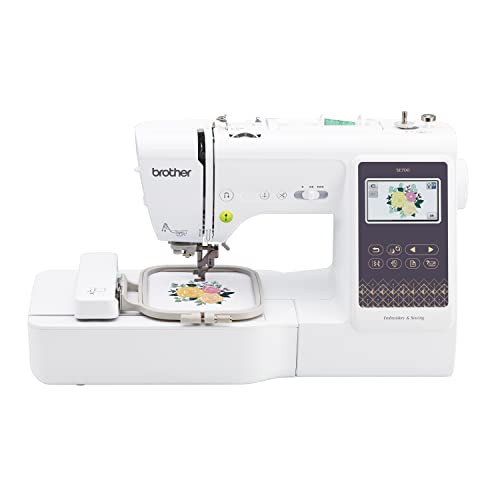
You’ve spent months saving up for a multi-needle embroidery machine. The day it arrives, you clear off the kitchen table, set it up, and start stitching. Then the thread spools roll off the edge. Your scissors vanish under a stack of fabric. The machine vibrates hard enough to rattle your coffee mug. Welcome to the reality of sewing without a proper table.
An embroidery machine table does more than hold your equipment. It keeps supplies organized, reduces vibration, and gives you room to work. The right one can double your usable space and cut set-up time in half. But with options ranging from rolling carts to drop-leaf desks, figuring out which fits your machine and your room takes some digging.
These five tables cover different needs: a stationary cabinet with generous storage, a foldable desk with built-in power, a convertible station that hides away, a large work surface with adjustable platform, and a compact rolling cart with a 60-spool thread holder. One should match your sewing style and space constraints. Let’s walk through them.
Here is a quick look at how the five candidates compare on the features that matter most.
| Features | Sauder Sewing Cart | Giantex Folding Table | Best Choice Station | Vividwood Foldable Table | Jchccu Rolling Cart |
|---|---|---|---|---|---|
| Material & Build | Engineered wood, soft white finish | MDF with metal frame | MDF with metal hinges | Thickened top, powder-coated frame | Metal frame, premium MDF |
| Drop-Leaf Design | Yes | Yes | Closed dimensions 23″L | Detachable side shelf | No (cart style) |
| Storage Features | 2 bins + hidden shelf + adjustable shelves | 3 side trays + open shelf + charging station | 2 rows pegs + 2 trays + interior shelf | 2 cloth drawers + lower shelf + side shelf | 3 fabric drawers + 60-spool holder + hooks |
| Mobility | None (stationary) | 5 casters, 3 lockable | 4 lockable wheels | 6 floor levelers (no wheels) | 4 wheels, 2 brakes |
| Best For | Stationary craft room with lots of supplies | Small apartments needing portability | Multipurpose home office / side table | Large projects, ample legroom | Dedicated embroidery cart, thread organization |
Sauder Sewing Cart
Sauder
Sauder Miscellaneous Storage Sewing Cart, Drop-Leaf Craft…
- CREATE YOUR IDEAL CRAFTING SPACE – Embrace your creativity with a dedicated area for all your sewing and crafting projects, ensuri…
- SPACIOUS TOP SURFACE FOR ALL YOUR SUPPLIES – The generous tabletop accommodates your sewing machine and craft supplies, making it…
- EXPANDABLE WORKSPACE WITH DROP-LEAF DESIGN – Need more room? The drop-leaf feature offers additional workspace, perfect for small…
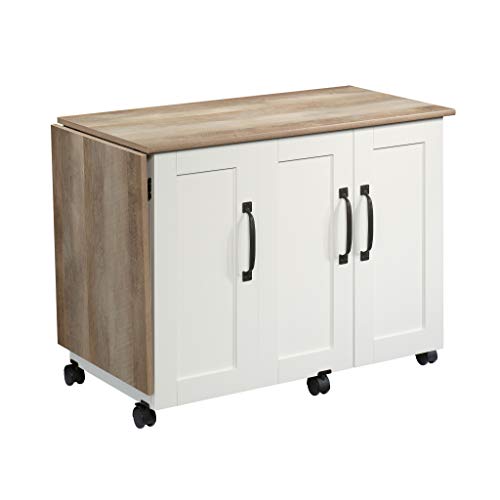
The Sauder Miscellaneous Storage Sewing Cart is the one you pick when you want your sewing station to look like a piece of furniture, not a utility rack. It’s a drop-leaf cabinet with a soft white finish and oak accents. The hidden shelf behind the doors is sized to hold a standard sewing machine, and the two pull-out storage bins catch thread remnants and small tools. This table is built for someone who sews in a living room or a dedicated craft room and doesn’t need to move the machine often.
The standout feature is the adjustable shelving inside the main cabinet. You can rearrange the shelves to store bulky items like fabric bolts or a mini iron. The drop-leaf adds 50% more work surface when you flip it up. For someone who does garment sewing or quilting alongside embroidery, that extra few inches of tabletop makes a real difference. The wood construction feels solid enough to dampen machine vibration, though the company doesn’t specify a weight limit.
The trade-off is size and lack of wheels. This table is large and stationary. If you work in a tight space or need to clear the floor for other activities, the Sauder cart locks you into one spot. Assembly also takes time—owners report an hour or two with the included instructions. There is no charging station or built-in power, so you’ll run cords across the top or down the side. It’s a lovely piece, but it expects you to commit to a fixed location.
- Drop-leaf expands workspace when needed
- Two pull-out storage bins and adjustable shelves
- Hidden shelf behind doors fits most standard sewing machines
- Soft White with Lintel Oak accents, furniture-grade look
- No casters; stationary design only
Best for: Sewers who value aesthetics and need a permanent, furniture-style station with ample storage.
Giantex Folding Table

GIANTEX
GIANTEX Folding Sewing Table with Charging Station,…
- [Smart Storage & Organization]: Keep all your sewing supplies within reach! This folding sewing table features a spacious tabletop…
- [Foldable Space-Saving Design]: Perfect for small spaces and multipurpose rooms, this drop-leaf sewing table easily folds down whe…
- [Built-in Power Strip with USB & Type-C]: Stay powered while you create! This sewing cabinet includes a built-in charging station…
If the Sauder cart feels like too much commitment, the Giantex Folding Sewing Table is the opposite. It folds flat to 35 inches long and 20 inches wide, which means you can stash it in a closet or behind a door. When open, it offers 45.5 inches of workspace with a drop-leaf on one side. Three built-in side trays hold thread, scissors, and marking tools within reach. There is also an open shelf underneath for a sewing box or fabric stack. This table is made for apartment dwellers, dorm students, or anyone who shares a space.
The built-in power strip sets it apart. Two AC outlets, a USB port, and a Type-C port live on the side panel. You can plug in your machine, a task light, and your phone charger without crawling under the desk. The five caster wheels let you roll the table around the room. Three of them lock, so the table stays put while you work. The wheels also make it easy to position the table under a window for natural light, then roll it back to a corner when you are done.
Some limitations show up in daily use. The work surface is narrow at 16 inches deep. A large embroidery machine with a 12-inch arm may hang off the back edge. The side trays are plastic and feel a bit light; you might not want to load them with heavy bobbins or metal rulers. The table height is 31 inches, which works for most chairs but may feel low if you prefer a taller drafting-style setup. Those downsides are manageable for occasional use, but heavy daily sewing might wear on you.
- Folded dimensions: 35″L x 20″W x 31″H, easy to store
- Built-in charging station with USB, Type-C, and 2 AC outlets
- 5 smooth-rolling casters, 3 lockable
- Three side storage trays plus an open lower shelf
- Drop-leaf expands work area
Best for: Space-conscious crafters who need a mobile, foldable table with power at their fingertips.
Best Choice Products Station

Best Choice Products
Best Choice Products Folding Sewing Table Multipurpose…
- STORAGE SPACE: Create fashion pieces in a breeze with a designated spot for yarn, pins, scissors, and materials in 2 rows of pegs,…
- MULTIPURPOSE STATION: Use your station to tailor clothes, or use your space for other crafts, and even as a convenient work desk
- MOBILE SPACE-SAVING DESIGN: When not using your table, wheels with casters make it easy to move your station to a convenient spot…
The Best Choice Products Folding Sewing Table looks like a narrow sideboard when closed, but open it up and you get a 46-inch-long work surface with pegboard-style storage. Two rows of pegs let you hang spools of thread or rolls of ribbon. Two attached storage trays hold smaller items. The interior shelf is large enough for a sewing machine or a stack of fabric. Magnetic door locks keep everything secure when you fold the table back into its closed shape. The closed dimensions (23 inches long) mean it takes up barely more space than a nightstand.
The convertible design is the main draw. It transitions from a compact side table to a full sewing station in about ten seconds. The metal hinges and MDF build work together to keep wobble under control. The lockable casters let you move it from the living room to the bedroom, then lock it down. Several users mention that the pegboard arrangement is handy for keeping current-project threads visible and untangled. The magnetic doors are a small touch, but they prevent contents from spilling out when you roll the table across a carpet seam.
The narrow depth is the biggest trade-off. At 14.75 inches deep, you cannot place a large embroidery machine in the center without the front or back hanging over. The pegboard holes are spaced at a standard 1-inch pattern, but the included pegs are basic plastic ones. Some owners swap them for metal pegboard hooks from a hardware store. The table also lacks a built-in power outlet, so cord management falls on you. It is a clever space-saving piece, but only if your machine fits within that 14.75-inch depth.
- Closed size: 23″L x 14.75″W x 31″H, opens to 46″L
- Pegboard with two rows of pegs for thread and tools
- Magnetic door locks and lockable wheels
- Interior shelf for machine or supplies
- MDF construction with metal hinges
Best for: Those who need a sewing table that disappears completely when guests come over.
Vividwood Foldable Table

Vividwood
Vividwood Foldable Sewing Machine Table, Multipurpose Sewing…
- 【Multipurpose Folding Sewing Table】 :Featuring a sleek design with a 56.7" wide tabletop and a 8.6" wide foldable side shelf. Perf…
- 【Adjustable Platform Shelve & Expandable Table】:Unique platform shelf (22.8" W × 10.6" D with 33 lbs Weight Limit) adjusts to acco…
- 【Ample Storage Space】:The sewing machine table includes 2 cloth storage drawers, a opening lower shelf and a side shelf to store s…
The Vividwood Foldable Sewing Machine Table is the largest of the five and the only one with an adjustable platform for the sewing machine. That platform measures 22.8 inches wide and 10.6 inches deep and can be raised or lowered to match the base height of your embroidery machine. This feature alone addresses one of the biggest frustrations: a machine that sits too high or too low relative to the table surface. When you are not sewing, the platform can hold a laptop or a keyboard. The overall table is 56.7 inches wide and 23.6 inches deep, giving you a serious amount of real estate.
The storage here includes two cloth drawers, an open lower shelf, and a detachable side shelf. The side shelf can be removed if your room cannot accommodate the full width. The cloth drawers are lightweight but useful for patterns, stabilizers, or small cutting tools. Six floor levelers let you adjust the table’s feet so it sits rock-solid on uneven floors. That is a nice touch for older homes with sloping hardwood. The metal frame and thickened tabletop hold up well under heavy machines; the company rates the platform at 33 pounds.
The downsides are minor but worth noting. This table does not fold flat—the side shelf detaches, but the main frame stays assembled. You cannot stash it in a closet like the Giantex or Best Choice models. There are no wheels, so moving it requires lifting. The cloth drawers also lack dividers, so small items like needles and buttons may shift around. Assembly is straightforward according to most feedback, but the instructions could be clearer. If you have the permanent space for it, the Vividwood delivers the most functional work surface.
- Overall dimensions: 56.7″W x 23.6″D x 30″H
- Adjustable platform (22.8″W x 10.6″D, 33-lb limit)
- Two cloth drawers plus lower shelf and detachable side shelf
- Six floor levelers for stability on uneven floors
- Thickened tabletop with powder-coated metal frame
Best for: Embroidery enthusiasts with dedicated space who want a flat, height-matched work surface for large machines.
Jchccu Rolling Cart

Jchccu
Sewing Table with 60 Spools Thread Holder…
- 【Ultimate Sewing Table Cart】Our all-in-one sewing cart could store all your DIY craft stuff. The top shelf can hold embroidery mac…
- 【Great Craft Workstation】This convenient craft workstation keeps your sewing supplies organized and accessible. Its four universal…
- 【Convenient Thread Holder】This thread holder features a double-sided design and can hold up to 60 spools of thread. The threads ar…
The Jchccu Sewing Table with 60 Spools Thread Holder takes a different approach. It is a rolling cart, not a desk. The top shelf holds your embroidery machine. The middle shelf stores fabric, hoops, and a thread storage box. Three fabric drawers handle scissors, rulers, and smaller accessories. Two storage hooks on the side hold scissors or a measuring tape. The real centerpiece is the double-sided thread holder mounted on top, which organizes up to 60 spools in neat rows. This cart is for the sewist who values quick access to thread colors over a large flat work surface.
The portability is excellent. Four universal wheels roll smoothly across tile or laminate, and two of them have brakes. You can wheel the cart next to your chair for a project, then push it against a wall when you are done. The overall footprint is compact: 23.6 inches wide and 11.8 inches deep. That is small enough to fit beside a desk or in a closet gap. The weight capacity is listed at 200 pounds, which means you can load it up with a heavy multi-needle machine plus a stack of fabric without worrying about collapse. The water-resistant MDF surface is easy to wipe clean after a thread-tangling session.
The main limitation is work surface. The top shelf is open, so your machine sits right on it, but there is no overhang to rest your hands or fabric. You will need a separate desk or table for laying out projects. The thread holder works wonderfully for 60 spools, but if you use cones or larger thread tubes, they may not fit on the pegs. The drawers are fabric, so they sag under heavy loads. A wood or plastic tray inside would have been smarter. Still, as a dedicated embroidery cart, it keeps everything in one rolling unit—thread, tools, and machine.
- Compact size: 23.6″W x 11.8″D x 30″H
- 60-spool double-sided thread holder
- Three fabric drawers plus two storage hooks
- Four universal wheels with two brakes
- Weight capacity up to 200 lbs
Best for: Embroidery sewists who want a mobile, space-efficient cart that keeps 60 thread spools tidy and within arm’s reach.
How We Chose These Products
We started by looking at what actually trips up real embroidery machine owners. The biggest complaints are machine size compatibility, vibration, lack of storage, and tables that take up too much room. We searched for tables that address at least one of these pain points directly. Each product had to offer a clear use case rather than just a pretty photo. We also favored tables with adjustable features, built-in organization, or space-saving designs over bare desks.
User feedback on assembly, stability, and daily use was considered, though specific review scores are not cited here because they change constantly. Common threads across many setups include the need for a level surface and easy access to supplies. The five tables we chose cover a range of prices and layouts. Prices for embroidery machine tables vary widely, from budget options around $100 to premium pieces over $300. Checking current Amazon pricing before purchasing is always wise, as deals shift frequently. The table that works for your neighbor may not suit your machine’s footprint or your room’s dimensions.
Buying Guide: What Really Matters
Before buying, measure your embroidery machine’s footprint. Some compact home machines are only 15 inches wide, but multi-needle commercial models can stretch 30 inches or more. A table that is too narrow will leave the machine overhanging, which stresses the seams and makes it unstable. Also note the machine’s height with the arm raised. Many tables are 30 to 31 inches tall, which matches a standard desk chair. If you use a lower sewing chair, look for an adjustable platform like the Vividwood model or add a custom riser.
Stability matters more than you think. A lightweight table amplifies vibration, which shows up as wobbly stitches and extra noise. Tables with a metal frame or thick MDF top tend to absorb some of that shake. Lockable casters help too—they prevent the table from creeping across the floor as the machine works. If your table sits on carpet, the levelers or brakes become essential. For stationary setups, a table without wheels often provides a more solid base.
Storage is the second big decision. Dedicated drawers and trays save you from hunting for tools mid-project. But too much storage can eat into legroom. A cart like the Jchccu keeps everything at the side, while a cabinet like the Sauder hides supplies behind doors. Think about your workflow. Do you like to have every spool visible, or do you prefer a clean surface that you reveal as you work? The answer points you toward either open thread holders or covered shelves.
DIY Options and Custom Solutions
Not everyone buys off the shelf. Some hobbyists prefer to build their own embroidery machine table. A basic approach starts with a sturdy wooden desk from a thrift store. Add a drop-leaf hinge to one side for extra fabric support. Install a shelf underneath to hold a thread box or a cutting mat. If you want height adjustment, use furniture risers or adjustable casters. One clever DIY trick involves mounting a pegboard on the back panel to hang tools and thread. The cost is often lower than a dedicated sewing table, and you can customize the dimensions exactly to your machine.
Another route is to repurpose a kitchen island or a utility cart. Add a padded mat to reduce vibration. Install a power strip on the side. The key is ensuring the table is deep enough that the machine does not teeter on the front edge. If you go the DIY route, reinforce the joints with metal brackets. Most store-bought tables in our roundup use metal frames for a reason. You can match that stability with a little planning.
Keeping Your Table in Good Shape
An embroidery machine table takes daily wear. Fabric dust, thread bits, and spilled seam rippers collect in crevices. Every few weeks, vacuum the surface and the storage compartments. Wipe down MDF or laminate tops with a damp cloth and dry immediately to prevent swelling. For tables with metal legs, check the screws and bolts every month. Vibration from the machine works them loose over time. A quick tighten with a screwdriver saves you from a wobbly fall.
Castors need attention too. Hair and lint wrap around wheel axles and jam them. Remove the wheels annually and clean out the debris. If you have lockable casters, test the brake every few weeks. If it sticks, a drop of sewing machine oil on the mechanism helps. These small habits keep your table stable and extend its life well beyond the first year.
Our Top Recommendation
If you need one table that suits most home embroidery machines, the Vividwood Foldable Table wins for adaptability and work surface. The adjustable platform solves the height mismatch that plagues many setups, and the large surface lets you lay out a quilt top alongside your machine. If space is tight and you want portability, the Giantex Folding Table with its built-in charging station and locking casters is the runner-up. For those who organize by thread color and want a mobile cart, the Jchccu Rolling Cart does that job better than any desk-style table could.
Frequently Asked Questions
Can I use a multi-needle embroidery machine on these tables?
It depends on the machine’s size and weight. The Vividwood table’s platform supports up to 33 pounds, and the Jchccu cart can hold 200 pounds. For a 12-needle machine weighing 50 pounds or more, the Jchccu cart or a heavy-duty stationary table works fine. The Sauder and Best Choice tables may be too narrow or light for a large, heavy machine.
What is the ideal table height for embroidery?
Most embroiderers prefer a height between 29 and 31 inches. This lets you rest your forearms comfortably while controlling the fabric. If the table is too high, you hunch your shoulders. Too low, you lean forward. The Vividwood’s adjustable platform lets you fine-tune the machine elevation. For fixed-height tables, add a footrest or raise your chair to find a comfortable angle.
How can I stop my machine from vibrating on the table?
Place a rubber mat or a silicone baking pad under the machine. Some tables, like the Vividwood and Sauder, are heavy enough to absorb vibration naturally. For lighter tables, add a stabilizing bar or a sandbag on the lower shelf. Also make sure the table feet are level and locked in place. Uneven legs amplify shaking.
Can these tables work for other crafts like quilting or scrapbooking?
Yes, several of them are designed as multipurpose stations. The Giantex and Best Choice tables have flat surfaces and storage trays that suit scrapbooking, beading, or small quilting projects. The Vividwood’s large surface is good for cutting fabric. The Jchccu cart is less practical for laying out large items, but its thread holder is useful for any craft that uses multiple spools of thread or yarn.