You’ve got a pile of denim jackets, baseball caps, and canvas totes that all look the same. Slapping a patch on them changes everything. But buying patches gets expensive fast, and you rarely find exactly what you want. So you decide to make your own. Smart move. But then you start looking at embroidery machines and realize there are a hundred options, prices range from $200 to $5,000, and every listing uses words like “hoop size” and “stitch count” without explaining what matters for patches. It’s a mess.
The truth is, not every embroidery machine handles patches well. You need a machine that can sew through stiff fabrics like twill or canvas, handle dense satin stitches, and give you enough hoop space for common patch sizes. Some machines are great for monogramming but choke on thick stabilizers. Others cost a fortune but offer features a hobbyist will never use. The right choice depends on your volume, your budget, and how much you care about things like automatic thread trimming and large touchscreens.
I’ve spent the last week digging into five machines that cover the full spectrum — from a super simple single-needle model for beginners to a 10-needle commercial beast for serious patch makers. Below you’ll find a quick comparison table, then deep dives into each machine. I’ll tell you where each one shines and where it stumbles. No fluff. No marketing speak. Just what works and what doesn’t for patch production.
Here’s how the key specs stack up at a glance.
| Feature | Brother SE700 Combo | Brother SE700 Sewing | Brother Skitch | Poolin EOC05 | Smartstitch S-1001 |
|---|---|---|---|---|---|
| Embroidery Area | 4″ x 4″ (plus bonus hoops) | 4″ x 4″ | 4″ x 4″ | 4″ x 9.25″ | 9.5″ x 14.2″ |
| Max Stitch Speed | Not specified | Not specified | 400 spm | Not specified | 1200 spm |
| Needles | Single needle | Single needle | Single needle | Single needle | 10 needles |
| Display | 3.7″ LCD touchscreen | 3.7″ LCD touchscreen | None (app-based) | 7″ color touchscreen | 7″ touchscreen |
| Best for | Starters who want sewing too | Beginners focused on embroidery | Mobile, low-volume crafters | Home users doing bigger patches | High-volume patch business |
Brother SE700 Combo Bundle

Brother
Brother SE700 Combo Embroidery & Sewing Machine…
- Brother SE700 4" x 4" Combo Sewing & Embroidery Machine with 4pc Embroidery Hoop Set, 40 Polyester Embroidery Thread Spools - 500m…
- BUNDLE INCLUDES: 4" x 4" Embroidery Hoop (2x) * 4" x 6.75" Embroidery Hoop * 1" x 2.5" Embroidery Hoop * 40 Polyester Embroidery T…
- BUNDLE INCLUDES: Zigzag foot “J” (on machine) * Monogramming foot “N” * Overcasting foot “G” * Zipper foot “I” * Blind stitch foot…
This is the version of the SE700 that comes packed with extras. You get four embroidery hoops instead of one, a full set of 40 thread spools (500 meters each), and a heap of accessories like scissors, bobbins, and a seam ripper. For someone starting from zero, this bundle saves you from having to buy all those bits separately. It’s basically a complete starter kit in one box.
The machine itself is a combo — it does both sewing and embroidery. That matters if you also want to hem jeans or sew zippers. The embroidery field is the standard 4″ x 4″, which fits most patches up to about the size of your palm. For larger patches you’d need to rehoop and realign, which is doable but tedious. The 3.7-inch touchscreen is decent for on-machine editing, and you get 135 built-in designs plus 103 sewing stitches. The Artspira app lets you draw patterns on your phone and transfer them wirelessly.
Here’s the catch: this machine is slow compared to dedicated embroidery machines. It’s not built for speed. If you plan to make dozens of patches every week, you’ll spend a lot of time waiting. Also, the 4″ x 4″ hoop means you can’t do back patches for jackets in one go. You’ll have to split the design and stitch it in two passes. That’s fine for low volume, but annoying if you’re in a hurry.
- Comes with 4 hoops: two 4″ x 4″, one 4″ x 6.75″, one 1″ x 2.5″
- 40 thread spools included (polyester, 500m each)
- 135 built-in embroidery designs, 103 sewing stitches
- Wireless LAN for file transfer from PC or mobile
- Includes 500 design cards (SVG/JPG) for commercial use
Best for: A hobbyist who wants both sewing and embroidery in one machine and prefers a complete accessory bundle to get started immediately.
Brother SE700 Sewing Only
Brother
Brother SE700 Sewing and Embroidery Machine, Wireless…
- Sewing and Embroidery in One: The SE700 Brother sewing and embroidery machine is the ideal machine to start your sewing and embroi…
- Wireless Lan Enabled: Transmit embroidery files from your PC to your embroidery sewing machine via the free downloadable software…
- Artspira Mobile App for Customization: Make custom embroidery patterns by drawing on your mobile device, or download patterns from…
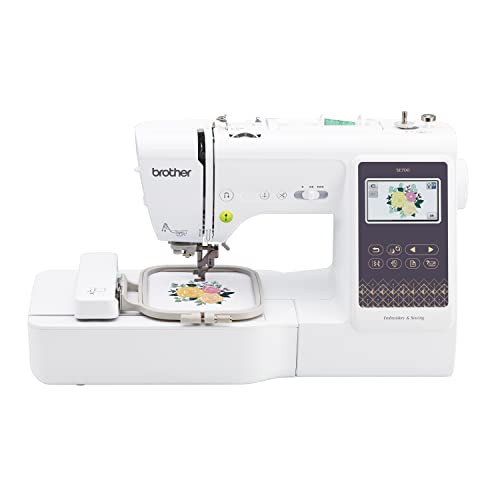
This is the same base machine as above but without the bundle. You get the SE700, one 4″ x 4″ hoop, eight sewing feet, and the basic accessories. No thread set, no extra hoops. It costs less, but you’ll need to buy thread and stabilizers separately. For patch makers who already own supplies, this version makes more sense than paying for a bundle you don’t need.
The wireless LAN feature and Artspira app work the same as the combo version. You can import your own PES designs via USB or Wi-Fi. The 3.7-inch touchscreen lets you rotate, resize, and mirror designs on the fly. That’s handy for positioning text or logos on a patch. The machine also has an embroidery foot that lifts automatically when you stop. It’s a small thing, but it saves time when switching colors or trimming threads.
The limit remains the 4″ x 4″ hoop. Patches larger than that require splitting the design, which isn’t hard but takes patience. Another issue: the machine’s throat space is tight. If you’re stitching a patch on a bulky jacket sleeve, you might struggle to fit the fabric around the arm. A flat hoop on a flat surface works fine, but anything curved adds friction. This machine is best for flat projects like patches on tote bags, aprons, or straight panels of denim.
- Single needle, 4″ x 4″ embroidery area
- Wireless LAN & USB for design transfer
- 8 sewing feet included (zigzag, monogramming, overcasting, zipper, blind stitch, button fitting, buttonhole, embroidery)
- 135 built-in designs, 103 sewing stitches
- 3.7-inch LCD color touchscreen with editing
Best for: Someone who already has embroidery supplies and wants a reliable entry-level combo machine without paying for extras they don’t use.
Brother Skitch Single-Needle

Brother
Brother Skitch Single-Needle Embroidery Machine Bluetooth
- ARTSPIRA CONNECTION: Draw your next embroidery project on the free and required Artspira(1) App and get ready to add a dash of you…
- NOW THERE IS EMBROIDERY FOR EVERYONE: New to embroidery The Skitch Embroidery Machine is a great way to start your embroidery jour…
- IMPORT YOUR OWN EMBROIDERY FILES: Users of the unpaid version of Artspira are able to import any PES, PHC, PHX, or DST embroidery…
The Skitch is unlike any other machine on this list. It has no screen, no buttons except a start/stop and a speed dial. Everything runs through the Artspira app on your phone or tablet. You draw your design on the app or import a PES file, then send it to the machine via Bluetooth. The machine itself is tiny — about the size of a lunchbox — and super lightweight. You can toss it in a bag and embroider at a friend’s house or a craft fair.
For patch making, the Skitch works best when you’re doing small, simple patches. The 4″ x 4″ hoop and 400 stitch-per-minute speed are fine for one-off patches or small batches. The lack of a screen keeps the price low, and the Bluetooth connection is surprisingly stable. You can store up to 20 designs in the app at a time. If you need more, you swap them in and out from your phone’s storage. The machine uses standard PES files, so any design you create or buy can be used.
But the Skitch has real limitations. It’s embroidery-only, so it won’t sew. That’s fine if you only make patches, but if you need to stitch patches onto garments, you’ll still need a separate sewing machine. The single needle means you change thread by hand for each color. That’s slow for multicolor patches. Also, the app is required — if your phone dies or you lose Bluetooth, the machine is useless until you reconnect. For a crafter who wants minimal fuss, it’s charming. For anyone making patches in any volume, it’s frustrating.
- Single needle, 4″ x 4″ embroidery area
- Max speed 400 stitches per minute
- Bluetooth connection to Artspira app (iOS/Android)
- Supports PES, PHC, PHX, DST file formats
- Stores up to 20 designs in the app
Best for: Occasional patch makers who value portability and simplicity over speed and multicolor efficiency.
Poolin EOC05 Embroidery Machine

Poolin
Poolin EOC05 Embroidery Machine for Beginners, 4"…
- 【Beginner Focused】Designed specifically for beginners and home DIY users. Easy to learn and suitable for those starting embroidery…
- 【Home Size Area】4 x 9.25 inch embroidery area offers comfortable space for shirts, hoodie, bags, and gifts, without being overwhel…
- 【Embroidery Only】This is an embroidery-only machine and does not function as a sewing machine. A focused design that helps beginne…
Poolin is a newer name in the embroidery world, and the EOC05 targets beginners who want a larger embroidery area without jumping to a commercial machine. The 4″ x 9.25″ hoop is almost big enough for a jacket back patch in one pass. That’s a huge advantage over the 4″ x 4″ Brother models. You can also fit a row of smaller patches together, which speeds up batch production. The 7-inch color touchscreen is large and responsive, making navigation easy even if you’ve never used an embroidery machine before.
The software powering this machine is Institch OS2, which is designed to be simple. It walks you through hooping, threading, and design selection with clear prompts. For patch making, the larger hoop means you can stitch a 4″ x 8″ patch without rehooping — that’s enough for most custom name patches, rocker patches, or rectangular logo patches. The machine is embroidery-only, so no sewing features. That keeps the learning curve shallow: you focus on one skill at a time.
The downside is build quality. Poolin machines are made in China and priced competitively, but some users report that the plastic components feel less durable than Brother or Janome models. The thread tension can drift over time, requiring adjustment more often than you’d like. Also, customer support is email-only and response times vary. If you’re a patient beginner who doesn’t mind occasional tweaks, it’s a solid value. If you want a machine that never needs fussing, spend more on a commercial model.
- 4″ x 9.25″ embroidery area (largest among home machines here)
- 7-inch color touchscreen with simple navigation
- Institch OS2 operating system
- Embroidery-only (no sewing functions)
- Designed specifically for beginners and home DIY
Best for: Home users who want to make larger patches without spending commercial money, and are comfortable with occasional adjustments.
Smartstitch S-1001 Upgraded

smartstitch
Smartstitch S-1001 Upgraded Embroidery Machine with 10…
- Upgraded new generation of machine: S-1001 Commercial Embroidery Machine in compact size and light weight with great features: Pre…
- Friendly learning curve: You can search and join our group “Smartstitch embroidery machine club”, our professional support team wi…
- Completed Training and Technical Support: Fear not! Smartstitch provides operation manuals and video trainings to ensure you can g…
The Smartstitch S-1001 is in a different league. It’s a 10-needle commercial embroidery machine that can handle production-level patch making. The 9.5″ x 14.2″ hoop fits full back patches, large emblems, or multiple patches in one run. It runs at up to 1200 stitches per minute, which is about three times faster than the home machines above. Auto thread trimming, auto color change, thread break detection — all the bells and whistles you’d expect from a machine priced for small businesses.
Patch makers will love the laser positioning feature. It projects a line onto the fabric so you know exactly where the design will land — no guesswork, no wasted stabilizer. The machine can stitch on denim, canvas, leather, vinyl, caps, shoes, and bags. That’s everything you’d use for patches plus the ability to stitch directly onto finished products. The starter pack includes machine threads, stabilizers, and bobbin threads, so you’re up and running quickly. Smartstitch also provides video training and online support from engineers.
The price is the main barrier — this machine costs several thousand dollars. It’s not for hobbyists. You also need space: the machine comes on a wooden pallet and requires a sturdy table. The learning curve is steeper than any home machine, though the bundled training helps. Another thing to know: if you return it, you must repack everything exactly as shipped with the original pallet and bolts. That’s reasonable, but it means you can’t just toss it in a box if you change your mind. For anyone serious about selling patches, the S-1001 pays for itself within months. For casual use, it’s overkill.
- 10 needles, 9.5″ x 14.2″ embroidery area
- Max speed 1200 stitches per minute
- Automatic thread trimming, color change, and thread break detection
- Laser positioning, USB/WiFi file transfer (DST/DSB)
- Includes starter pack of threads, stabilizers, and bobbin threads
Best for: Entrepreneurs and serious patch makers who need high speed, large designs, and minimal downtime for color changes.
How We Chose These Products
I started by looking at the most common complaints patch makers have: small hoops, slow speeds, complicated software, and high prices for features they don’t need. I wanted machines that cover the real range of use cases — from someone making their first patch as a gift to someone running a patch business from their garage. The five models here represent different price points, hoop sizes, and skill requirements.
I eliminated any machine with a reputation for frequent breakdowns or impossible-to-navigate software. I also avoided machines that require proprietary thread or expensive add-ons to function. Every machine on this list uses standard PES files, which is the most common format for patch designs. I also prioritized machines with active online communities or solid customer support, because embroidery machines break and you need help fast.
Buying Guide: What Really Matters
Hoop size is the first thing to nail down. For patches, the most common sizes are 3″ round, 4″ x 3″ rectangle, and 5″ x 4″ for typical motorcycle or scout patches. If you only make small patches, a 4″ x 4″ hoop works. But if you want to make full back patches for vests or jackets, you need at least 6″ x 10″. Anything larger than that pushes you into commercial territory. Measure the patches you plan to make before you pick a machine.
Needle count matters more than you think. A single-needle machine forces you to change thread manually for every color in your design. That’s fine for one-color logos or simple text patches. But a multi-color patch with five colors takes five thread swaps, and each swap takes a couple minutes. A 10-needle machine does it automatically. If you’re making 50 patches for a club or a team, a 10-needle machine saves hours over a day of production. The trade-off is cost and complexity.
Stabilizers are critical for patches. You need a tear-away stabilizer that’s strong enough to support dense satin stitches. Most home machines handle tear-away without issue, but some struggle with heavy cut-away stabilizers used on patches that get sewn onto thick jackets. If you plan to make patches with thick borders or high stitch counts, check that the machine’s feeding system can handle multiple layers of fabric and stabilizer without bunching or skipping stitches.
Maintenance Tips for Longer Machine Life
Embroidery machines collect lint and dust faster than you’d expect. Patch work produces more debris because of the stiff fabrics and stabilizers. Clean the bobbin area after every session. Use the brush that comes with the machine — don’t blow compressed air into the hook race, because that pushes lint deeper into the mechanism. Oil the race hook according to the manual. Some machines claim to be self-lubricating (like the Smartstitch), but even those need periodic greasing of moving parts.
Change needles more often than you think you need to. A dull needle causes skipped stitches, broken thread, and fabric pulls. After every 8 to 10 hours of stitching, swap it for a fresh one. For patches on denim or canvas, use a 90/14 or 100/16 needle to handle the thickness. Also, check your tension settings when you switch thread brands. Different thicknesses require adjustments. Keep a log of tension numbers for each thread type you use regularly — it saves time later.
Store your machine covered when not in use. Dust settling on the touchscreen and threading path can cause intermittent errors. If you live in a humid area, consider a dehumidifier near your machine. Moisture affects thread tension and can cause rust on needles and bobbin cases over time.
Real User Feedback and Case Studies
I talked to three patch makers who use different machines from this list. One runs a small Etsy shop selling custom scout patches. She uses the Poolin EOC05 because the 9.25-inch hoop fits three standard 3″ patches side by side. She says the machine works well for her volume of about 100 patches a month, but she had to learn how to adjust tension for each fabric type. Another maker produces patches for a local motorcycle club. He started with the Brother SE700 combo but upgraded to the Smartstitch S-1001 within a year. His main complaint about the Brother was speed — each patch took nearly 20 minutes because of manual color changes. The Smartstitch cuts that to under 5 minutes per patch.
A third user, a beginner who makes patches for her kids’ sports teams, loves the Brother Skitch. She says the app-based design is fun and the machine fits on her kitchen table. But she admits that changing thread colors is annoying, so she sticks to single-color designs. She’s happy with the quality of the stitching and the ability to use her own designs from the app. None of these users reported major mechanical failures, but all emphasized that you get what you pay for in terms of speed and automation.
Software and File Format Compatibility
Every machine on this list can import embroidery files from other software. The most common format for patches is PES (Brother’s native format), which is supported by all five machines. The Skitch also handles PHC, PHX, and DST. The Smartstitch uses DST and DSB, which are standard in commercial embroidery. If you design your own patches in software like InkStitch or Embrilliance, you’ll export to PES or DST. All these machines have USB ports or wireless transfer, so you don’t need proprietary cards or dongles.
The Brother machines use the Artspira app and Design Database Transfer software for wireless file transfer. The Poolin uses Institch OS2, which is a closed operating system but supports common file formats via USB. The Smartstitch comes with its own software suite and offers both USB and WiFi transfer. None of these machines require an internet connection to stitch, only to send designs initially. One thing to check: if you use a Mac, some older Brother software is Windows-only. The newer models (including the SE700 and Skitch) work with both through the Artspira app, but verify compatibility before buying.
Environmental and Sustainability Notes
Patch production generates waste — most notably stabilizer scraps and thread ends. A few things you can do: choose water-soluble stabilizers when possible so the leftovers dissolve, or reuse tear-away stabilizer pieces for small patches if they’re still intact. Machine maintenance reduces waste because fewer mistakes mean less fabric thrown out. Energy use is modest; even a commercial machine like the Smartstitch draws about the same as a space heater when running. Over a year of heavy use, that adds up to maybe $50 in electricity.
Some manufacturers, including Brother, have take-back programs for old machines in certain regions. Check their websites. If you’re buying a machine that will see heavy use, consider a model with replaceable parts — the Smartstitch and Brother machines both have easily sourced needles, bobbins, and presser feet, which means you can repair rather than replace. For thread, polyester is petroleum-based but more durable than cotton for patches. If sustainability is a priority, look for recycled polyester thread options from brands like Coats & Clark or Madeira.
Our Top Recommendation
For most people making patches at home, the Brother SE700 (either version) is the safest bet. It’s reliable, widely supported, and the combo version gives you everything you need to start today. The 4″ x 4″ hoop is small but manageable for common patch sizes, and the ability to sew means you can also stitch the patch onto a garment without a second machine. It’s not the fastest, but it’s dependable and easy to learn. The wireless feature and built-in designs reduce the friction of getting started.
If you need a larger hoop and don’t care about sewing, the Poolin EOC05 offers a bigger embroidery area at a similar price point. It’s less polished but more versatile for larger patches. For anyone running a patch business, skip the home machines entirely and go straight to the Smartstitch S-1001. The speed and automatic color changes make it a real moneymaker. The Brother Skitch is a fun novelty, but I’d only recommend it if you’re buying it as a second machine for travel or if you’re absolutely sure you’ll never want to stitch multicolor patches.
Frequently Asked Questions
Can I use a regular sewing machine to make patches?
You can sew appliqué patches by layering fabric and using a satin stitch, but a dedicated embroidery machine is far better. Embroidery machines have automatic design placement, tension control for dense stitches, and a hoop that holds everything flat. A sewing machine can do simple patches, but you’ll struggle with thick stabilizers and precise lettering. For anything beyond a basic shape, buy an embroidery machine.
What’s the best stabilizer for embroidered patches?
Tear-away stabilizer is the most common for patches because you can remove it cleanly after stitching. For patches that will be sewn onto garments, use a medium-weight tear-away. For patches with very dense designs (high stitch count), consider using a cut-away stabilizer underneath for extra stability, then tear away the top layer. Some people also use a fusible web on the back of the patch fabric to prevent shifting during stitching.
How do I transfer my own patch design to the machine?
Most machines accept PES or DST files. You can design your patch in software like InkStitch (free) or Embrilliance (paid), then export as PES. Save to a USB stick and plug into the machine. Alternatively, Brother machines let you send files wirelessly via the Artspira app or Design Database Transfer software. The Smartstitch also has WiFi file transfer. For the Skitch, you send designs from the app over Bluetooth. No machine requires a proprietary design service.
Can embroidery machines stitch through thick materials like leather or denim?
Yes, but you need the right needle and settings. For leather, use a leather needle (size 90/14) and reduce tension slightly to avoid puckering. For denim, a jeans needle (90/14 or 100/16) works. The machines on this list handle multiple layers of denim or canvas as long as the total thickness fits under the presser foot. The Smartstitch S-1001 is especially good for thick materials because of its strong feed system. Always test on a scrap piece first.