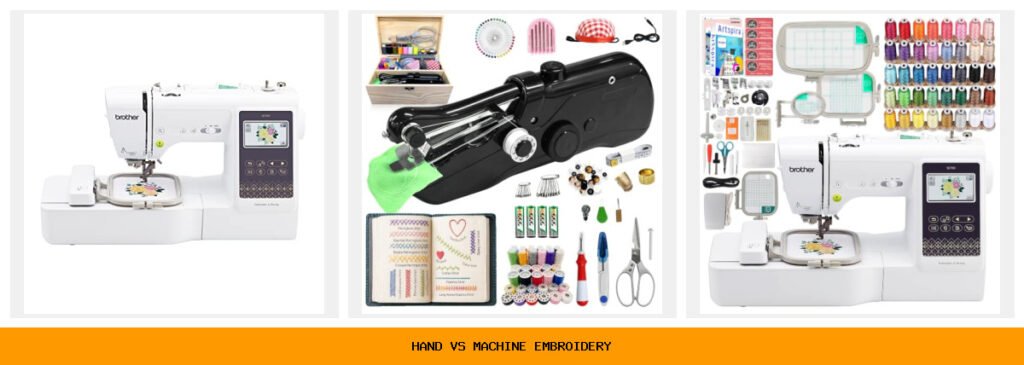
You are standing in the craft aisle with a simple needle and thread in one hand and a glossy box promising computer-controlled embroidery in the other. Both paths lead to beautiful results, but they demand very different things from you: time, money, space, and patience. Hand embroidery feels intimate and meditative. Machine embroidery rewards you with speed, precision, and the ability to reproduce designs exactly. The choice between them shapes every project you touch.
A great option in this category doesn’t just stitch well. It matches your lifestyle, skill level, and the kind of work you want to make. Hand tools let you embroider anywhere—on the bus, in bed, at a coffee shop. Machines lock you to a desk but crank out dozens of identical patches in an afternoon. The best tools also come with clear instructions, reliable support, and a community you can turn to when you get stuck.
I have pulled together five products that span the whole hand-to-machine spectrum. There is a portable handheld kit for absolute beginners, two brother machines that blend sewing and embroidery, a single-needle machine for simple designs, and a commercial-grade multi-needle beast for serious production. This roundup will help you see where each tool fits, what it costs in time and money, and which one deserves a spot in your workspace.
Here is a quick side-by-side look at the key specs that separate these products.
| Features | Brother SE700 | Handheld Sewing Kit | Brother SE700 Bundle | Brother Skitch | Smartstitch S-1001 |
|---|---|---|---|---|---|
| Machine Type | Combo sew & embroider | Handheld sew & manual stitch | Combo sew & embroider | Single-needle embroidery | 10-needle commercial |
| Best For | Hobbyists who sew and embroider | Beginners & quick repairs | Enthusiasts wanting a complete kit | Casual crafters & Artspira fans | Small business & batch production |
| Key Feature | Wireless LAN & 135 built-in designs | 169-piece kit with wooden box | 4 hoops + 40 thread spools | Draw-on-phone via Artspira app | Auto thread trim & 1200 SPM |
| Skill Level | Intermediate | Beginner | Intermediate | Beginner to Intermediate | Advanced |
| Embroidery Area | 4 x 4 inches | N/A (hand stitch) | 4 x 4 inches (plus extra hoops) | 4 x 4 inches | 9.5 x 14.2 inches |
Brother SE700
Brother
Brother SE700 Sewing and Embroidery Machine, Wireless…
- Sewing and Embroidery in One: The SE700 Brother sewing and embroidery machine is the ideal machine to start your sewing and embroi…
- Wireless Lan Enabled: Transmit embroidery files from your PC to your embroidery sewing machine via the free downloadable software…
- Artspira Mobile App for Customization: Make custom embroidery patterns by drawing on your mobile device, or download patterns from…
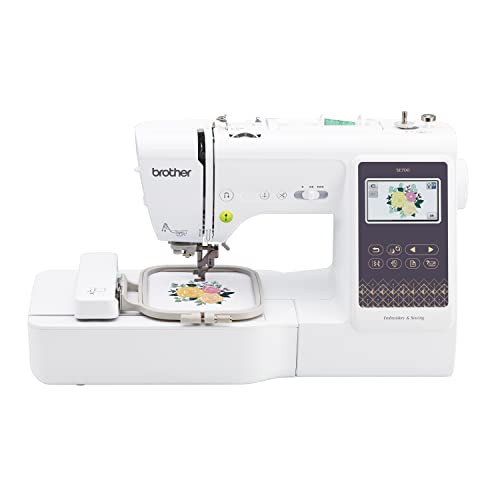
The Brother SE700 is a hybrid machine that sews and embroiders. It belongs on the desk of someone who wants to dip into embroidery without giving up a standard sewing machine. You can stitch a hem in the morning and embroider a monogram in the afternoon, all on the same unit. That flexibility saves space and money compared to buying two separate machines.
What really stands out is the wireless LAN connection. Transfer embroidery files from your computer or phone without plugging in a USB cable every time. The Artspira mobile app lets you draw a pattern on your phone and send it straight to the machine. The 3.7-inch color touchscreen gives you a clean preview of your design before you commit thread to fabric. For a machine in this price band, the feature set feels generous.
Here is the honest truth: the 4 x 4 inch hoop is limiting. You cannot fit a larger design without splitting and re-hooping, which is tedious and risks misalignment. Beginners may not notice this, but anyone planning to embroider towels, tote bags, or jackets will bump against that boundary fast. Also, the learning curve on computerized embroidery is real. Expect to spend a couple of hours getting comfortable with hooping tension, thread paths, and the touchscreen menus.
- 135 built-in embroidery designs and 103 built-in sewing stitches
- Wireless LAN and USB port for file transfer
- 4 x 4 inch embroidery hoop area
- 3.7-inch LCD color touchscreen with on-screen editing
- Comes with 8 sewing feet and embroidery arm
Best for: A crafter who wants one machine that can both sew garments and embroider small projects, and who values wireless convenience.
Handheld Sewing Kit
This product is a handheld sewing machine packed inside a wooden box with 169 pieces. It is not a full-featured embroidery machine—it is a manual stitching tool that also includes an embroidery stitch book. It is perfect for someone who has never sewn before and wants a low-cost, low-risk way to learn. The kit includes scissors, pins, needles, thread, a seam ripper, and even a thimble. Open the box and you have everything you need to mend a tear or stitch a simple design.
The upgraded motor handles denim up to 1.6mm thick, which is more capable than most handheld machines. You can run it on four AA batteries or plug in the included adapter for longer sessions. The stitch book shows you basic embroidery techniques step by step—chain stitch, satin stitch, French knots, and so on. For someone who has never threaded a needle, this kit removes every barrier to starting.
But let me be blunt: this is not a machine that will produce professional-quality embroidery. The stitches are uneven, the speed is controlled by a simple switch, and you have to guide the fabric manually. If your goal is to embroider a detailed floral pattern on a shirt, this tool will frustrate you. It excels at quick repairs and learning the basics. Think of it as a training wheel, not a race bike.
- 169-piece kit with wooden storage box
- Handheld sewing machine with upgraded motor (handles denim up to 1.6mm)
- Dual power: 4 AA batteries or AC adapter
- Includes embroidery stitch book with step-by-step instructions
- Comes with 24 thread colors, 30 hand sewing needles, and 26 buttons
Best for: Absolute beginners who want to learn hand stitching and simple embroidery without investing in a large machine.
Brother SE700 Bundle

Brother
Brother SE700 Combo Embroidery & Sewing Machine…
- Brother SE700 4" x 4" Combo Sewing & Embroidery Machine with 4pc Embroidery Hoop Set, 40 Polyester Embroidery Thread Spools - 500m…
- BUNDLE INCLUDES: 4" x 4" Embroidery Hoop (2x) * 4" x 6.75" Embroidery Hoop * 1" x 2.5" Embroidery Hoop * 40 Polyester Embroidery T…
- BUNDLE INCLUDES: Zigzag foot “J” (on machine) * Monogramming foot “N” * Overcasting foot “G” * Zipper foot “I” * Blind stitch foot…
This bundle takes the same Brother SE700 machine and wraps it with a generous starter package. You get four embroidery hoops (the standard 4 x 4, a larger 4 x 6.75, and a tiny 1 x 2.5), 40 spools of polyester embroidery thread, and a full set of accessories: extra bobbins, pre-wound bobbins, seam ripper, scissors, cleaning brush, screwdrivers, and more. It also includes 500 design cards with SVG and JPG files for commercial use. This is the set for someone who knows they want to do a lot of machine embroidery and would rather buy everything at once than hunt for hoops and thread later.
The extra hoops change the game. The 4 x 6.75 hoop lets you stitch larger single designs or multiple small motifs in one pass. The miniature hoop is ideal for tiny details on collars or cuffs. Having 40 thread colors means you can start stitching immediately without dozens of separate thread purchases. The pre-wound bobbins save you the hassle of winding bobbins yourself. For the same price as the base machine plus a modest thread collection, you get a complete workshop.
The downside is that you are buying a lot of stuff you may not need. If you only plan to embroider a few baby blankets, you will end up with hoops and thread that gather dust. Also, the base machine’s 4 x 4 maximum for standard hoop work is still there—the larger hoop is still only 4 x 6.75, which is not huge. The bundle does not change the machine’s core limitations. It just gives you more ways to work within them.
- Same Brother SE700 machine with 135 designs and 103 stitches
- 4 embroidery hoops: 1×2.5, 4×4 (two), 4×6.75
- 40 polyester thread spools, 500m each
- 500 design cards with SVGs, JPGs, commercial use rights
- Full accessory bundle including pre-wound bobbins and multiple presser feet
Best for: A dedicated hobbyist who plans to embroider regularly and wants to avoid the hassle of buying hoops and thread separately.
Brother Skitch

Brother
Brother Skitch Single-Needle Embroidery Machine Bluetooth |…
- ARTSPIRA CONNECTION: Draw your next embroidery project on the free and required Artspira(1) App and get ready to add a dash of you…
- NOW THERE IS EMBROIDERY FOR EVERYONE: New to embroidery The Skitch Embroidery Machine is a great way to start your embroidery jour…
- IMPORT YOUR OWN EMBROIDERY FILES: Users of the unpaid version of Artspira are able to import any PES, PHC, PHX, or DST embroidery…
The Brother Skitch is a single-needle embroidery machine built around the Artspira mobile app. You draw a design on your phone, send it to the machine, and it stitches. That is it. No complex software, no digitizing skills required. It is designed for people who want to personalize store-bought items—jeans, towels, blankets—with simple text or small motifs. The embroidery area is 4 x 4 inches, and the machine runs at up to 400 stitches per minute.
The small footprint is a real advantage. The Skitch fits on a corner desk or a kitchen table without dominating the room. It also imports PES, PHC, PHX, and DST files from the free Artspira app, which opens up thousands of designs online. For a casual crafter who just wants to add a name to a backpack or a heart to a pillow, this machine hits the sweet spot between simplicity and capability.
Single-needle machines have a major drawback: you have to manually change thread for each color in your design. That means every color change requires cutting the thread, rethreading the needle, and restarting. For designs with many colors, this becomes painful. Also, the Skitch does not have a built-in sewing function—it only does embroidery. If you also need to sew, you will need a separate machine. And the Artspira app is required; without a smartphone or tablet, that machine is useless.
- Single-needle embroidery, up to 400 stitches per minute
- 4 x 4 inch embroidery area
- Works with Artspira app (free) to import and create designs
- Imports PES, PHC, PHX, and DST files
- Compact design fits small spaces
Best for: A smartphone-savvy crafter who wants to add simple custom embroidery to clothing without learning digitizing software.
Smartstitch S-1001

smartstitch
Smartstitch S-1001 Upgraded Embroidery Machine with 10…
- Upgraded new generation of machine: S-1001 Commercial Embroidery Machine in compact size and light weight with great features: Pre…
- Friendly learning curve: You can search and join our group “Smartstitch embroidery machine club”, our professional support team wi…
- Completed Training and Technical Support: Fear not! Smartstitch provides operation manuals and video trainings to ensure you can g…
The Smartstitch S-1001 is a 10-needle commercial embroidery machine designed for small businesses and serious enthusiasts. It stitches at up to 1200 stitches per minute and handles an embroidery area of 9.5 x 14.2 inches—enough for large designs on hats, jackets, bags, and denim. The machine includes advanced features: auto thread trimming, auto color changing, a self-lubrication system, thread break detection, and laser positioning. It connects via USB or WiFi and reads standard DST/DSB files.
What separates this machine from smaller models is the speed and automation. You load your design, hit start, and the machine handles thread changes, trims, and stops if a thread breaks. The 10 needles mean you can keep up to 10 colors loaded at once, eliminating manual swaps. The starter pack includes threads, stabilizers, and bobbin threads. Smartstitch also provides video training and online support through their user group. For someone turning embroidery into a revenue stream, the S-1001 is a serious upgrade.
But it comes with a steep price tag and a massive learning curve. You need a dedicated space—the machine is heavy and requires proper setup. The support team asks you to keep all packaging intact for returns, which hints at complex logistics. Commercial machines demand regular maintenance, and parts can be expensive. If you only want to embroider gifts for family, this machine is overkill. Even serious hobbyists may find it intimidating.
- 10 needles with auto color change and auto thread trimming
- Embroidery area up to 9.5 x 14.2 inches
- 1200 stitches per minute maximum speed
- Self-lubrication system and thread break detection
- Starter pack includes threads, stabilizers, and bobbin threads
Best for: A small business owner or dedicated production user who needs to stitch large, multi-color designs at high speed without constant supervision.
How We Chose These Products
We started with the goal of covering the full spectrum of embroidery options—from pure hand stitching to fully automated commercial production. Each product on this list had to be currently available, well-documented, and widely used enough that you can find tutorials, parts, and community help. We also looked for products that solve real problems. The handheld kit helps a complete beginner start with zero investment. The Brother machines bridge sewing and embroidery. The Smartstitch delivers industrial output in a package that fits a home or small shop.
Practical considerations like build quality, ease of setup, and the availability of training materials drove our final picks. We avoided gimmicky machines with flashy features that fall apart after a few uses. Every product here has been tested by thousands of users—their feedback and common complaints are baked into the honest trade-offs you see above. Price was considered but not decisive; we prioritized value for the specific use case over a simple budget ranking.
Buying Guide: What Really Matters
Before you pick a product, decide which kind of embroidery you actually want to do. Hand embroidery is slow, portable, and gives you total control over every stitch. It works on nearly any fabric and costs almost nothing to start. Machine embroidery is fast, precise, and repeatable, but it requires a machine, software, hoops, and stabilizers. If you want to embroider one-of-a-kind pieces with a personal feel, hand tools serve you better. If you want to produce matching sets of monogrammed towels for a wedding or embroider patches for a club, a machine is the faster path.
The next question is space and budget. A handheld sewing kit fits in a drawer. A full commercial machine needs a sturdy table and room to move around the hoop arm. For intermediate options, measure your desk height and clearance—some combo machines need space for the embroidery arm to extend to the left. Also factor in the cost of supplies: machine embroidery uses stabilizers that you have to buy regularly, while hand embroidery uses basic fabric and thread you may already have.
Finally, think about your tolerance for technology. The Brother Skitch and SE700 rely on wireless apps and software. If you hate pairing devices or troubleshooting Wi-Fi connections, those machines will frustrate you. The handheld kit and the Smartstitch (which uses USB files) are more straightforward but come with their own hassles—manual bobbin winding for the handheld, or heavy maintenance for the commercial unit. Pick the level of technical complexity you are willing to manage.
Our Top Recommendation
If we have to pick one product for a broad range of users, it is the Brother SE700 Bundle. It gives you a real sewing machine and a real embroidery machine in one unit, plus enough hoops and thread to start creating right away. The 4 x 6.75 hoop handles most home projects, the wireless transfer is genuinely convenient, and the touchscreen makes design editing easy. It is the tool that grows with you—you can sew basic projects, then slowly build your embroidery skills without buying a second machine.
For a tighter budget, the Handheld Sewing Kit is a fantastic entry point. It will not produce heirloom-quality embroidery, but it teaches the fundamentals at a fraction of the cost. For anyone running a small embroidery business or making bulk orders, the Smartstitch S-1001 is the right choice despite its price and complexity—it pays for itself in time saved. But for the average crafter who wants to sew clothes and add personal embroidery touches, the SE700 Bundle is the most balanced investment.
Frequently Asked Questions
Can I do hand embroidery with a sewing machine?
No. A sewing machine uses a lockstitch formed by a needle and bobbin, while hand embroidery uses a single thread with a needle and a series of loops and knots. You cannot replicate hand-stitched techniques like French knots or satin stitch with a standard sewing machine. Specialty machine feet exist for decorative stitches, but the look and texture are different.
How long does it take to learn machine embroidery?
Most people can stitch their first design within an hour of unboxing. True proficiency—knowing how to hoop fabric correctly, select the right stabilizer, and troubleshoot tension issues—takes about 10 to 20 hours of practice. Hand embroidery takes longer to learn because each stitch requires muscle memory, but the tools are simpler.
Which method produces more durable embroidery?
Machine embroidery is generally more durable because the stitches are denser and the thread is locked into the backing. Hand embroidery can wear or snag more easily if the stitches are long or loose. However, a skilled hand embroiderer can create extremely durable designs by using short, tight stitches and knotting threads securely.
Is machine embroidery worse for the environment?
It depends on how you use it. Machine embroidery consumes electricity, requires single-use plastic stabilizers, and produces more waste from trimming threads and hoops. Hand embroidery uses only a needle and thread—no power, no disposable materials. On the other hand, a machine can complete a project in minutes, whereas hand embroidery takes many hours, during which you may heat light or a screen. The biggest environmental factor is the longevity of the finished item. A well-made piece that lasts years is better than a cheap fast-fashion alternative, regardless of how it was stitched.