
Janome Sewing Machine Reviews: Choose the Right Category
The best Janome sewing machine depends on whether you want simple garment construction, computerized convenience, or sewing and embroidery in one.

This guide has Amazon links. If you buy through them we may earn a small commission, at no extra cost to you.
The best Janome sewing machine depends on whether you want simple garment construction, computerized convenience, or sewing and embroidery in one workspace. Brand reputation alone cannot choose that category for you. These Janome sewing machine reviews compare three different approaches, explain why a discontinued model needs special buying checks, and help you connect useful controls with your actual projects before committing money to features you might never use at home.
As an Amazon Associate, Practical Textile earns from qualifying purchases. Product links may earn us a commission.
What’s in this article10 sections
Quick Answer: Which Janome Category Should You Choose?
Start with the Janome 2212 category for simple mechanical sewing, consider the 4120QDC’s feature set when evaluating a computerized upgrade, and investigate the Memory Craft 9850 when you genuinely need hoop embroidery as well as sewing. These are different purchases. The 4120QDC is listed as discontinued by Janome, so availability, condition, accessories, and support require particular attention.
This is a research-based category comparison. We have not tested these machines side by side or measured long-term reliability. Recommendations describe project fit rather than a hands-on performance ranking.
Janome Memory Craft 9850
Consider this category when both ordinary seams and hoop embroidery belong in your plans.
Brother CS5055
Compare a simpler computerized sewing machine if embroidery is unnecessary.
Janome Sewing Machines: Compare the Category First
| Model | Category | Key distinction | Main buying check |
|---|---|---|---|
| 2212 | Mechanical sewing | 12 built-in stitches and four-step buttonhole | Are direct controls and basic functions sufficient? |
| 4120QDC | Computerized sewing | Speed slider, needle positioning, and automatic cutting | Janome lists it as discontinued; inspect the exact offer. |
| Memory Craft 9850 | Sewing and embroidery | Ordinary sewing plus a removable embroidery workflow | Do your designs fit, and is the full embroidery equipment included? |
The largest feature list is not automatically the strongest match. A repair-focused sewist can reasonably prefer fewer controls, while a garment maker working frequently may value repeated convenience functions. An embroiderer needs design and hoop capabilities that a sewing-only model cannot gain through an ordinary presser-foot purchase.
Janome 2212 Review: Mechanical Sewing with a Focused Feature Set
The 2212 represents a straightforward entry-level mechanical approach. Janome describes a front-loading bobbin arrangement, dial stitch selection, a free arm, and drop feed. These features support a conventional sewing workflow, but you should understand the bobbin access and buttonhole sequence before choosing it solely because the interface looks simple.
A small stitch menu can suit repairs, woven clothing, craft pieces, and learning basic construction. The key question is whether the required stitch is present, rather than how many decorative alternatives surround it. If you mostly join seams, finish accessible edges, and insert zippers, a large alphabet menu may contribute little to your day-to-day work.
A four-step buttonhole requires you to manage its stages rather than letting a one-step system complete the full sequence in one operation. That does not make a good buttonhole impossible; it changes the workflow. Test on the complete garment layer arrangement, mark both ends accurately, and practice the transition between stages before sewing a visible row.
The front-loading bobbin also deserves a practical demonstration. Some sewists prefer that familiar arrangement, while others find a top-loading system easier to inspect. Ask to wind, insert, remove, and reinsert the bobbin yourself. A buying decision should reflect the routine operations you will actually perform, not just how clear the machine looks in a photograph.
Who should consider the 2212 category?
Choose this approach when you want to learn conventional machine setup and keep the control system focused. It is less compelling when you already know you need automatic cutting, built-in lettering, or a dedicated speed limiter. If one of those functions would solve a repeated frustration, buying a simpler machine merely to upgrade soon afterward may be false economy.
For a more complete discussion of this category and model naming, our Janome sewing machine comparison can help you organize the choices. Verify any listing-specific bundle separately; accessories and condition are part of the purchase.
Janome 4120QDC Review: Useful Controls with an Availability Caveat
The 4120QDC represents a step toward computerized convenience. Its published features include 120 stitches, seven one-step buttonholes, memorized needle positioning, a speed-control slider, a thread cutter, and adjustable foot pressure. That collection is relevant to frequent sewing because it affects repeated actions, not just occasional decorative experimentation.
For example, a consistent needle-down stopping position can make a planned pivot easier to manage. A speed limit can reduce dependence on fine pedal pressure during careful work. An automatic cutter can shorten a repeated finishing step. None proves better seam quality by itself, but each may remove a small interruption that happens many times during a garment or patchwork project.
The important current caveat is availability: Janome lists this model as discontinued. That means you should evaluate a real dealer or used offer rather than treating it as a guaranteed current-production recommendation. Clarify condition, service arrangements, included accessories, and whether the seller can demonstrate the complete machine.
A low price on an incomplete unit can become less attractive after replacing a controller, cover, table, feet, or other needed parts. Conversely, a properly supported remaining-stock offer may deserve consideration. We do not classify every discontinued machine as a bad purchase; we do require more careful verification of the specific unit and its ownership costs.
What would make a computerized upgrade worthwhile?
List the three operations that interrupt your sewing most often. If they involve controlled starting, positioning, or repeated cutting, convenience controls may be more valuable than extra stitch patterns. If the problem is a garment that cannot fit around the arm or a dense seam stack that will not feed, an expanded stitch menu is unlikely to solve it.
Request a demonstration on fabric similar to your projects and try the actual controls. A feature that sounds helpful can still feel awkward if the button placement or screen organization does not suit you. Check how easily you can change the selected stitch without losing track of the foot and setup that operation requires.
Janome Memory Craft 9850 Review: Sewing and Embroidery Together
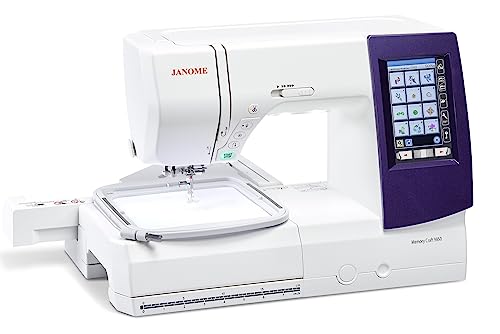
The Memory Craft 9850 combines sewing with hoop embroidery. Janome lists a maximum embroidery field of 6.7 by 7.9 inches and USB design transfer, alongside sewing functions including automatic cutting and foot-pressure adjustment. Its embroidery capability is the main reason to evaluate it differently from the sewing-only models discussed above.
Measure your intended embroidery designs before buying. A design can fail to fit because one dimension is too large even when its total area seems modest. Allow for the actual hoop, design orientation, placement, and garment access. The largest supported field also does not guarantee that every finished bag, sleeve, or pocket can be positioned for embroidery.
A combination machine uses the same core workspace for two processes. That can suit a home studio with limited room. It also means ordinary sewing waits while the machine is stitching an embroidery design. Someone who wants to assemble garments at the same time may prefer a separate sewing machine and dedicated embroidery unit.
File transfer does not eliminate design preparation. Logos and artwork need suitable digitizing into a supported embroidery format. Dense details, small lettering, inappropriate resizing, or unsuitable stabilization can produce poor results even when the machine is functioning correctly. Budget for samples and digitizing rather than calculating only the cost of the hardware.
Memory Craft 9850 advantages and limitations
Reasons to consider it
- It offers both construction sewing and automatic hoop embroidery.
- Convenience controls can support a varied home-sewing workflow.
- The embroidery field is relevant to designs beyond small square motifs.
- USB transfer allows suitable custom designs beyond built-in choices.
- One main machine may suit a studio with limited storage space.
Reasons to compare other setups
- You cannot use the same machine for separate sewing and embroidery jobs simultaneously.
- Embroidery adds supplies, design preparation, and a distinct learning process.
If you want an embroidery-only category instead, explore our Janome embroidery machine guide. A 500E or 550E is not interchangeable with a sewing-and-embroidery combination simply because the brand and product family names are related.
Match the Machine to Your Projects
Clothing and alterations
Start with the construction requirements: seam type, fabric behavior, buttonholes, zippers, and access to small areas. Check the stitch and foot needed for each operation. A stretch seam needs appropriate elongation; a woven blouse may need delicate feeding and clean buttonholes; a trouser repair may involve a bulky crossing that deserves a specific sample.
For repeated alterations, handling can matter more than decorative options. Consider how easily you can see the needle area, remove the accessory compartment, reach the reverse control, and position the garment without catching another layer. Leave adequate table space to support the work rather than asking the feed mechanism to drag the whole garment’s weight.
Quilt piecing and quilting
Piecing rewards an accurate, repeatable seam allowance. Test your foot and guide arrangement on strips, press the sample, and measure the finished unit. Decorative patterns will not compensate for an inconsistent seam allowance repeated across many blocks.
Quilting a sandwich introduces bulk and movement requirements. An extension table supports work outside the machine; it does not enlarge the arm opening. Before choosing a model for large quilts, examine the available working space and the way you will support and move the quilt. A photograph of a quilt beside the machine does not prove comfortable handling of every size.
Leather, canvas, and unusually dense stacks
Assess the actual seam construction rather than relying on a machine’s weight or reputation. Fabric density, surface friction, thread requirements, and intersections all affect the task. An extra-high foot lift does not establish a maximum stitching capacity, and fitting material under the foot does not prove it can be sewn safely.
If dense materials are central to your work, ask for a demonstration using your own samples and intended thread. Stop if a test machine struggles, and compare specialized equipment when necessary. Forcing a domestic model through repeated difficult seams is not a sensible way to evaluate whether you bought enough machine.
New, Used, and Discontinued: Buying Checks That Matter
- Exact model and suffix: confirm the full identification, market version, and included functions.
- Condition: distinguish new stock, refurbished stock, and a used machine sold privately.
- Complete accessories: check the controller, power cable, required feet, bobbins, covers, and any embroidery unit or hoops.
- Service terms: confirm who handles repairs and what proof of purchase is needed.
- Demonstration: request ordinary sewing plus relevant buttonholes or embroidery operations on an appropriate sample.
- Total budget: allow for needles, thread, project supplies, digitizing if needed, and missing accessories.
When buying used, inspect a complete stitch sample rather than accepting a motor-running video as evidence of normal sewing. Ask whether the machine has been serviced and whether there are known faults. For a combination model, a functioning straight stitch alone does not verify the embroidery mechanism, design transfer, or all supplied hoops.
Also verify electrical suitability for your US home and follow the machine’s labeling. Do not assume that a similarly named overseas offer has identical equipment or warranty coverage. Shipping, return conditions, and repair access can change the value of an apparently attractive deal.
When a Different Brand or Category Makes More Sense
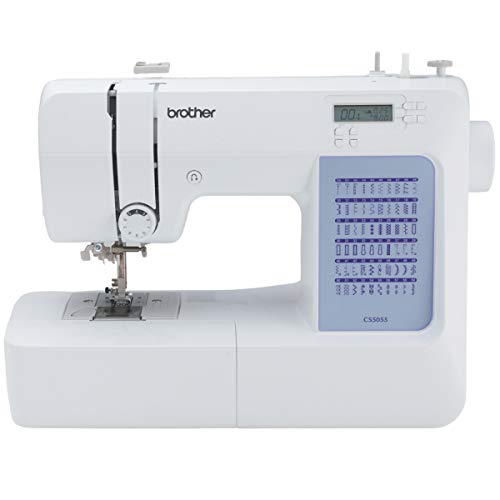
For sewing-only needs, compare a simpler computerized alternative before paying for embroidery. The Brother CS5055 is one such model to investigate, with the important reminder that computerized stitch selection does not automatically include every convenience control. Our Brother machine guide distinguishes its role from more specialized models.

If you prefer mechanical operation, compare the control layout and limitations in our Singer 4423 review. For embroidery-specific alternatives, our Poolin embroidery review considers field shape and model-name distinctions. Choose the process first, then compare brands within that process.
Frequently Asked Questions
What is the best Janome sewing machine for beginners?
It depends on the controls and projects. The 2212 category offers focused mechanical operation, while computerized models may provide useful speed and positioning controls. Try threading, bobbin access, and a basic sample before choosing by stitch count alone.
Is the Janome 4120QDC discontinued?
Janome’s product page identifies it as discontinued. Evaluate the condition, included equipment, service arrangements, and seller terms of any remaining-stock or used offer rather than assuming normal current-production availability.
Can the Memory Craft 9850 embroider a custom logo?
It supports hoop embroidery and compatible transferred designs. A logo still needs suitable digitizing, must fit the field, and requires a tested fabric and stabilizer setup. Import capability does not automatically turn a picture into good embroidery.
Can a Janome embroidery-only machine sew garments?
An embroidery-only machine does not replace ordinary garment construction sewing. Check whether the exact model is sewing-only, embroidery-only, or a combination. Similar Memory Craft names are not proof of the same functions.
Should I buy a used Janome sewing machine?
A used unit can be worth evaluating when its condition, completeness, and repair options are clear. Request a relevant stitch demonstration, confirm included parts, and compare the total cost with a supported alternative. A brand name alone does not verify a used machine’s condition.
Final Recommendation
Choose a Janome category that solves your real sewing problem. The 2212 approach suits a focused mechanical workflow; the discontinued 4120QDC illustrates computerized conveniences worth assessing in a specific offer; the Memory Craft 9850 belongs on the shortlist when hoop embroidery is part of the plan.
Do not pay for capabilities simply because they appear impressive together. Identify the operations you need, test representative materials where possible, and verify the exact equipment being sold. A clear match between machine, project, and support is more useful than a universal brand ranking.
