
Singer Patchwork 7285Q Review: Quilting Controls and Real Limits
The Singer Patchwork 7285Q combines household sewing with useful quilting controls, but its name does not make it a longarm machine. This review.

This guide has Amazon links. If you buy through them we may earn a small commission, at no extra cost to you.
The Singer Patchwork 7285Q combines household sewing with useful quilting controls, but its name does not make it a longarm machine. This review explains the working space, included quilting accessories, needle positioning, and bobbin requirements that matter more than a decorative stitch total. Compare those details with your quilt sizes and sewing habits before deciding whether this computerized package offers the right balance of convenience, capacity, and overall purchase value.
As an Amazon Associate, Practical Textile earns from qualifying purchases. Product links may earn us a commission.
What’s in this article11 sections
Quick Answer
The 7285Q is worth comparing for piecing, smaller quilts, and mixed household sewing when its complete package is competitively priced. Its speed slider, needle positioning, and extension table are useful; its 5.5-inch needle-to-tower space remains a limitation for bulky quilts. Confirm the actual package and seller before ordering.
This guide compares published specifications and project fit; it does not report hands-on testing.
Singer Patchwork 7285Q
Check the complete package, including the table and quilting feet.
Brother XR9550
A sewing and quilting comparison, not a larger embroidery field.
Juki HZL-F300
No verified Amazon offer is linked for this model; read the buying checks below.
Check the separate cost of optional table and knee lifter.
Quick Comparison: Match the Sewing Task
| Model | Reason to compare | Important limitation |
|---|---|---|
| Singer 7285Q | Computerized controls and quilting accessory package | 5.5-inch needle-to-tower space |
| Brother XR9550 | Speed control, utility sewing, and wide table | Lettering is not hoop embroidery |
| Juki F300 | Box feed and useful electronic conveniences | Wide table and knee lifter are optional unless bundled |
The first question is how you plan to quilt. Joining small patchwork pieces asks for accurate seam allowance and controlled starts. Quilting a layered top asks for support, feeding, and room to reposition the project. Creating embroidered quilt blocks is a separate operation requiring an embroidery machine. The Patchwork name addresses the first two roles within household capacity, not every machine process associated with quilts.
Singer 7285Q: What Its Quilting Package Actually Adds
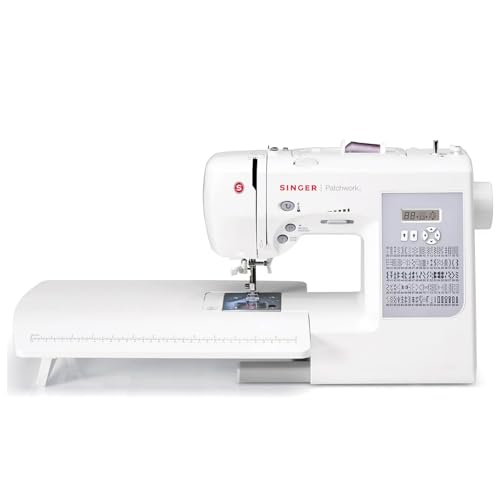
The 7285Q has 100 built-in stitches. Singer also describes 203 stitch applications; those figures count different things. Applications are uses of the available stitches, not another 203 independently selectable stitch patterns. For a buyer, the more useful question is whether the machine includes the seam, edge-finishing, buttonhole, and decorative choices needed for actual projects.
Its speed control lever sets an upper sewing speed, while the start/stop button provides another way to operate the machine. These features can help when learning to guide patchwork or manage a short curved seam. They do not guide the fabric for you. Practicing on small pieces remains necessary, particularly when approaching the end of a narrow seam without pulling the fabric behind the needle.
Programmable needle up/down is a worthwhile convenience. Stopping with the needle down can help preserve a pivot point while turning an appliqué shape or repositioning a block. Stopping up makes removing the work easier. This feature should be demonstrated at the machine rather than inferred from the word computerized, because not every electronic sewing machine provides the same controls.
The manufacturer lists an extension table, even-feed walking foot, quarter-inch foot, and darning accessories in its package. These tools address different operations. A walking foot helps feed layered material during suitable forward-feed work. A quarter-inch foot assists seam guidance during piecing. Free-motion work uses its own setup and technique. No single foot serves all three purposes equally.
Five advantages:
- Speed limiting supports controlled practice.
- Needle stop positioning helps with pivots and repositioning.
- The listed extension table provides level support beside the needle.
- The accessory package covers several common quilting operations.
- Ordinary utility stitches and buttonholes allow work beyond quilts.
Two limitations:
- The 5.5-inch working space can become restrictive as quilt bulk increases.
- The package does not turn the machine into a longarm or automatic embroidery system.
Working Space: The Table Does Not Enlarge the Throat
Singer specifies approximately 140 millimeters, or 5.5 inches, between needle and tower. That measurement matters because the rolled or folded part of a quilt must move through that space. An extension table supports fabric on the outside; it does not move the tower farther away. Photographs showing a wide table can therefore suggest more working capacity than the needle-to-tower measurement actually provides.
For mug rugs, pillow fronts, small wall hangings, and many piecing tasks, the restriction may be manageable. A large quilt with lofty batting presents a different handling problem. The operator must support its weight and reposition the bulk repeatedly. A machine that forms a sound stitch can still feel awkward if most of the sewing time is spent wrestling a heavy project around the bed.
Test the kind of sandwich you intend to use, including batting and backing. Stitch a short line, turn, and return in the opposite direction. Notice whether the project drags off the table or pushes against the tower. The aim is to evaluate comfortable control, not merely demonstrate that the needle can pass through one small stack of fabric.
Bobbins, Threading, and Setup Details
The 7285Q calls for Singer Class 15J transparent bobbins. Do not substitute a differently shaped bobbin because it looks almost the same or because another Singer uses Class 15. Matching the model’s specified bobbin is a small purchasing detail that can prevent unnecessary tension troubleshooting. Keep the correct bobbins identified in a separate container if several machines share the sewing room.
Use the manual’s threading route and bobbin insertion direction. When stitches suddenly become messy, begin by rethreading and checking needle condition rather than immediately adjusting several controls. A threading error can resemble a tension problem. Changing thread, needle, stitch length, and tension together makes it difficult to identify the original cause or reproduce a successful setting later.
The needle threader is a threading aid, not a solution for every needle and thread combination. Check the supported sizes in the manual. Replace a damaged needle and use a suitable type for the material. Keep a simple sample card with the fabric, thread, needle, and settings that worked; this is especially useful when returning to a quilt after several weeks away.
Brother XR9550: A Useful Alternative for Mixed Sewing
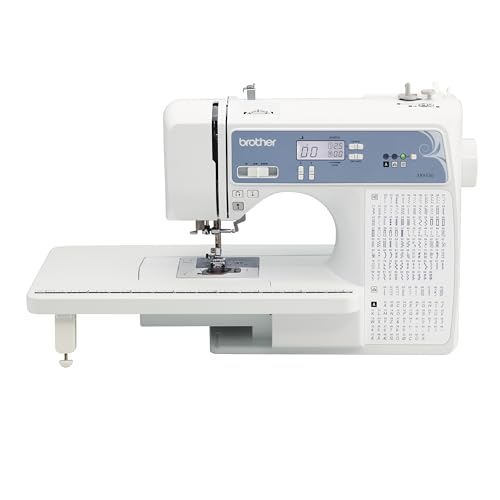

The XR9550 deserves comparison when you want a computerized household machine for garments as well as quilts. Its speed control and included table address some of the same practical concerns as the Patchwork package. Evaluate the controls directly: how easily can you select a straight stitch, alter its length, stop at a corner, and return to the previous setting?
Do not treat the XR9550’s sewing lettering as automatic hoop embroidery. It produces selected stitches while the operator guides the work; it does not replace a machine that moves a hooped garment through a design. Also inspect the accessory list carefully. A spring-action quilting foot and a walking foot are different accessories, even when both appear in quilting discussions.
Our Brother sewing machine comparison explains the broader range. If the table and control package already meet your needs, compare delivered cost and support rather than choosing whichever listing displays the largest stitch count. Decorative options are useful only when they support something you expect to sew.
Juki HZL-F300: Compare Controls and Complete Station Cost
The F300 offers box feed, speed control, needle positioning, and automatic thread cutting. Those conveniences can be meaningful for a sewer who repeatedly starts and finishes seams. They do not remove the need to test a particular quilt sandwich. A feed-system name describes a mechanism, while your sample shows whether the complete setup behaves as you need.
Budget for the actual station. The F300’s wide table and knee lifter are optional unless the seller specifically includes them. Comparing a fully equipped 7285Q package against a bare F300 price without adding the desired accessories produces an incomplete cost comparison. Write down the machine, table, feet, case, tax, and any instruction included with each offer.
For a second brand perspective, see our Janome machine comparison. The right upgrade should solve a named problem such as control, support, or repetitive finishing. A higher purchase price alone does not prove that a machine is easier to use for your particular quilts.
Choose by Projects, Not the Patchwork Label
For quilt piecing, make a strip set and measure it after pressing. Uneven seam allowance may come from guidance, cutting, pressing, or the foot setup rather than an inadequate machine. A quarter-inch foot is helpful, but the finished measurement is the useful result. Test a scant seam allowance with your own thread and fabric before committing many blocks to one setting.
For straight-line quilting, test the even-feed foot on a representative sandwich. Start with manageable practice pieces and examine the underside. Support the quilt at the table instead of letting its weight pull the layers. Stitching slowly and evenly is usually more informative than running a short sample at maximum speed.
For free-motion quilting, follow the machine and accessory instructions for the correct setup. Practice moving the sandwich without pulling against the needle. This is a learned coordination task; selecting a quilting stitch does not automate it. If free-motion work will dominate your sewing, compare working space and visibility before decorative stitch selection.
For garments, test a seam and buttonhole in the intended fabric. Quilting accessories do not tell you how a machine will handle a stretchy neckline or a fine blouse hem. Our garment sewing guide helps separate these requirements, while the mechanical and computerized comparison explains the operating styles.
A Practical Purchase and Acceptance Checklist
Confirm that the listing identifies 7285Q rather than a similar Singer number. Ask whether the extension table and named feet are included in that exact offer. Used or open-box machines can lose accessories, and a generic photograph does not establish the contents of the carton. Request a written inventory and pictures of the actual items when the condition is not new.
Check the US electrical specification, seller’s return terms, and eligibility for manufacturer coverage. A long warranty headline does not mean every component, labor charge, shipping cost, or used purchase receives identical coverage. Keep the invoice and packaging until the machine has completed the projects used for your acceptance test.
During that test, wind a bobbin, thread the machine, sew a straight seam, make a buttonhole, and try each control that influenced your purchase. Check that the table sits level and that the foot controller responds progressively. Record the settings used for successful samples so that a later threading mistake does not get confused with a persistent machine defect.
For another package comparison, our quilting sewing machine guide discusses piecing, layers, and space. Choose the machine you can operate comfortably at a realistic total cost, then reserve enough of the budget for suitable thread, needles, batting, and a supported work surface.
Frequently Asked Questions
Is the Singer 7285Q suitable for beginners?
It can be a reasonable learning option when the controls, manual, and support suit the buyer. Speed limiting and needle positioning are useful, but a beginner still needs to learn threading, fabric guidance, and suitable settings. Start with straightforward woven-fabric projects before attempting a large quilt.
Does the 7285Q include a walking foot?
Singer lists an even-feed walking foot in the manufacturer’s package. Confirm the exact seller’s inventory, particularly for used, refurbished, and open-box offers. An accessory shown in a general model photograph is not enough to establish what a particular seller will deliver.
Which bobbins does the 7285Q use?
The manufacturer specifies Class 15J transparent bobbins. Use the model’s manual and correct part identification rather than assuming that another Singer bobbin is interchangeable. A bobbin that appears to fit is not necessarily the correct profile.
Can it quilt a queen-size quilt?
Its 5.5-inch working space makes bulky projects demanding to handle. Whether a specific quilt is manageable depends on bulk, design, support, and operator technique. Test a representative sandwich and consider larger working space if finishing substantial quilts is your main activity.
Does it embroider names automatically in a hoop?
No. The 7285Q is a sewing and quilting machine, not a computerized hoop embroidery machine. Decorative sewing and free-motion embellishment are different processes from importing a design and having the machine position a hooped garment automatically.
Final Recommendation
Compare the Singer 7285Q when you want quilting conveniences in a general household machine. Its appeal is the combination of speed control, needle positioning, and listed accessories. Buy with realistic expectations about working space, correct bobbins, and the actual package. If a larger throat is the requirement, keep comparing machines instead of expecting the extension table to solve that limitation.
