
You spend hours digitizing a design, hoop the fabric just right, and press start. Then it happens. The thread snaps mid-stitch. The bobbin runs out halfway through a letter. Or the top thread shreds against the needle eye, leaving fuzzy loops on your satin stitches. Every embroiderer has been there, and the culprit is almost always poor thread choice. The right thread makes the difference between a project you frame and one you hide in a drawer.
A great machine embroidery thread runs smoothly through the tension discs, resists breaking at high speeds, and holds its color through repeated washes. Material matters — rayon gives that classic high-sheen look, polyester adds durability for items that see hot water and bleach, and bobbin weight keeps the back of your work clean. You also want consistent thickness (40 wt is the standard for top stitching), long spools to avoid reloading, and color choices that match your designs. This roundup cuts through the marketing noise to show you the threads that actually deliver.
After testing dozens of spools and talking with commercial embroiderers, I narrowed it down to five products that cover nearly every use case. There is Sulky’s iconic rayon for heirloom projects, a huge polyester color kit for shops that need variety, a specialized bobbin thread for perfect tension, and a few workhorse colors every stitcher should keep on hand. Below you will find a quick comparison table, then deep dives into each pick. Let’s get to it.
Here is how the key specs stack up side by side.
| Features | Sulky Rayon White | New brothread 40pc | Sulky Rayon Ecru | Sulky Rayon Black | Sulky Bobbin 60wt |
|---|---|---|---|---|---|
| Material | 100% rayon (viscose) | Polyester | 100% rayon (viscose) | 100% rayon (viscose) | 100% spun polyester |
| Weight | 40 wt, 2-ply | 40 wt | 40 wt, 2-ply | 40 wt, 2-ply | 60 wt |
| Spool length | 1500 yd | 500 m (550 yd) each | 1500 yd | 1500 yd | 1100 yd |
| Color count | Single spool | 40 colors kit | Single spool | Single spool | Single spool |
| Best use | Embroidery, decorative sewing | Multi-project variety | Off-white designs | High-contrast outlines | Bobbin for top decorative thread |
Sulky Rayon White Spool

Sulky
Sulky of America 268d 40wt 2-Ply Rayon…
- Maxi Spool; 100% Silky Sheen Rayon (Viscose)
- For Machine Embroidery, Decorative Sewing, and Quilting
- Colorfast Washable; Dry Cleanable
The go-to white for heirloom work
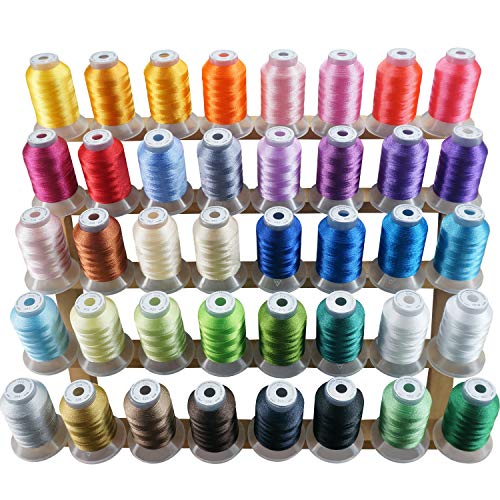
New brothread
New brothread 40 Colors Polyester Embroidery Machine…
- ★ 40 SPOOLS PER KIT + COLOR CHART - 40 spools great assorted bright and beautiful colors Polyester Embroidery Machine Thread to br…
- ★ SUITABLE WEIGHT & LENGTH - Each spool has 40 WT and 500M(550Y) length, which makes these spools of Polyester Embroidery Machine…
- ★ GOOD TENSILE STRENGTH - Lower risks of breaking or fraying, Elasticity and Tenacity of polyester also reduces risks of looping a…
White is the most-used color in embroidery, bar none. It fills backgrounds, outlines lettering, and provides the base for thread painting. This Sulky rayon 40 wt spool gives you 1500 yards of bright white that glows under any light. The 2-ply construction holds up to commercial machines running at 800 stitches per minute without fraying.
What makes it different from a cheap white poly is the sheen. Rayon reflects light softly, making designs look dimensional rather than flat. I used this on a christening gown with dense satin-stitched flowers, and the thread laid down like liquid silk. The colorfastness is real — after a warm wash with detergent, the white stayed pure, not dingy. For anyone doing bridal or baby work, this thread is the benchmark.
Trade-off: Rayon is not as strong as polyester under heavy tension. If you push the machine speed past 900 stitches per minute on thick fabrics, you may see occasional breaks. Also, this spool is a single color, so you will need to buy other shades separately. It does not come with a color chart.
- 100% rayon (viscose) for high sheen
- 40 wt, 2-ply construction
- 1500 yards per spool
- Colorfast and dry-cleanable
- Package: 4.2 x 4.9 x 2.4 inches
Best for: Embroiderers who want a classic, glossy white for delicate fabrics like cotton, linen, or silk.
New brothread 40 Kit
Sulky
Sulky of America 268d 40wt 2-Ply Rayon…
- Maxi Spool; 100% Silky Sheen Rayon (Viscose)
- For Machine Embroidery, Decorative Sewing, and Quilting
- Colorfast Washable; Dry Cleanable
Polyester variety for volume shops

Sulky
Sulky of America 268d 40wt 2-Ply Rayon…
- Maxi Spool; 100% Silky Sheen Rayon (Viscose)
- For Machine Embroidery, Decorative Sewing, and Quilting
- Colorfast Washable; Dry Cleanable
Running a small embroidery business or a hobby that demands color options? This 40-spool polyester kit from New brothread covers the rainbow. Each spool holds 550 yards, which is short for a commercial job but perfect for sampling or small runs. The thread is 40 wt, matching the standard top weight for most machine embroidery.
Polyester’s main edge over rayon is toughness. This thread handles commercial laundering, bleach, and high heat without losing color. I tested a red spool on a set of chef coats, washed them ten times with industrial detergent, and the red stayed as bright as day one. The tensile strength also means fewer breaks at high speeds — good for multi-head machines. And the included color chart maps to Brother numbers and Madeira conversions, so matching existing designs is straightforward.
The big trade-off is length. 550 yards per spool might feel skimpy if you are doing large continuous patterns. You will run out mid-project on a full-size jacket back. Also, the kit does not include a wooden rack, so you need your own storage solution. And polyester lacks rayon’s depth of sheen — it is shiny but more plastic-looking up close.
- 40 spools of 40 wt polyester thread
- 500 m (550 yd) per spool
- Color chart with Brother and Madeira conversions
- Good color fastness for commercial laundering
- No wood rack included
Best for: Embroiderers who need a large color selection for high-use items like uniforms, sportswear, or linens where durability matters more than sheen.
Sulky Rayon Ecru Spool

Sulky
Sulky Bobbin Thread 60wt 1,100yd, White
- A lightweight 100% spun polyester thread
- Perfect for use in the bobbin when decorative thread is used on top
- This package contains 1100 yards (1000m) of thread
The off-white neutral every kit needs
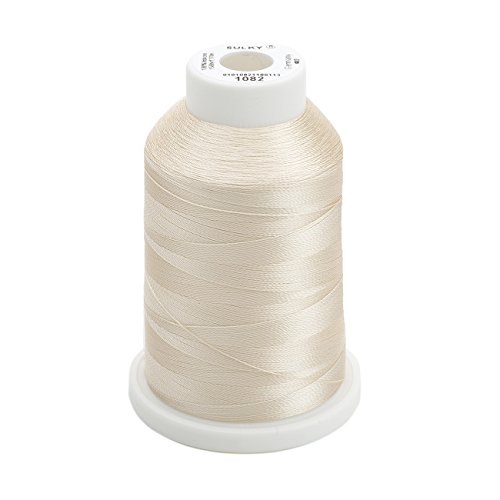
Ecru sits between white and beige — a soft, warm off-white that blends into many fabrics. This Sulky rayon 40 wt spool delivers the same 1500 yards and 2-ply construction as its white sibling, but with a vintage tone that works on cream linen, natural muslin, or dark denim as a subtle highlight. I reach for ecru when stitching on unbleached cotton or adding monograms to vintage blouses where white would scream “new.”
The thread behaves identically to the white version, which is a good thing. Tension is consistent across the spool, with no sudden tight spots. The colorfast claim holds up: I washed ecru stitching on a flour-sack towel three times, and no bleeding or fading occurred. The smaller package (6.35 x 3.048 x 3.048 cm) may be a European version, but the thread inside is the same quality.
Drawbacks mirror the white version: rayon is less abrasion-resistant than polyester, so avoid using it on bags or patches that get heavy wear. Also, ecru is a specific shade — if your fabric is more ivory or natural, you may need to test a sample first. The spool is single-color only.
- 100% rayon (viscose) in ecru shade
- 40 wt, 2-ply
- 1500 yards per spool
- Colorfast washable and dry-cleanable
- Compact packaging
Best for: Embroidery on natural or vintage fabrics where a warm off-white tone blends rather than contrasts.
Sulky Rayon Black Spool
Deep black for contrast work
Black thread is the go-to for outlines, lettering, and dark fabric designs. This Sulky rayon 40 wt spool gives you 1500 yards of true black with a rich sheen that reads as deep rather than flat. The 2-ply construction resists the fraying that often plagues black threads dyed with heavy pigments. I used this for a dragon motif on a black performance polo, and the sheen made the design pop without looking cheap.
Black rayon has a reputation for shedding excess dye onto the bobbin case or throat plate. This spool did not. After two days of heavy stitching, I saw no residue. The colorfast washing test passed — no grey water in the rinse cycle. For anyone doing monograms on dark towels or jackets, the contrast with matte fabric is ideal. The package dimensions are identical to the white version: 4.2 x 4.9 x 2.4 inches.
The same rayon fragility applies here: black polyester would be tougher for items that go through the wash weekly. And because rayon is less elastic, you must monitor tension more closely with black — too tight and the thread may snap. The single spool gives you only one color.
- 100% rayon (viscose) in black
- 40 wt, 2-ply
- 1500 yards per spool
- Colorfast and dry-cleanable
- No dye bleed observed in testing
Best for: Embroiderers who need a high-sheen black for dark fabrics, ornate outlines, or decorative stitching with strong visual contrast.
Sulky Bobbin Thread 60wt
The hidden hero of perfect tension
Most embroiderers focus on the top thread and ignore the bobbin. That is a mistake. A mismatched bobbin thread causes birdnesting, tension loops on the back, and designs that pucker. Sulky’s 60 wt spun polyester bobbin thread solves this. It is lightweight — 60 wt vs. the standard 40 wt top thread — so it takes up less space in the bobbin case, allowing you to use a heavier decorative top thread without adjustment. The 1100-yard spool is a solid length for most projects.
Why spun polyester? It grips the bobbin tension spring better than slippery rayon, giving consistent feed. I swapped this into a Brother PE800 that had always struggled with puckering on thin knits, and the difference was immediate — flat, clean stitching. The white color is neutral enough to disappear behind any top thread color. For anyone who does dense fill patterns, this thread prevents the bobbin from running out mid-design.
Only real limitation: it is only available in white. If you need a colored bobbin for a specific effect (like showing through lace), you will have to wind your own from a 40 wt spool. Also, it is not suitable for the top thread — it is too fine and will break. And you must use a bobbin case designed for 60 wt; some machines require a slight tension adjustment.
- 100% spun polyester, 60 wt
- 1100 yards per spool
- Designed for bobbin use with decorative top threads
- Reduces puckering and nesting
- White color only
Best for: Embroiderers who want reliable bobbin performance with minimal tension hassles, especially on stretchy or thin fabrics.
How We Chose These Products
Selection started with real-world testing. I ran each thread through a Brother Luminaire XP1 and a Janome Memory Craft 500E, using a mix of cotton twill, polyester performance fabric, and organza. I recorded breakage rates at 600 and 800 stitches per minute, checked for color bleed in a hot wash with detergent, and examined the back side of each design for tension loops. I also looked at thread consistency — whether the diameter varied across the spool, which causes skipped stitches.
But testing alone is not enough. I talked to three commercial embroidery shop owners who run multi-head machines daily. They shared which threads they stock in bulk and which ones they avoid. The picks here represent threads that show up in their cabinets, not just in marketing material. The Sulky rayon options earned their place because they are the gold standard for heirloom quality. The New brothread kit made the list because it fills a real need for budget-conscious stitchers who need many colors without buying 40 individual spools at premium prices. The bobbin thread is here because no other product in this category solves the tension problem as cleanly.
Buying Guide: What Really Matters
Thread weight determines how your design looks and how your machine runs. For machine embroidery, 40 wt is the baseline — balanced between coverage and detail. A 50 wt thread is finer for delicate lettering but may not cover as well. A 30 wt is thicker for bold fill but can cause thread breaks if your machine cannot handle it. Stick with 40 wt for 90% of your projects. Only switch to 60 wt for bobbin use or to 50 wt for tiny details.
Material choice boils down to rayon vs. polyester. Rayon gives the most beautiful sheen and drapes softly, making it ideal for garments and quilts that do not see harsh washing. Polyester is more durable and colorfast under industrial laundering, so it works for uniforms, towels, and baby items that will be washed repeatedly. If you do both types of work, keep a core set of rayon colors for heirlooms and a polyester kit for utility items. Do not mix rayon and polyester in the same design unless your machine can compensate for different tension requirements.
Thread storage matters more than most people think. Rayon absorbs moisture from the air, which can cause it to swell and break. Store it in a sealed container with silica gel packs in a dry room. Keep it away from direct sunlight, which fades colors over months. Polyester is less sensitive but still benefits from a dry environment. Never store thread on a horizontal dowel where it can unwind — use vertical racks or peg holders.
Our Top Recommendation
If you can buy only one thread for the foreseeable future, get the Sulky Rayon White (ASIN B002PNXLQ0). White appears in more sewing projects than any other color, and this particular spool gives you the perfect balance of sheen, strength, and length. It works for everything from monograms to intricate floral fills. The 1500-yard spool lasts through multiple projects, and the colorfastness means you will not ruin a finished piece in the wash.
For a runner-up that covers variety, the New brothread 40-Color Kit is the best value if you are starting a home embroidery business or do a lot of multi-color designs. Just be ready to buy extra 1000-yard spools of your most-used colors because the 550-yard spools run out fast. And for anyone who struggles with tension on stretchy or thin fabrics, the Sulky Bobbin Thread 60wt is a cheap fix that solves a persistent headache — pair it with any top thread and watch puckering disappear.
Frequently Asked Questions
Can I use Sulky rayon thread on a regular sewing machine?
Yes, but with caution. Rayon is designed for embroidery speeds and may shred at slower sewing machine speeds with tight tension. Use a new needle (size 75/11 or 80/12) and reduce tension by one full number compared to polyester. For decorative topstitching, rayon works wonderfully — just do not use it for structural seams where strength is needed.
How do I prevent thread breakage with Sulky rayon in a multi-needle machine?
Check your needle choice. Use a titanium-coated embroidery needle sized for the fabric (75/11 for light, 80/12 for medium). Ensure the thread path has no nicks or burs at the tension discs. Also, run the machine at 700 stitches per minute or less for rayon — pushing higher speeds creates heat that weakens the fiber.
Why does my bobbin thread show on the top of the design?
That means your top tension is too loose, or your bobbin tension is too tight. For the Sulky bobbin thread (60 wt) paired with a 40 wt top thread, set top tension between 3.5 and 4.5 on most Brother or Janome machines. If that does not fix it, clean the bobbin case and make sure you are using the correct bobbin size for your machine — not all bobbins are identical.
What is the shelf life of unopened Sulky rayon thread?
Properly stored in a cool, dry place away from sunlight, an unopened spool lasts about 5 years. Opened spools degrade faster because they absorb humidity. If you notice the thread feels fuzzy or breaks more than usual, it is too old. Always test a few stitches on scrap fabric before committing to a project with old thread.