
We earn a commission if you buy through links on this page, at no extra cost to you. The two products mentioned here are suggested from their chemistry, the manufacturer's instructions and my years in industrial dyeing, not from our own testing; as an Amazon Associate we earn from qualifying purchases.
Quick answer
Color fastness (colourfastness) is how well a dyed or printed fabric keeps its colour, and avoids staining other fabrics, when it is washed, rubbed, exposed to sweat, water, light, heat or chlorine. Labs grade it on a grey scale from 1 (poor) to 5 (excellent); light fastness uses the blue wool scale from 1 to 8.
What is color fastness in textile? (meaning)
Colour fastness is the resistance of a fabric's colour to change or transfer during the life of the garment. A colourfast T-shirt looks the same after many washes and leaves no marks on a white sofa. Poor fastness shows up as fading, bleeding in the laundry or colour rubbing off onto skin and bags.
Every fastness test looks at two separate things:
- Colour change: how much the dyed fabric itself fades or shifts shade.
- Staining: how much colour moves onto an undyed multifibre strip (cotton, nylon, polyester, wool and more) placed next to it.
A fabric can pass one and fail the other: a deep black may hold its own shade at grade 4 yet stain the white cotton band at grade 3. That is why a lab report lists both numbers.
Color fastness grades: the grey scale and blue wool scale
The technician compares the tested sample with the original under standard light and matches the difference to a set of grey reference chips. There is one grey scale for colour change (ISO 105-A02) and a different one for staining (ISO 105-A03). Both run from 5 to 1 in half grades, so you will see results like 3-4 or 4-5.
| Grade | Colour change means | Staining means | In practice |
|---|---|---|---|
| 5 | No change | No staining | Excellent |
| 4-5 / 4 | Slight change | Slight staining | Good; most buyers are happy |
| 3-4 / 3 | Noticeable change | Noticeable staining | Borderline; often the pass line |
| 2-3 / 2 | Considerable change | Considerable staining | Usually a fail |
| 1 | Severe change | Heavy staining | Poor |
Grey scale grades 5 (best) to 1 (worst), assessed in half grades.
Light fastness is graded differently. Under ISO 105-B02, the sample is exposed to a xenon arc lamp alongside eight blue wool references. Each reference fades about twice as slowly as the one before it, so grade 1 is very poor and grade 8 is outstanding. A sample that fades at the same rate as reference 5 gets light fastness 5.
Typical buyer requirements
Requirements vary by brand, but many brands ask for 3-4 or better on wash, perspiration and water staining, 4 on dry rubbing, and a lower wet-rub minimum (often 2-3 or 3) for dark shades. Apparel light fastness is commonly around 4 on the blue wool scale.
Types of color fastness and their test standards
There are more than a dozen fastness tests, but these are the ones that matter for everyday clothing and home textiles. For the wider QC picture, see our guide to types of textile testing.
| Fastness type | What it simulates | Common standards |
|---|---|---|
| Washing | Home laundering with detergent; checks fading and staining of the multifibre strip | ISO 105-C06, AATCC 61 |
| Rubbing (crocking), dry and wet | Colour rubbing off onto skin, bags, car seats or furniture | ISO 105-X12, AATCC 8 |
| Perspiration | Acid and alkaline sweat in contact with the fabric | ISO 105-E04, AATCC 15 |
| Water | Wet fabric lying against other fabric (rain, damp storage) | ISO 105-E01, AATCC 107 |
| Light | Fading in daylight, shop windows, curtains | ISO 105-B02, AATCC 16.3 |
| Sublimation / dry heat | Ironing, heat pressing, storage in hot conditions; mainly polyester | ISO 105-P01, AATCC 117 |
| Chlorinated water | Swimming pool water on swimwear | ISO 105-E03 |
ISO 105 is the international series; AATCC methods are common for the US market. Conditions (temperature, time, steel balls) differ by test number.
From the dye house: consumers feel the wash test most, but wet rubbing is the test dark shades fail most. Dry rubbing rarely causes trouble on a properly washed-off fabric.
What my lab data shows: where fabrics actually fail
These figures come from my own development records. They show a pattern found in almost any knit dyeing operation: problems concentrate in dark shades and polyester blends.
From my lab data: wet rubbing
Of 69 rubbing reports, 10 failed, all on wet rubbing; dry rubbing never failed. Dark shades carry far more dye on the surface, so they need a longer wash-off. Two soaping baths at 80°C, then hot washes at 70°C and 60°C, lifted cotton to wet 3 and often 3-4.
From my lab data: staining in wash, perspiration and water
Out of 95 development batches, 9 failed staining, and all 9 were deep shades. Colour change stayed at grade 4 wherever it was reported; the problem was dye moving onto the white strip. The fix was reduction clearing the polyester twice and finishing at 100–110°C instead of the hotter cotton setting.
Causes of poor color fastness and how to fix them
| Cause | What happens | Remedy |
|---|---|---|
| Unfixed or hydrolysed reactive dye | Dye that reacted with water instead of cotton sits loosely on the fibre and bleeds in washing and wet rubbing | Thorough wash-off; correct alkali, salt and fixation time |
| Insufficient soaping | Loose dye is left in the fabric after dyeing | Hot soaping (around 80°C) and rinsing until the bath runs clear |
| Wrong dye class for the fibre | Direct dye on cotton or acid dye on the wrong fibre gives weak wash fastness | Match dye class to fibre: reactive for cotton, disperse for polyester, acid for nylon and wool |
| Very dark shades | More dye than the fibre can fully fix; surface dye rubs off when wet | Longer wash-off, double soaping, a fixing agent and rubbing improver |
| High stenter temperature on polyester | Disperse dye migrates to the fibre surface (thermomigration) and stains in wash and perspiration tests | Reduction clear after dyeing; dry and finish polyester blends at lower temperatures |
Most of these are process faults, not fibre faults. See knit fabric dyeing defects and remedies and which dyeing process gives the most colorfast fabric.
Expert tip from Kamrul Islam
On polyester-cotton blends, never judge fastness on the fabric straight out of the dyeing machine. Test it after stenter and compacting, because heat can push disperse dye to the surface and turn a grade 4 into a 3.
How to check color fastness at home
You do not need a lab to spot a fabric that will bleed. These checks take a few minutes and are worth doing on new dark or bright items and hand-dyed pieces.
- Dry rub test. Rub a clean white cotton cloth firmly back and forth about ten times on an inside seam. Colour on the cloth means poor dry rub fastness.
- Wet rub test. Dampen the white cloth with plain water, wring it out, and repeat. Most dark garments transfer a little here; heavy colour means it will mark light bags and furniture.
- Wet swatch test. Wet a hidden area (or a spare swatch) with warm water and a drop of detergent, press it between folds of white cloth or paper towel for a few minutes, then check for colour.
- Bowl test. Soak the item alone in a bowl of warm water for 10–15 minutes. Coloured water means it should be washed separately for the first few washes.
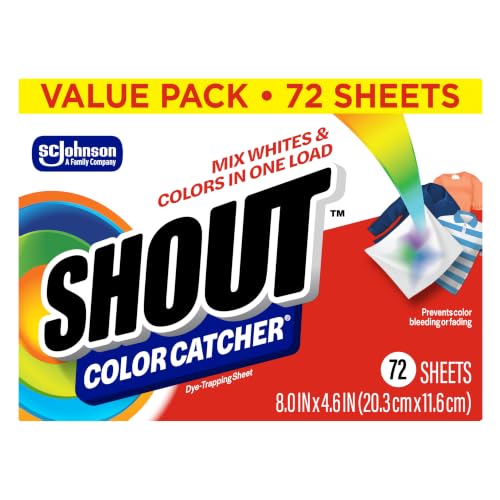
Shout Color Catcher Dye-Trapping Sheets, 72 Count
If an item bleeds in the bowl test, a dye-trapping sheet in the drum catches loose dye in the wash water before it settles on your whites. It does not improve the garment's fastness; it only limits the damage.
Buy on AmazonTie-dyed or home-dyed something? Rinse until the water runs clear before the first wash; see how to keep tie dye from bleeding into white.

Rit ColorStay Dye Fixative, 8 fl oz
A cationic dye fixative used after rinsing helps home dyes on natural fibres bleed less in later washes. Follow the label, and treat it as a help, not a substitute for a proper rinse-out.
Buy on AmazonWhich fabrics and dyes are most colorfast?
Fastness depends on the dye-fibre pair more than the fibre alone. Properly washed-off reactive dyes on cotton give good wash fastness because they bond chemically with the fibre. Disperse dyes on polyester give good wash and light fastness but can be weak on sublimation if finished too hot. Vat dyes on cotton are among the most wash- and light-fast. Direct dyes and many household all-purpose dyes give the weakest wash fastness unless a fixative is used.
Frequently asked questions
What does color fastness mean?
Color fastness means a fabric keeps its colour and does not stain other materials when washed, rubbed, wetted, exposed to sweat, light, heat or chlorine. It is graded from 1 (poor) to 5 (excellent), and light fastness from 1 to 8.
What is a good color fastness rating?
Grade 4 or above is good, and 3-4 is the common pass line for washing and staining tests. For light fastness, around 4 on the blue wool scale is typical for apparel.
What is the difference between colour change and staining?
Colour change measures how much the tested fabric fades or shifts shade. Staining measures how much dye transfers to a white adjacent fabric. Each has its own grey scale and its own grade on the report.
Why does light fastness use a 1 to 8 scale?
Light fastness is judged against eight blue wool references that each fade about twice as slowly as the previous one. The sample gets the grade of the reference that fades at the same rate.
Why do dark colours fail wet rubbing?
Dark shades carry much more dye, and any unfixed or loosely held dye on the surface transfers easily when wet. A longer wash-off with hot soaping usually improves wet rubbing by about half to one grade.
How do I know if a garment is colorfast?
Rub a damp white cloth on an inside seam, or soak the item alone in warm water for 10 to 15 minutes. If colour transfers or the water turns coloured, wash it separately until it stops bleeding.
Can you make a fabric more colorfast at home?
You can reduce bleeding by rinsing until the water runs clear and using a dye fixative on home-dyed natural fibres. You cannot fully fix a badly dyed fabric, so washing cold and separately is still the safest option.
Our verdict
The short version
Colour fastness is graded 1–5 on the grey scale (1–8 for light), and every result has two sides: colour change and staining. Failures cluster in dark shades and polyester blends, and the fixes are process fixes: proper soaping, reduction clearing and sensible finishing temperatures.



[…] What Is Color Fastness In Textile? | 16 Types | Methods | Importance […]