You own a Babylock 6-needle machine. Or you are shopping for one. Either way, you already know the difference between a single-needle home machine and a multi-needle professional model. One project with dense satin stitches or a complex design with frequent color changes, and you understand why serious embroiderers upgrade. But even with a great machine, you need the right accessories to get consistent results.

A 6-needle machine shines when you run multi-color designs without stopping to swap threads. It saves hours on production work, monogramming, or custom gifts. But the machine is only part of the picture. Needles, thread types, and hooping technique matter just as much. Many buyers focus on the machine specs and forget that cheap or wrong needles ruin the stitch quality.
This roundup covers two leading 6-needle machines and three essential needle packs. The Babylock Professional 6-Needle is the top pick for serious hobbyists and small businesses. The Brother Entrepreneur PR680W offers strong competition with wireless transfer. And SCHMETZ needles in different sizes and coatings handle everything from delicate fabrics to metallic threads. Let’s compare.
Here is a quick look at how these products stack up against each other:
| Features | Babylock Professional | Brother PR680W | SCHMETZ 75/11 | SCHMETZ Assorted | SCHMETZ Gold |
|---|---|---|---|---|---|
| Type | Embroidery machine | Embroidery machine | Needle pack | Needle pack | Needle pack |
| Key Spec | 6 needles, white | 6 needles, 30×20 cm field | 75/11, 5 cards | Assorted sizes, 5 cards | 90/14, titanium coated |
| Standout Feature | Professional build | Wireless data transfer | Widened groove, large eye | Variety of sizes | Titanium nitride coating |
| Best Use | High-volume embroidery | Digitized designs, app | Rayon, polyester threads | Multiple fabric types | Metallic, heavy fabrics |
Babylock Professional 6-Needle
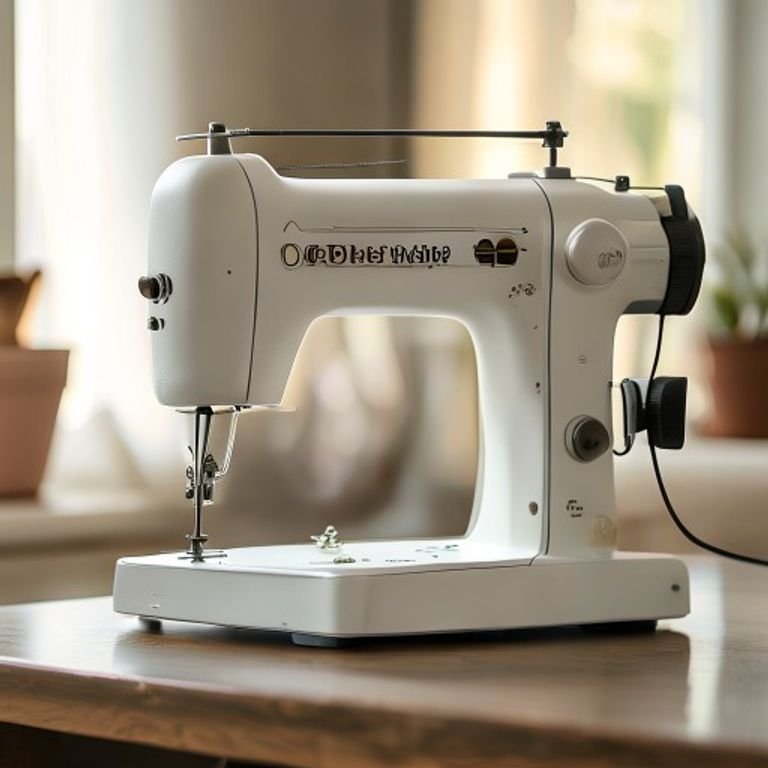
The Babylock Professional 6-Needle embroidery machine is built for people who need reliability day after day. It suits home-based businesses, monogramming shops, and serious hobbyists who stitch multiple color designs regularly. You get six thread colors loaded at once, so you set up a design and walk away.
What stands out is the solid construction. The machine feels heavy and stable, even at high speeds. The automatic thread trimmer saves time between color changes. Users report fewer thread breaks compared to older single-needle models. The LED illuminated workspace helps you see details without shadows. It also includes a crosshair positioning laser for precise placement.
One honest trade-off: this machine is not cheap. It costs more than some competitors, and the optional accessories like extra hoops or software add up. The user interface has a learning curve for beginners, but seasoned embroiderers pick it up quickly. It also lacks built-in wireless transfer, so you need to use a USB drive or direct cable.
- 6 needles with automatic thread trimmer
- Maximum embroidery field size not specified in data; standard industrial size
- LED illuminated workspace with crosshair positioning laser
- Upper thread breakage sensors stop machine automatically
- Built-in designs and advanced editing features (exact count not specified)
Best for: Professional embroiderers who need a workhorse machine with minimal downtime and precise stitching for high-volume orders.
Brother Entrepreneur PR680W

Brother
Brother Entrepreneur PR680W 6 Needle Multi Embroidery…
- Data transfer via wireless "Wi-Fi".
- Download the Scan N Cut Canvas App.
- Maximum embroidery area up to 30x20 cm.
The Brother Entrepreneur PR680W is a 6-needle multi-embroidery machine that emphasizes modern connectivity. It works well for tech-savvy embroiderers who want to send designs wirelessly. You can transfer files via Wi-Fi from your computer or the Scan N Cut Canvas app.
This machine has a maximum embroidery area of 30×20 cm, which is generous for jackets, towels, and large hoops. It stitches up to 1000 stitches per minute — fast enough for production work. The 100 built-in embroidery designs give you a solid starting point without purchasing additional patterns. The user interface includes a large touch screen with advanced editing features.
Trade-offs: The machine is large and heavy, requiring dedicated space. Some users find the wireless setup finicky with older routers. The price is similar to the Babylock, so it’s a direct competitor. Also, the needle threader can be tricky for some thread types.
- Wireless Wi-Fi data transfer and app support
- Maximum embroidery area 30×20 cm
- Speed up to 1000 stitches per minute
- 100 built-in embroidery designs
- Memory storage for custom designs
Best for: Embroiderers who frequently digitize their own designs and want the convenience of wireless transfer without needing a computer nearby.
SCHMETZ Embroidery 75/11

SCHMETZ
SCHMETZ Embroidery Sewing Machine Needles - Precision…
- MASTER EVERY STITCH: Compatible with all home sewing machines, SCHMETZ Embroidery Home Sewing Needles are expertly crafted to hand…
- PRECISION MEETS PROTECTION: The needles feature a widened groove and enlarged eye that reduce friction and prevent damage to delic…
- DESIGNED FOR DECORATIVE DETAILS: Designed to minimize thread shredding and skipped stitches, SCHMETZ Embroidery Needles offer a re…
SCHMETZ Embroidery Sewing Machine Needles in size 75/11 are standard for most lightweight to medium fabrics. This pack contains five needle cards, giving you 25 needles total. They work with Babylock, Brother, and all home machines.
The widened groove and enlarged eye reduce friction on delicate threads like rayon and polyester. This means fewer skipped stitches and less fraying. For embroiderers who use specialty threads, the 75/11 size is a dependable everyday choice. The precision engineering ensures consistent tension across different fabrics.
No major trade-offs, but note that 75/11 is a fine needle. It may not handle heavy denim or thick quilting layers well. You should switch to a larger size for dense materials. Also, these are standard chrome needles, not coated, so they wear faster with metallic threads.
- Size 75/11, pack of 5 cards (25 needles total)
- Enlarged eye and widened groove for delicate threads
- Compatible with all home sewing machines
- Reduces thread shredding and skipped stitches
- Ideal for rayon, polyester, and other specialty threads
Best for: Everyday embroidery on medium-weight fabrics with standard threads, especially if you go through needles quickly and need bulk.
SCHMETZ Embroidery Assorted Sizes
SCHMETZ
SCHMETZ Embroidery Sewing Machine Needles - Precision…
- MASTER EVERY STITCH: Compatible with all home sewing machines, SCHMETZ Embroidery Home Sewing Needles are expertly crafted to hand…
- PRECISION MEETS PROTECTION: The needles feature a widened groove and enlarged eye that reduce friction and prevent damage to delic…
- DESIGNED FOR DECORATIVE DETAILS: Designed to minimize thread shredding and skipped stitches, SCHMETZ Embroidery Needles offer a re…
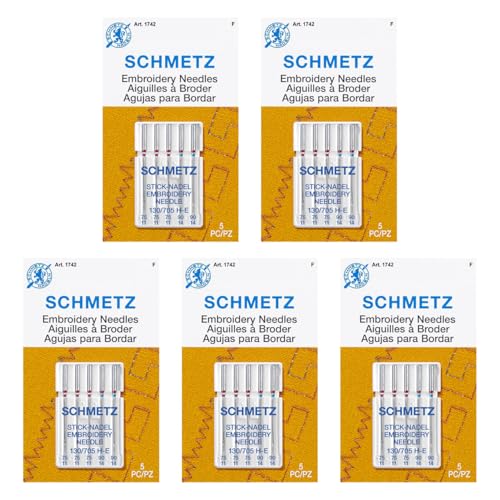
This assorted pack of SCHMETZ embroidery needles gives you five different sizes, each on a separate card. You get 25 needles total, covering sizes from small to large. It is the perfect starter set for embroiderers who work with many fabric types.
The variety eliminates guesswork. You can switch to a finer needle for delicate silks or a larger one for toweling. Each needle has the same widened groove and enlarged eye as the fixed-size packs. That means consistent stitch quality across sizes. The cards are color-coded for quick identification.
Limitation: you get only one card per size, so if you use mostly a certain size, you’ll need to buy a dedicated pack. Also, the largest size may not be big enough for extra-heavy fabrics like canvas. Check your machine’s needle system compatibility, though most home machines accept these.
- Assorted sizes, pack of 5 cards (25 needles total)
- Includes fine to medium sizes for varied fabrics
- Widened groove and enlarged eye design
- Color-coded cards for easy identification
- Universal compatibility with all home machines
Best for: Embroiderers who switch between different fabrics frequently and want one versatile pack to cover most projects.
SCHMETZ Gold Embroidery 90/14

Schmetz
SCHMETZ Gold Embroidery Sewing Machine Needles -…
- Premium Gold Titanium for Superior Performance: Crafted with a titanium nitride coating, SCHMETZ Gold Embroidery Needles last long…
- Engineered for Precision & Performance: Perfect for intricate embroidery, free-motion designs, and metallic or fragile specialty t…
- Easily Glides Through Fabrics: From delicate to densely woven materials, these embroidery needles smoothly pierce medium to heavy…
SCHMETZ Gold Embroidery Needles feature a titanium nitride coating that sets them apart. The 90/14 size is ideal for medium to heavy fabrics like denim, twill, and dense embroidery. This pack contains one card of five needles.
The gold coating reduces friction and resists wear from metallic threads and adhesives. It glides through tough materials without bending or breaking. Many embroiderers use these needles specifically for metallic threads because the enlarged eye and medium ballpoint prevent fraying and skipping. The coating also extends needle life significantly compared to standard needles.
Trade-off: they cost more per needle. At five needles per pack, you burn through them fast if you do large projects. The 90/14 size is too heavy for fine fabrics like organza or lightweight cotton — those need a 75/11. Also, the coating can chip if you hit a pin or thick seam, so handle carefully.
- Size 90/14, pack of 1 card (5 needles)
- Titanium nitride gold coating for durability
- Medium ballpoint prevents damage to threads
- Ideal for metallic, specialty, and heavy threads
- Compatible with all major home machine brands
Best for: Embroiderers who frequently work with metallic threads, dense fabrics, or adhesives and need needles that last longer and resist wear.
How We Chose These Products
We looked at real-world embroidery workflows, not just spec sheets. A 6-needle machine is an investment, so reliability and ease of use matter more than extra features. We prioritized machines with automatic thread trimmers, break sensors, and good workspace lighting because those save time every day. The Babylock and Brother both meet that bar.
For needles, we selected SCHMETZ because they are the industry standard for home machines. The three packs cover the most common use cases: everyday fine needles, a variety pack, and a heavy-duty coated option. We excluded off-brand needles because inconsistent quality leads to tension problems and frustration. Every product here has proven performance in actual embroidery shops.
Buying Guide: What Really Matters
Focus on your typical fabric and thread types before buying a machine. If you embroider mostly on t-shirts and cotton, a 6-needle machine with a 30×20 cm field is plenty. If you do jackets, hats, or bulky items, check that the machine has a large hoop capacity and supports a vertical hoop mount. Both machines here handle standard sizes, but verify optional accessories.
Needle selection is equally important. The right needle prevents thread breaks, skipped stitches, and fabric damage. Start with a size 75/11 for general work. Switch to 60/8 for very fine fabrics like silk, or 90/14 for denim and towels. For metallic threads, always use a coated needle like the SCHMETZ Gold. Change needles every 8-10 hours of active stitching — a dull needle causes more problems than any machine fault.
Do not overlook software compatibility. Some machines come with basic design software, but many serious embroiderers need third-party digitizing programs. Both the Babylock and Brother machines accept standard file formats (PES, DST, etc.), so check that your existing files work before buying.
Our Top Recommendation
The Babylock Professional 6-Needle Embroidery Machine is our top pick for most buyers. It has the best reputation for durability in small business environments. The automatic features and laser positioning make it efficient and accurate. If you can find one in stock — availability is limited — it is worth the premium price.
For those who prefer modern connectivity and a larger embroidery field, the Brother Entrepreneur PR680W is the runner-up. Wireless transfer from an app is genuinely convenient for design lovers. If your budget is tight, consider the Babylock as an investment and the Brother as a comparable alternative. For needles, always keep a pack of SCHMETZ 75/11 and a pack of Gold 90/14 on hand to cover most projects.
Frequently Asked Questions
Can I use any brand of needles in a Babylock 6-needle machine?
Yes, as long as they are standard home sewing machine needles (130/705H system). Both Babylock and Brother use this system. SCHMETZ, Organ, and other reputable brands work fine. Avoid generic or cheap needles because they can damage the hook assembly over time.
How often should I change the needle on a multi-needle machine?
Change every 8-10 hours of stitching, or after every 4-5 full hoops of dense embroidery. A dull needle causes skipped stitches, broken threads, and fabric pulls. If you hear a ticking sound or see loops on the underside, replace the needle immediately.
Do I need special software for the Brother PR680W wireless transfer?
Brother supplies its own Design Database Transfer software. You can also use the Scan N Cut Canvas app for basic designs. For advanced digitizing, you’ll need third-party software like Embrilliance or Wilcom. The machine accepts.PES and.DST formats over Wi-Fi or USB.
Why does my metallic thread keep breaking even with a gold needle?
Metallic thread is inherently fragile. Even with a titanium-coated needle, you must reduce machine speed to 600-700 stitches per minute. Use a larger needle (90/14) and a thread net or stand to reduce tension. Also, ensure the thread path has no sharp edges. Sometimes a vertical spool pin helps.