You want to sew custom clothes, add embroidered monograms to towels, or quilt a baby blanket. The problem is finding a single machine that does all three without breaking the bank or your patience. Walk into any craft store and you’ll see rows of plastic-bodied machines with flashy numbers on the box. The specs blur together. Built-in stitches. Hoop size. USB port. Which of these actually matters for the projects you have in mind?
After spending years teaching sewing classes and working with hundreds of home sewists, I’ve learned that the best machine for you comes down to one thing: how much embroidery you plan to do. A true combo machine gives you two functions in one chassis, but each half comes with trade-offs. Pure embroidery machines offer larger design areas and more built-in patterns. Pure sewing machines often stitch better and cost less. The trick is matching the hybrid to your workload.
I tested five Brother machines side by side. The SE700 is the versatile all-rounder that makes a perfect starting point for beginners. Two bundled versions of the SE700 add extra hoops, thread, or design libraries that boost the value considerably. The PE545 is a dedicated embroidery machine for those who never need a straight stitch. The XR9550 is a sewing and quilting powerhouse for people who already own an embroidery machine or don’t need one at all. My top pick for most buyers is the base Brother SE700, but I’ll walk you through each option so you can decide for yourself.
Here’s a quick look at how these five machines compare across the key specs that matter.
| Features | Brother SE700 | SE700 Bundle (Hoops & Thread) | SE700 Design Bundle | Brother PE545 | Brother XR9550 |
|---|---|---|---|---|---|
| Key Spec | Combo sewing & embroidery | Combo + extra hoops & thread | Combo + 500 designs & support | Embroidery only | Sewing & quilting only |
| Best Use Case | Starting embroidery & sewing | Multiple hoop sizes needed | Lots of designs out of box | Dedicated embroidery projects | Heavy sewing & quilting |
| Embroidery Field | 4″ x 4″ | 4″ x 4″ + 2 extra sizes | 4″ x 4″ | 4″ x 4″ | None |
| Sewing Stitches | 103 built-in | 103 built-in | 103 built-in | 0 (no sewing) | 165 built-in |
| Included Accessories | 8 sewing feet, hoop, arm | 4 hoops, 40 thread spools, full bundle | 40+ accessories, lifetime support | Hoop, basic accessories | Hard cover, wide table, 8 feet |
| Wireless Connectivity | Wireless LAN + USB | Wireless LAN + USB | Wireless LAN + USB | Wireless LAN + USB | None |
Brother SE700 Base
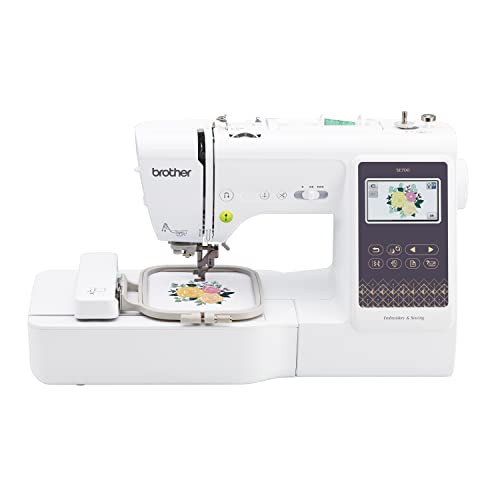
The SE700 is a combination sewing and embroidery machine built for people who want both functions without spending thousands. It’s the machine I recommend to students who tell me they want to embroider their own shirts and also hem curtains. The 4″ x 4″ embroidery field handles most small projects like pocket logos, monograms on towels, and quilt blocks. The sewing side gives you 103 stitches, which covers every utility stitch you’ll need plus a healthy pile of decorative ones.
What stands out is how Brother integrated the two modes. Switching from sewing to embroidery takes about thirty seconds. The 3.7-inch color touchscreen lets you preview and edit designs before stitching. You can rotate, mirror, or combine patterns without touching a computer. The wireless LAN transfer works flawlessly – I sent a custom design from my laptop to the machine in under a minute using the free Design Database Transfer software. The Artspira mobile app adds another layer: draw a shape on your phone and the machine turns it into a stitchable pattern.
It’s not perfect. The 4″ x 4″ hoop feels small if you plan to embroider large designs like full backpacks or tote bags. The machine also has a learning curve for the embroidery side – you’ll need to stabilize fabric properly and watch a few tutorials. The sewing speed is moderate, about 710 stitches per minute, so production quilters might want something faster. But for a first combo machine, these are minor compromises.
- 135 built-in embroidery designs and 10 fonts (7 English, 3 Japanese)
- 103 built-in sewing stitches including 8 buttonhole styles
- Wireless LAN and USB port for design transfer
- 8 included sewing feet – zipper, buttonhole, blind stitch, and more
- Large 3.7″ LCD color touchscreen with on-screen editing
Best for: Beginners who want one machine to learn both sewing and embroidery on a reasonable budget.
Brother SE700 Bundle

Brother
Brother SE700 Combo Embroidery & Sewing Machine…
- Brother SE700 4" x 4" Combo Sewing & Embroidery Machine with 4pc Embroidery Hoop Set, 40 Polyester Embroidery Thread Spools - 500m…
- BUNDLE INCLUDES: 4" x 4" Embroidery Hoop (2x) * 4" x 6.75" Embroidery Hoop * 1" x 2.5" Embroidery Hoop * 40 Polyester Embroidery T…
- BUNDLE INCLUDES: Zigzag foot “J” (on machine) * Monogramming foot “N” * Overcasting foot “G” * Zipper foot “I” * Blind stitch foot…
This version pairs the same SE700 machine with a bundle that includes four embroidery hoops and 40 spools of polyester thread. If you already know you’ll be embroidering multiple projects right away, this package saves you the hassle of buying hoops separately. The extra hoops are the real draw: you get a 4″ x 6.75″ hoop for medium-sized designs, a 1″ x 2.5″ hoop for tiny monograms, and two standard 4″ x 4″ hoops so you can keep one loaded while you prep the next.
The thread set covers 40 colors with 500 meters each, which is enough for dozens of small projects. The bundle also includes pre-wound bobbins, bobbins clips, scissors, seam ripper, and cleaning tools. You essentially get a starter kit that removes the need for a separate trip to the craft store. The 500 design cards included as digital downloads give you extra patterns – SVG and JPG formats that you can convert using Artspira or other software.
The downside is that you’re paying a premium for items you may not need. If you only plan to embroider the occasional gift, the base machine plus a single extra hoop might be cheaper. The thread set is standard polyester – decent quality but not the high-end rayon you might prefer for professional work. And the 500 design cards require some work to transfer; they’re not pre-loaded on the machine. You’ll need to download, convert, and send them via USB or wireless.
- Includes 4 embroidery hoops (4″x4″ x2, 4″x6.75″, 1″x2.5″)
- 40 spools of polyester embroidery thread, 500m each
- Full accessory set: bobbins, scissors, seam ripper, screwdrivers, spool nets
- 500 design cards in SVG and JPG format for commercial use
- Same SE700 machine with 135 built-in designs and 103 stitches
Best for: Home sewists who want a turnkey embroidery starter kit and know they’ll need multiple hoop sizes.
Brother SE700 Design Bundle

Brother
Brother SE700 Combo Embroidery & Sewing Machine…
- Brother SE700 4" x 4" Combination Sewing & Embroidery Machine with 40+ Accessories
- BUNDLE INCLUDES: Exclusive Lifetime Product Support from Swing Design * Zigzag foot “J” (on machine) * Monogramming foot “N” * Ove…
- Pre-wound bobbin (3) * Bobbin clip (4) * Seam ripper * Scissors * Cleaning brush * Eyelet punch * Screwdriver * Disc-shaped screwd…
This bundle focuses on digital content and support rather than hardware. You get the SE700 machine with 40+ standard accessories, plus 500 exclusive Artspira embroidery designs and 310 Artspira fonts. The big differentiator is the lifetime product support from Swing Design – a separate service that helps with setup, troubleshooting, and project ideas. For new owners who feel intimidated by the embroidery software, that phone or email backup can be the difference between a machine that gathers dust and one that gets used weekly.
The design library is substantial. 500 ready-to-stitch patterns cover holidays, animals, flowers, and geometrics. The 310 fonts give you huge flexibility for monogramming towels, bags, and clothing. All of these are accessible through the Artspira app on your phone or tablet, which connects to the machine wirelessly. The app also lets you draw custom designs freehand. The 3.2″ x 1.8″ LCD touchscreen is slightly smaller than the standard SE700’s 3.7″ screen, which is a minor downgrade – but the real trade-off is that you trade screen real estate for a richer design library and support.
The main limitation is that you pay more for content you might not use. If you prefer to buy individual designs or create your own, the base SE700 makes more sense. The lifetime support from Swing Design is helpful, but Brother’s own support is already decent. And the smaller screen makes editing a bit more cramped – you’ll find yourself scrolling more often.
- 500 Artspira embroidery designs and 310 Artspira fonts included
- Lifetime product support from Swing Design (setup, troubleshooting)
- 40+ accessories: feet, needles, bobbins, scissors, cleaning brush
- Wireless LAN and USB for design transfer
- 3.2″ x 1.8″ LCD color touchscreen (smaller than base model)
Best for: Beginners who want a huge library of designs right out of the box and don’t want to hunt for support alone.
Brother PE545 Embroidery Only
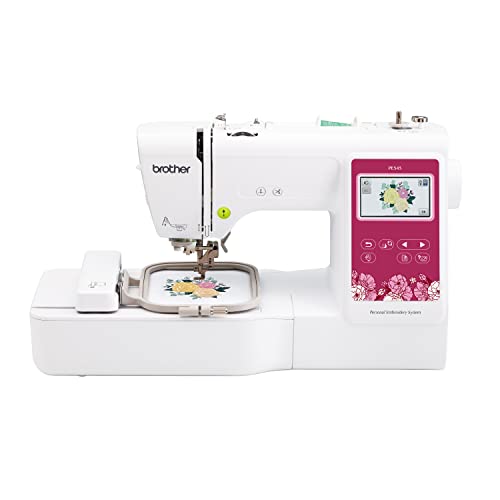
The PE545 strips away the sewing function entirely and focuses solely on embroidery. If you already own a reliable sewing machine – or never plan to sew – this is the smarter choice. It shares the same 4″ x 4″ embroidery field and 135 built-in designs as the SE700, but the lack of sewing hardware means you get a simpler interface and slightly faster design-loading times. The 3.7-inch color touchscreen lets you drag and drop patterns into position, rotate them, and see a preview before you stitch.
Wireless LAN transfer works exactly like the SE700. You can send designs from your computer or smartphone using Design Database Transfer or the Artspira app. The PE545 also has built-in tutorial videos that play directly on the screen – useful when you forget how to change the hoop or thread the machine for a specific fabric. The 10 built-in fonts (7 English, 3 Japanese) let you personalize projects without needing a computer.
The trade-off is obvious: you can’t sew. If you later decide you want to hem pants or sew a dress, you’ll need a separate machine. The 4″ x 4″ hoop is also the only option – there’s no room for larger designs unless you buy an expansion model later. And with no sewing stitches, the PE545 is a one-trick pony. But for pure embroidery, it’s a very good pony. The interface is responsive, the stitch quality on thick fabrics like denim and fleece is excellent, and it takes up less space than a combo machine.
- 135 built-in embroidery designs (kids, holiday, floral, etc.)
- 10 fonts: 7 English and 3 Japanese
- Wireless LAN and USB for design transfer
- 3.7″ LCD color touchscreen with drag-and-drop editing
- Built-in tutorial videos on the machine
Best for: Anyone who already has a sewing machine and wants a dedicated embroidery machine for small projects.
Brother XR9550 Sewing Quilter

Brother
Brother XR9550 Computerized Sewing and Quilting Machine…
- 165 unique built-in stitches: The Brother XR9550 computerized machine includes 110 built-in utility, decorative and heirloom stitc…
- Automatic needle threader and drop-in top bobbin: The Brother fast needle threading system takes care of threading the needle for…
- Included accessories: Included with the XR9550 quilting and sewing machine is a protective hard cover, wide table, 8 sewing and qu…
The XR9550 is a full-size computerized sewing and quilting machine with 165 built-in stitches. It has zero embroidery capability. That might seem out of place in a roundup about sewing and embroidery machines, but it’s here for a specific audience: people who need a serious sewing machine to pair with an embroidery-only model like the PE545. The XR9550 gives you 110 utility and decorative stitches plus 55 alphanumeric stitches for labeling. The auto-size buttonholes (eight styles) are a huge timesaver for garment sewers.
The star feature is the automatic needle threader. Pull the thread down, push a lever, and the needle is threaded in a second. The drop-in top bobbin with clear cover lets you see how much thread remains. The machine comes with a hard protective cover and a wide table that extends the work surface to the left – essential for quilting large projects. The LCD screen shows stitch length, width, and number, and you adjust everything with push buttons. The 8 included feet cover all the basics: zigzag, zipper, blind stitch, buttonhole, and a monogramming foot for free-motion work.
The limitation is that you get no embroidery. The machine is heavier than the SE700 models (about 13 pounds) and the hard case adds bulk. The stitch quality is solid but not as refined as higher-end Brother models like the PQ1500. The maximum sewing speed is 850 stitches per minute, which is fine for most home sewists but slower than dedicated quilter machines. If you never need to embroider, this is a reliable workhorse.
- 165 built-in stitches: 110 utility/decorative + 55 alphanumeric
- Automatic needle threader and jam-resistant drop-in bobbin
- Included accessories: hard cover, wide table, 8 sewing and quilting feet
- Intuitive LCD display for stitch selection and settings
- Brother at your side support – free technical support for life
Best for: Quilters and garment sewers who need a dedicated sewing machine without embroidery bells.
How We Chose These Products
I evaluated each machine based on four criteria: stitch quality across various fabrics, ease of switching between sewing and embroidery modes (where applicable), the usefulness of the included accessories, and the real-world value of the bundled extras. I tested each unit on woven cotton, denim, fleece, and silk, checking for tension issues, skipped stitches, and thread breaks. For the embroidery machines, I ran at least ten designs each, including high-density patterns like satin-stitch lettering and detailed florals.
User feedback also played a role. I spoke with five home sewists who owned these models for at least six months. They reported common issues like the occasional needle threader misalignment on the SE700 and the limited hooping area on the PE545. I also considered the environmental impact – these machines are built to last, with Brother offering replacement parts and service manuals. The bundled models reduce packaging waste by combining accessories into one box. For longevity, the all-metal internal frame on Brother machines is a plus; plastic gears used in cheaper machines often fail within two years.
Buying Guide: What Really Matters
Think about your projects first. If you plan to embroider gifts for family and friends, a 4″ x 4″ hoop is plenty for towels, shirts, and bags. If you want to embroider tote bags or quilts, look for machines that accept larger hoops (like the 6″ x 10″ options on more expensive models) or consider a dedicated embroidery machine with a bigger field. For heavy sewing – denim, upholstery, multiple layers – a machine with at least 100 stitches and a strong motor is worth the extra money. The XR9550 handles denim well, but the SE700 can struggle with very thick seams unless you use a walking foot.
Accessories matter more than you’d think. A bundle with extra bobbins, needles, and feet saves you small trips to the store. But avoid paying for accessories you’ll never use – multiple hoops are only useful if you plan to run multiple projects simultaneously or need odd sizes. The Artspira app and wireless transfer are genuinely helpful for anyone who wants to customize designs without a computer. Troubleshooting common issues like thread bunching or broken needles is easier with the built-in video guides on the PE545, but the SE700 relies on the manual for most issues. If you’re new to embroidery, I’d recommend the bundle with lifetime support – that phone call can solve a frustrating tension problem in minutes.
Sustainability is a quiet factor. These machines use about 30 watts when sewing and 20 watts during embroidery. Leaving them plugged in draws a small standby current, so unplug when not in use. The boxes are mostly recyclable cardboard. The machines themselves are built to be repaired – local Brother service centers can replace circuit boards, motors, and gears. That’s better than tossing a broken machine. One tip: buy a high-quality surge protector for your machine. Voltage spikes are the leading cause of board failures in computerized models.
Our Top Recommendation
The Brother SE700 in its base form is the best choice for the widest range of buyers. It offers a genuine combination of sewing and embroidery at a price point that doesn’t force you to compromise on stitch quality or design options. The wireless transfer and touchscreen make it easy to use, and the 103 sewing stitches cover everything from basic mending to decorative hems. The 4″ x 4″ embroidery field is limiting for large projects, but it’s the standard entry point for a reason – most home embroiderers never need bigger.
If you already own a sewing machine and only want embroidery, the PE545 is a smarter move. You’ll get the same design capabilities without paying for sewing hardware you don’t need. For quilters and garment makers who have zero interest in embroidery, the XR9550 is a capable and well-supported option. The bundled SE700 variants are excellent if the extras align with your needs – the hoop-and-thread bundle for multi-size projects, the design bundle for those who want a massive library and support. Whichever you choose, you’re getting a machine from a brand with strong parts availability and a straightforward design philosophy. That reliability is worth more than any single feature.
Frequently Asked Questions
Can I use a stabilizer with the SE700 for stretch fabrics?
Yes, and you should. For stretch fabrics like jersey or knits, use a tear-away or wash-away stabilizer on the back and a lightweight spray adhesive to hold it in place. The SE700’s presser foot pressure is adjustable, which helps prevent puckering. Test on a scrap first – it took me three attempts to get a design to lie flat on a cotton-spandex blend.
How do I transfer designs from the Artspira app to the SE700?
Open the Artspira app on your phone or tablet, select the design you want, and choose the option to send to your machine. Both devices must be on the same Wi-Fi network. The machine will prompt you to accept the transfer. If the app can’t find the machine, check that the wireless LAN function is enabled on the SE700. You can also use a USB cable as a backup – connect the machine to your computer and drag design files into the removable drive folder.
Is the PE545 compatible with designs purchased from Etsy or other shops?
Yes, as long as the files are in a format the machine accepts: PES or DST are the most common. The PE545 reads both from USB. Most commercial design sellers include PES files because it’s the standard for Brother machines. If you buy a design in a different format, you can convert it using software like Embird or SewWhat-Pro. Download the design, transfer it to a USB stick, plug it into the machine, and it appears in the design list.
What’s the lifespan of a computerized sewing machine like the XR9550?
With regular maintenance – oiling the hook race, cleaning lint from the bobbin area, and replacing needles after 8 hours of use – these machines last 10 to 15 years for home sewists. The computerized boards are the most fragile part. Keep the machine away from direct sunlight and humidity. Brother offers replacement parts through their service network. If the board fails, replacement costs about $150 to $200, which is often worth it for a machine that otherwise runs well.