We earn a commission if you buy through links on this page, at no extra cost to you. Picks are based on softener chemistry, fibre behaviour, manufacturer instructions and industrial wet-processing experience, not our own product testing.
Quick answer
The best fabric softener for static cling is a dryer sheet such as Bounce Outdoor Fresh, because it releases its cationic softener in the dryer, exactly where synthetic clothes build their charge. Downy liquid works well too if you prefer adding softener in the rinse. For a fragrance-free option, use Bounce Free & Gentle. Whatever you choose, stop over-drying polyester and fleece.
Our top picks at a glance
Bounce Outdoor Fresh Dryer Sheets, 160 Count
Heat-released softener coats every garment in the dryer, where most static forms.
No products found.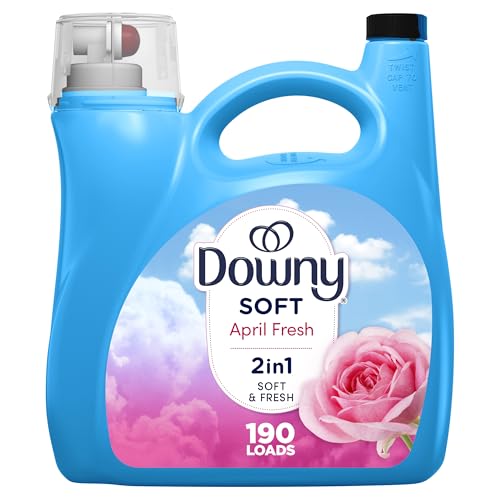
Downy Liquid Fabric Softener, April Fresh, 140 oz
Cuts static and wrinkles from the rinse cycle; good if you air-dry part of the load.
Buy on Amazon
Bounce Free & Gentle Dryer Sheets, 160 Count
Same static control without dyes or perfume, a fragrance-free option for sensitive skin.
Buy on AmazonStatic cling fixes compared
| Product | Type | Where it works | Best for | |
|---|---|---|---|---|
No products found. Bounce Outdoor Fresh Dryer Sheets, 160 Count | Dryer sheet | In the dryer | Mixed loads with polyester, fleece, nylon | No products found. |
| Liquid softener | Final rinse | Cotton-rich loads, wrinkle reduction | Buy on Amazon |
| Dryer sheet, dye- and perfume-free | In the dryer | Households avoiding fragrance | Buy on Amazon |
 | Anti-static spray | On the worn garment | Skirts, dresses, tights, emergencies | Buy on Amazon |
 | Wool dryer balls | In the dryer | Cotton loads, chemical-free softening | Buy on Amazon |
Sheets and liquid leave a cationic film on fibres; wool balls work mechanically.
Why static builds up in your laundry
Static cling is a triboelectric effect. When two different materials rub and separate, electrons move from one to the other, leaving one fabric positive and the other negative, so they stick. A tumble dryer is an ideal static generator: constant contact between different fibres in hot, dry air.
On the triboelectric series, wool and nylon tend to charge positive, while polyester, acrylic and polypropylene charge negative. Cotton sits near the middle. A load of nylon leggings, polyester fleece and wool socks makes far more static than a load of cotton T-shirts.
The second factor is moisture, which conducts charge away. Cotton holds plenty, so its charge leaks off quickly; polyester holds almost none. That is why static is worse in winter, when indoor humidity drops, and when you over-dry synthetics.
| Fabric type | Moisture regain (typical) | Static risk | Best fix |
|---|---|---|---|
| Cotton, linen | About 7–8.5% | Low | Wool dryer balls or a light dose of liquid softener |
| Wool | About 13–16% | Low when washed alone, high when tumbled with synthetics | Wash and dry separately, air-dry flat |
| Polyester, polyester fleece | About 0.4% | High | Dryer sheet, lower heat, remove slightly damp |
| Nylon | About 4% | High against polyester | Dryer sheet or air-dry; spray when worn |
| Acrylic (sweaters, blankets) | About 1–2% | High | Dryer sheet, low heat, or hang to dry |
| Polyester-spandex activewear | Under 1% | High | Air-dry; no softener (it blocks wicking) |
| Cotton-polyester blends | Depends on blend | Medium | Dryer sheet, avoid over-drying |
Standard textbook moisture regain values. Higher regain means charge dissipates faster.
How fabric softener reduces static (and wrinkles)
Most fabric softeners are cationic surfactants, usually quaternary ammonium compounds. Washed fibres carry a slight negative surface charge in water, so the positively charged softener molecules are pulled onto the fibre and stay there after rinsing. That thin film does three things to stop static cling:
- Neutralises surface charge. The positive head balances the negative charge on fibres like polyester.
- Adds lubricity. Fatty tails face outwards, so fabrics slide with less friction and generate less charge.
- Attracts a little moisture. The film holds a trace of water, giving charge a path to leak away.
The same lubrication is why fabric softener reduces static and wrinkles together: smoother fibres relax instead of setting into creases. Sheets deliver the film in the dryer, liquid in the final rinse. For softness without a coating, see how to soften fabric without fabric softener.
Expert tip from Kamrul Islam
In the dye house we apply cationic softener as the last bath, after washing-off, because leftover anionic detergent reacts with it and wastes it. At home, always put liquid softener in the softener dispenser, never in the drum with the detergent.
When not to use fabric softener: towels and activewear
The film that stops static is water-repellent on its outer side. On towels it builds up wash after wash, so the loops feel soft but absorb less. On activewear it coats the fine capillary channels that move sweat away from the skin (see what moisture-wicking means) and can trap odour in synthetics.
Good to know
Skip softener and dryer sheets on towels, microfibre, gym wear, water-resistant jackets and flame-resistant items. Air-dry these or use low heat with wool dryer balls.
How the textile industry makes fabric anti-static
Mills use the same ideas at scale. Non-durable anti-static finishes are cationic or hygroscopic chemicals applied in finishing that wash off over time, like your softener. Durable finishes use hydrophilic polymers that survive many washes, and workwear, carpets and cleanroom garments use conductive carbon or metal yarns to drain charge permanently. More in our guide to special durable finishes in textiles.
Expert tip from Kamrul Islam
For performance knits we use hydrophilic silicone softeners, which keep the hand soft without killing absorbency. Household softeners aren't made that way, which is why sportswear labels say no softener.
The 5 best fabric softeners and fixes for static cling reviewed
Bounce Outdoor Fresh Dryer Sheets, 160 Count
Dryer sheet · 160 sheets · Outdoor Fresh scent
Bounce sheets carry a softener that melts in dryer heat and transfers to clothes as they tumble, so the anti-static film goes on exactly where charge builds. That makes sheets more direct than liquid for synthetic-heavy loads. Use one sheet per normal load, two for a large fleece load.
Pros
- Works in the dryer where static forms
- Also cuts wrinkles and lint cling
- Easy to dose, no measuring
Cons
- Scented, which not everyone wants
- Not for towels or activewear
Skip it if skip it if you line-dry most of your laundry, since sheets only work in a dryer.
Expert tip from Kamrul Islam
Put the sheet on top of the wet load at the start. If it leaves a greasy spot on dark polyester, rub in a little liquid detergent and rewash.
Downy Liquid Fabric Softener, April Fresh, 140 oz
Liquid · 140 fl oz · April Fresh scent · rinse cycle
Downy liquid deposits its cationic film in the final rinse, coating every fibre before drying starts. It reduces static and wrinkles and gives cotton a softer feel. It suits homes that machine-dry some items and hang others, since treated fabric keeps some static protection either way.
Pros
- Coats the whole load evenly in the rinse
- Softens cotton well
- Large bottle for many loads
Cons
- Strong scent for some users
- Overdosing leaves residue
Skip it if skip it if you dry mostly synthetics on high heat; a dryer sheet works more directly.
Expert tip from Kamrul Islam
Use the cap line, not more. Excess cationic softener builds up and can make whites look dull over time.
Bounce Free & Gentle Dryer Sheets, 160 Count
Dryer sheet · 160 sheets · dye- and perfume-free
The free and clear version of the Bounce sheet: same softening and anti-static action, no added dye or perfume. Choose it if fragrance bothers someone at home or you use a fragrance-free detergent.
Pros
- No dyes or perfume
- Same anti-static action as standard Bounce
- Good for mixed family loads
Cons
- No scent at all, if you like fresh laundry smell
- Still leaves a film, so not for towels
Skip it if skip it if you want laundry to smell fresh; the scented Bounce does the same job with fragrance.
Expert tip from Kamrul Islam
Fragrance-free does not mean coating-free. Still keep these sheets away from gym wear and microfibre.
Static Guard Fabric Spray, Fresh Linen, 5.5 oz
Aerosol spray · 5.5 oz · Fresh Linen scent
Static Guard is the quick fix for a skirt clinging to tights. A light mist leaves an anti-static layer on the garment surface. It does not replace softener in the wash, but it handles static that builds during the day in dry air.
Pros
- Instant fix on a worn garment
- Works on items you don't machine-dry
- Small can fits a drawer or bag
Cons
- Treats the surface only, not the whole load
- Needs reapplying after washing
Skip it if skip it if your static problem starts in the dryer; fix the laundry routine first.
Expert tip from Kamrul Islam
Spray the inside of a skirt or dress from the distance shown on the can and let it dry before dressing. Test silk or acetate linings in a hidden spot first.
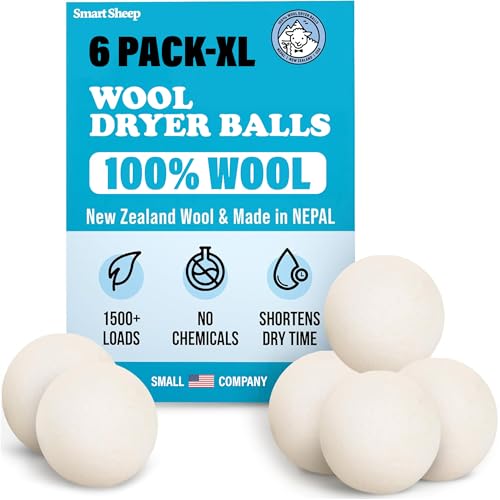
Smart Sheep XL Wool Dryer Balls, 6-Pack
Wool dryer balls · 6 XL balls · reusable
Wool dryer balls separate clothes so they dry faster and softer, with no film on the fibres. They reduce static on cotton-rich loads, but their effect on mostly polyester loads is mild. Their big advantage is that they are safe for towels and activewear.
Pros
- No coating, safe for towels and gym wear
- Shorter drying time
- Reusable for many loads
Cons
- Weaker on all-synthetic loads
- Can be noisy in the drum
Skip it if skip it if your loads are mostly fleece and polyester and static is severe; a dryer sheet will do more.
Expert tip from Kamrul Islam
Add two or three tightly scrunched aluminium foil balls for extra static control. The conductive metal gives charge a path to discharge. Replace them when they flake.
How to stop static cling in the dryer
- Sort by fibre. Dry cotton and towels apart from polyester, nylon and fleece.
- Choose one softener method. A sheet in the dryer or liquid in the rinse, not both.
- Lower the heat. Dry synthetics on low or permanent-press; high heat strips the moisture that keeps static down.
- Take synthetics out slightly damp. Let them finish on a hanger.
- Use wool or foil balls for towels and activewear, where softener doesn't belong.
- Fix the air. In winter, keeping indoor humidity around 40 to 50% reduces static on clothes you wear.
Expert tip from Kamrul Islam
Over-drying causes more cling than the choice of softener. Fleece dries far faster than cotton, so on a cotton setting it spends most of the cycle bone-dry and charging up.
Buyer's guide: choosing an anti-static softener
Sheet or liquid. Static forms in the dryer, so sheets act at the right moment for synthetic loads. Liquid suits cotton-rich loads and partly air-dried washing.
Scent. Scent has no effect on static control. Choose a free and gentle version if anyone in the home prefers no fragrance, or pair it with a fragrance-free detergent. If scent matters, see our pick of the best smelling long-lasting laundry detergent.
What you wash. For towels, sportswear and microfibre, softener is the wrong tool; use wool dryer balls, low heat and air-drying. For static on clothes you're wearing, keep a can of Static Guard.
Frequently asked questions
What is the best fabric softener for static?
A dryer sheet such as Bounce Outdoor Fresh is the best choice for static because it applies its anti-static film in the dryer, where static forms. Downy liquid is the best liquid option, and Bounce Free & Gentle is the best fragrance-free pick.
Does fabric softener reduce static and wrinkles?
Yes. Cationic softener neutralises surface charge and lubricates fibres, so clothes build less static and relax rather than set into creases.
Are dryer sheets or liquid fabric softener better for static cling?
Dryer sheets are usually better for static cling because they work during tumble drying, when charge builds. Liquid softener is better for overall softness on cotton and for loads that are partly air-dried.
What fabric softener is best for static in winter months?
Use a dryer sheet, dry synthetics on low heat and remove them slightly damp. Low winter humidity makes static worse, so a humidifier and an anti-static spray help too.
Why should you not use fabric softener on towels or activewear?
The softener film is water-repellent on its outer side, so it reduces towel absorbency and blocks the wicking channels in sportswear. It can also trap odour in synthetic gym clothes.
Do wool dryer balls reduce static?
They reduce static on cotton-rich loads by shortening drying time and holding a little moisture, but their effect on all-polyester loads is mild. Adding a few aluminium foil balls improves static control.
What laundry softener helps reduce static in socks?
A dryer sheet in the load works best for wool-blend and synthetic socks. For athletic socks with wicking yarns, skip softener and use low heat or wool dryer balls.
Our verdict
Our verdict
For most homes the best fabric softener for static cling is Bounce Outdoor Fresh dryer sheets, because they act where static starts. Pick Downy liquid for softer cotton, Bounce Free & Gentle for no fragrance, Static Guard for clothes you're wearing, and wool dryer balls for towels and activewear. And stop over-drying synthetics.
No products found.