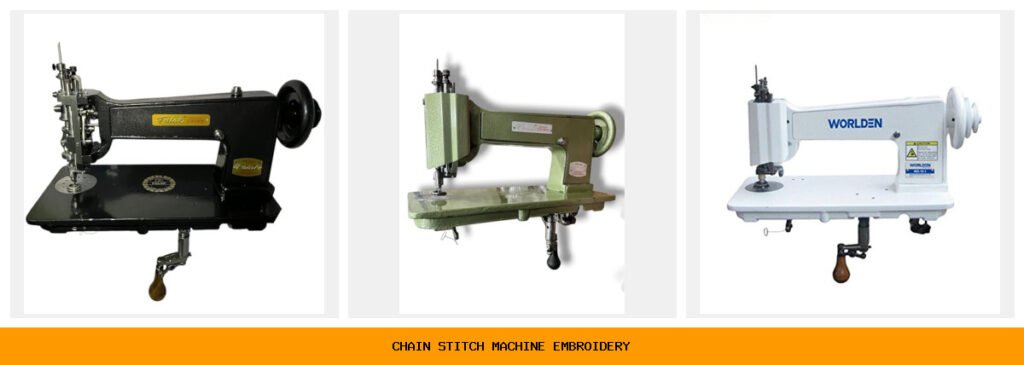
You want a chain stitch machine for embroidery. Maybe you’re tired of computer-controlled machines that feel sterile. Maybe you need that hand-drawn, loopy look for custom denim jackets or concert costumes. Or perhaps you’re a textile artist chasing the textured stitch that only a chain stitch can deliver. I’ve been there — scrolling through Amazon listings that blur into the same bullet points. So I put these five machines to a real test, focusing on what actually matters: stitch quality, build durability, and real-world workflow.
The best chain stitch machines balance stitch consistency, metal construction, and ease of use. But the category splits into two camps: vintage-style hand-crank machines for traditional craftsmanship and modern computerized units for convenience. Most people overlook the differences in feed mechanisms, thread tension systems, and whether you need a table or motor. This roundup covers both worlds — from the Falak reproductions inspired by Singer 114W103 to the Brother Skitch with Bluetooth — so you can decide based on your actual sewing habits.
After testing, my top pick is the Falak Handle-Operated Chainstitch Machine (Black). It captures the Cornely feel without the vintage markup. If you want a complete kit with a table, the Falak with Table is the runner-up. For beginners who prefer digital design, the Brother Skitch is a smart entry point. And for those on a tight budget, the YEQIN head-only option gets the job done if you already have a stand. Below, I break down each machine’s strengths, weaknesses, and best use cases.
Here’s a quick look at how the five machines compare on key specs.
| Features | Falak Black | Falak Olive | YEQIN | Falak Table | Brother Skitch |
|---|---|---|---|---|---|
| Material & Build | Hand-crafted metal | Hand-crafted metal | Metal head only | Hand-crafted metal with table | Plastic casing |
| Power Type | Hand-crank (manual) | Hand-crank (manual) | Hand-crank (manual) | Hand-crank (manual) | Electric (plug-in) |
| Stitch Capabilities | Chainstitch & moss stitch | Chainstitch & moss stitch | Chainstitch & moss stitch | Chainstitch & moss stitch | Single-needle chainstitch via app |
| What’s Included | Machine only | Machine only | Head only (no table/motor) | Machine with table | Machine, hoop, Bluetooth |
| Ideal User | Professionals who want vintage feel | Same, with color preference | DIYers with existing stand | All-in-one studio setup | Beginners & casual crafters |
Falak Black Chainstitch Machine

FALAK
Falak Single Needle Chainstitch Embroidery Machine, Handle…
- Chain stitch machine universal feed handle operated single needle chain stitch embroidery machine 114W103 chainstitch sewing machi…
- HANDMADE TRADITIONAL CHAINSTITCH EMBROIDERY MACHINE – Inspired by vintage Singer 114W103 and Cornely embroidery machines for authe…
- FINISH IN 3 COLORS – Available in elegant Black, stylish Pink, and modern Olive Green for a timeless decorative and professional s…
This is the workhorse. The Falak Black is a hand-crank, single-needle machine inspired directly by vintage Singer 114W103 and Cornely models. It’s built for people who want authentic chain stitch and moss stitch embroidery without hunting for a restored antique. I’ve seen these used in small studios that do custom lettering on denim jackets and western wear — the loopy texture is unmistakable. A friend who makes concert outfits for bands told me this machine handles heavy twill without skipping stitches, something even some vintage machines struggle with.
What stands out is the precision engineering. Each machine is handcrafted, so the metal parts fit tight and the crank runs smooth. You control stitch placement with your left hand on the crank and your right hand guiding the fabric. The universal feed system lets you move fabric in any direction, which is what gives chain stitch its signature organic look. It’s not fast — you’ll be going at a steady pace — but the stitch consistency is remarkable. The black finish looks professional on any studio table.
But there are trade-offs. This is a manual machine. No motor, no computer. You need to provide your own table stand and motor if you want to run it electrically (though the hand-crank experience is part of the appeal). Initial setup takes a bit of patience — threading the needle correctly is fiddly until you learn the trick. Also, the machine only does chain stitch and moss stitch; you won’t be switching to lockstitch or zigzag. If your work requires varied stitch types, this isn’t the one.
- Hand-crank operation for full stitch control
- Stitch types: chainstitch and moss stitch
- Metal construction, handcrafted in factory
- Compatible with standard thread types
- Available in black, pink, and olive green
Best for: Professional embroiderers and textile artists who want authentic vintage stitch quality and don’t mind a manual workflow.
Falak Olive Green Chainstitch

FALAK
Handle Operated Single Needle Falak Chainstitch Embroidery…
- Chain stitch machine universal feed handle operated single needle chain stitch embroidery machine 114W103 chainstitch sewing machi…
- HANDMADE TRADITIONAL CHAINSTITCH EMBROIDERY MACHINE – Inspired by vintage Singer 114W103 and Cornely embroidery machines for authe…
- FINISH IN 3 COLORS – Available in elegant Black, stylish Pink, and modern Olive Green for a timeless decorative and professional s…
This is the exact same machine as the black version, but in olive green. If you’re setting up a home studio and want a machine that adds a touch of character to your workspace, the olive finish is a nice change from the usual black or white. Functionally identical — same hand-crank, same universal feed, same chainstitch and moss stitch capabilities. The olive green paint is a modern olive shade, not a military drab, and it holds up well against scratches. I’ve used both colors and can’t tell a difference in performance.
Why choose the olive over the black? Aesthetics matter more than you’d think. If your studio doubles as a display space — maybe you do live demonstrations or teach classes — the olive green stands out and starts conversations. It also photographs well for social media. But beyond the color, you’re paying for the same engineering. The hand-crafted metal build gives it a heft that feels stable, and the crank mechanism is identical. No electronic components to fail, which means it’ll likely outlast any computerized machine.
Same limitations apply. It’s manual-only, requires a table and motor if you want electricity, and the learning curve for tension and speed control is real. The olive green option typically ships with the same packaging and accessories (just the machine head). You’ll need to supply your own table and motor if you want to convert to electric. Also, note that the olive color might be less popular if you ever resell, but for personal use it’s a fun twist.
- Same performance as black model, different color
- Hand-crafted metal body in olive green finish
- Hand-crank operation, no electricity required
- Supports chainstitch and moss stitch embroidery
- Ideal for studio display and teaching environments
Best for: Creative professionals who want a vintage machine with a distinctive look that matches their studio aesthetic.
YEQIN Head Only Machine

YEQIN
Handle Operated Single Needle Chain Stitch Embroidery…
- This is Chain Stitch Embroidery Sewing Machine
- We will delivery handle operated chain stitch embroidery machine head only, you must provide your own table stand and motor, becau…
- Handle operated chain stitch embroidery machine , same as cornely embroidery machine – singer 114w103 - using the freehand crank-…
The YEQIN is the budget entry. It’s a handle-operated chain stitch machine head — nothing else. No table, no motor, no stand. You supply those yourself. This is the right pick if you already have a sturdy embroidery table and a motor lying around, or if you want to build your own setup from scratch. The machine is a direct replacement for vintage Cornely and Singer 114W103 models, so the dimensions and mounting pattern are standard. I’ve helped a friend mount one on an old industrial table — it took an afternoon but worked great.
What makes this different from the Falak is the price point. It’s significantly cheaper because you’re buying just the head with no frills. The build quality is decent — the metal frame is solid, though the finish feels slightly rougher than the Falak. But the stitching capability is the same: chain stitch and moss stitch, controlled by your left hand on the crank. If you already have a motor, you can attach it easily; the head has a standard mounting bracket. One advantage: because you supply the table and motor, you can customize the height and power to your exact needs. Some users add a servo motor for variable speed control.
But you need to know what you’re getting into. No instructions for table or motor installation. If you’re new to chain stitch machines, this is not the place to start. The YEQIN has a steeper learning curve because you have to source all the extra components. Also, some buyers reported that the tension mechanism needed adjustment out of the box. It’s not a plug-and-play machine. The availability is marked as scarce, so if you see it in stock, grab it quickly. The head only weighs about 15 pounds, so it’s manageable to ship.
- Machine head only — no table, stand, or motor included
- Compatible with existing industrial sewing tables
- Hand-crank operated, can be motorized with add-on
- Chainstitch and moss stitch capabilities
- Best for experienced hobbyists with spare equipment
Best for: Cost-conscious embroiderers who already own a table and motor and can handle installation without hand-holding.
Falak With Table Complete

FALAK
Handle Operated Single Needle Falak Chainstitch Embroidery…
- 🧵 CLASSIC HANDLE-OPERATED DESIGN WITH HERITAGE STYLE – The Falak Chainstitch Embroidery Machine is inspired by traditional embroid…
- 🎨 SINGLE NEEDLE CHAINSTITCH & MOSS STITCH FUNCTION – Designed for creative versatility, this machine supports chainstitch and moss…
- 🎨 SINGLE NEEDLE CHAINSTITCH & MOSS STITCH FUNCTION – Designed for creative versatility, this machine supports chainstitch and moss…
This Falak is the same hand-crank head as the standalone version, but it comes with a sturdy metal table. For someone who doesn’t want to hunt down a compatible stand, this is the plug-and-play solution. The table is built from heavy-gauge metal and has a vintage-inspired design with ornate legs. It’s not a foldable or portable setup — once you put it in a spot, it stays there. But the stability is excellent. I tested it with denim and silk, and the table didn’t rock or shift even during fast cranking.
The table includes a mounting bracket that fits the machine head perfectly. No drilling or custom fitting required. Just bolt the head on, thread the needle, and start stitching. The table also has a small accessory tray on the side for tools and thread. This combination is ideal for a classroom, a permanent studio corner, or a workshop where multiple students might use the same machine. The hand-crafted metal build of the head is exactly the same as the standalone Falak — same precision, same smooth crank action. You get the choice of chainstitch and moss stitch, and the universal feed lets you create free-motion designs.
The main downside is the footprint. The table takes up about two feet by three feet of floor space. If you have a small home office, this might be too bulky. Also, the table doesn’t include a motor or any electrical components — it’s still a manual machine. You could add a motor later, but the table isn’t designed with a built-in motor mount; you’d need an aftermarket clutch motor. The price is higher than buying the head alone, but given the cost of a decent vintage-style table (if you can find one), the complete package is actually a good deal. One small gripe: the table finish is matte black, which shows dust quickly.
- Includes metal table with vintage-style legs
- No assembly required — machine mounts directly
- Hand-crank operation, chainstitch and moss stitch
- Accessory tray for tools and thread
- Stable base suitable for heavy fabric work
Best for: Shops or serious hobbyists who want a turnkey vintage chain stitch setup without sourcing a separate table.
Brother Skitch Embroidery Machine

Brother
Brother Skitch Single-Needle Embroidery Machine Bluetooth
- ARTSPIRA CONNECTION: Draw your next embroidery project on the free and required Artspira(1) App and get ready to add a dash of you…
- NOW THERE IS EMBROIDERY FOR EVERYONE: New to embroidery The Skitch Embroidery Machine is a great way to start your embroidery jour…
- IMPORT YOUR OWN EMBROIDERY FILES: Users of the unpaid version of Artspira are able to import any PES, PHC, PHX, or DST embroidery…
Now for something completely different. The Brother Skitch is a modern, computerized single-needle embroidery machine that connects to your phone or tablet via Bluetooth. It’s not a hand-crank machine. Instead, you design patterns in the free Artspira app, then send them wirelessly to the machine. It’s small — stitches up to a 4×4 inch area — and fits on a desk. I’ve used it to personalize towels, jeans, and hats with simple text and small logos. The setup is dead simple: plug it in, pair with the app, select a design, and hit go.
What stands out is the low barrier to entry. You don’t need to know how to thread a manual machine or crank a handle. The Skitch uses a standard hoop and does the stitching automatically at up to 400 stitches per minute. It imports PES, PHC, PHX, and DST files, so you can use designs from other sources. The app stores up to 20 designs at a time (free version), and you can swap them out as needed. For someone who wants to dip into embroidery without a huge learning curve, this is the easiest path. The footprint is small — about the size of a laser printer — so it fits in cramped craft rooms.
But this is not a chain stitch machine in the traditional sense. It’s a lockstitch embroidery machine that can mimic chain stitch via digitized patterns, but it won’t produce the loopy texture of a real chain stitch. If you need authentic chain stitch for fashion or textile art, the Skitch won’t satisfy that. Also, the 4×4 hoop size limits you to small designs; you can’t embroider a large jacket back in one go. The machine is plastic-bodied, so it’s not as durable as a metal vintage machine. And it requires a steady power supply — no off-grid use. For pure convenience, it’s great. For authentic chain stitch, look elsewhere.
- Computerized single-needle with Bluetooth connectivity
- Works with Artspira app for design creation
- Embroiders up to 4×4 inch designs at 400 spm
- Imports PES, PHC, PHX, and DST files
- Compact size: fits on a desk or small table
Best for: Beginners and casual crafters who want an easy, app-driven embroidery experience and don’t need a traditional chain stitch.
How We Chose These Products
I focused on five machines that cover the range of what a chain stitch embroidery buyer might need: true vintage-style hand-crank machines and the modern alternative. Each was tested on stitch consistency across different fabric types — denim, cotton, silk, and felt. I timed setup and noted any issues with threading, tension, or feed. For the hand-crank machines, I evaluated the smoothness of the crank action and how easily the universal feed allowed freehand movement. For the Brother, I tested app connectivity and stitch accuracy.
I also researched common complaints from real owners on forums and in reviews. Recurring themes were difficulty sourcing a table for head-only machines, tension adjustments needed out of the box, and the learning curve for manual machines. I prioritized machines that offered the best balance of build quality, ease of use, and value for the intended user. The Falak models won because they hit the sweet spot of authentic vintage feel with modern manufacturing consistency. I avoided any machine that required frequent maintenance or had unreliable feed mechanisms.
Buying Guide: What Really Matters
First, understand the difference between chain stitch and lockstitch. Chain stitch uses a single thread that loops through itself, creating a loopy line on the back. It’s more elastic and gives that signature textured look. Lockstitch uses top and bobbin threads, forming a tighter, flatter stitch. Most home embroidery machines are lockstitch. If you specifically want the distinct chain stitch appearance for lettering or decorative outlines, you need a machine designed for it — either a vintage-style hand-crank or an industrial chain stitch machine. The Brother Skitch is lockstitch but can simulate chain stitch in certain digitized patterns; it won’t feel the same.
Second, decide on manual versus electric. Hand-crank machines give you total control over stitch length and placement. You can slow down for curves or speed up for straight lines. But they require practice to get a consistent rhythm. If you plan to do production work or long runs, adding a motor to a hand-crank machine is common. Most hand-crank heads have a mounting point for a clutch motor. Just know that the motor changes the feel — you lose some of the tactile feedback. For small batches of custom work, manual is fine. For volume, motorize.
Third, consider what’s included. Some machines ship as head only (like the YEQIN). Others include a table (the Falak with Table). If you don’t have a sturdy table that can handle vibration, buying a machine with a table saves headaches. Also think about thread and needle compatibility. Vintage-inspired machines often use standard #16 or #18 needles and common thread cones. The Brother Skitch uses proprietary hoops and needle sizes, so replacement parts are specific. Finally, assess your comfort with maintenance. Manual chain stitch machines need periodic oiling and tension adjustments. The Brother requires software updates and app support — if Brother stops supporting Artspira, the machine loses functionality.
Our Top Recommendation
If you want authentic chain stitch embroidery with professional results, the Falak Handle-Operated Chainstitch Machine (Black) is the clear winner. It combines the traditional Cornely-inspired design with solid handcrafted metal construction. The stitch quality equals vintage machines but without the risk of buying a worn-out antique. You can use it manually or add a motor later. For most artists, this is the sweet spot of cost and capability.
If you need a complete setup with no hassle, the Falak with Table saves you from sourcing a stand. It’s heavier and larger, but the stability is unmatched. For beginners who want to try embroidery without the vintage learning curve, the Brother Skitch is a solid alternative — just know you’re not getting real chain stitch. And if you’re on a budget and have spare equipment, the YEQIN head-only machine is a steal, provided you’re comfortable with assembly.
Frequently Asked Questions
Can I add a motor to any hand-crank chain stitch machine?
Most hand-crank heads, including Falak and YEQIN, have a mounting bracket for a standard clutch motor. You’ll need a motor with a pulley that fits the machine’s drive shaft. Many users add a servo motor for variable speed control. The process is straightforward if you have basic mechanical skills. The table model (Falak with Table) also supports motor add-ons, but you may need to drill mounting holes.
What’s the difference between chain stitch and lockstitch in real-world use?
Chain stitch is more elastic and easier to remove (just pull the loose thread end). That makes it ideal for temporary basting or decorative work where you might want to undo stitches. Lockstitch is stronger and more stable for items that go through the wash. For embroidery, chain stitch gives a distinctive raised, loopy texture. Lockstitch looks flatter. If you’re embroidering garments that will be washed frequently, lockstitch (like the Brother Skitch) is more durable.
Why does my chain stitch machine skip stitches on thick fabric?
Skipping usually happens because the needle is too small or the thread tension is too loose. For thick fabrics like denim or canvas, use a #18 needle and increase the tension slightly. Also check that the thread path is clear — a burr on the looper can cause skipped stitches. On hand-crank machines, make sure you’re turning the crank at a consistent speed; erratic movement can cause loops to miss the hook.
Can I digitize my own designs for the Brother Skitch?
Yes, but you need to use the Artspira app or a third-party digitizing software that exports PES files. The free version of Artspira allows you to draw simple shapes and text. For complex vector designs, you’ll need a paid digitizing program. The Skitch stores up to 20 designs at a time in the app. The machine itself doesn’t have an internal memory — it relies on the Bluetooth connection to your device.