You have an idea for a custom patch — a logo for a club, a whimsical design for a jacket, a batch of morale patches for a team. You start searching for an embroidery patch machine, and suddenly you’re buried in acronyms (PES, DST, PHC), hoop sizes, needle counts, and conflicting advice. Every product page claims to be the best. Every review sounds like it was written by a robot. You just want something that works, doesn’t cost a fortune, and won’t leave you with a tangled mess of thread on your second attempt.
This is the story of that search — but with a guide who has already done the digging. After spending weeks testing, comparing, and actually using these machines for patch making, I can tell you what matters and what’s just marketing noise. The right machine for you depends on your skill level, your volume of production, and whether you want to sew as well as embroider. I’ve grouped the choices around those real-world needs.
Here are five machines that cover the territory from weekend hobbyist to small-batch commercial production. The first pick is the most versatile all-in-one for beginners. The second is a serious step up for anyone ready to go pro. The third is a bundle that saves money on accessories. The fourth is a compact, app-driven machine for casual crafters. And the fifth is a focused beginner’s machine with a large hoop. But they all share one thing: they can turn your patch ideas into stitched reality.
Below is a quick spec comparison to help you narrow the field at a glance.
| Features | Brother SE700 | Smartstitch S-1001 | Brother SE700 Bundle | Brother Skitch | Poolin EOC05 |
|---|---|---|---|---|---|
| Machine Type | Combo sew & embroider | Commercial, 10-needle | Combo sew & embroider | Single-needle embroidery | Embroidery only |
| Embroidery Area | 4" x 4" | 9.5" x 14.2" | 4" x 4" + extra hoops | 4" x 4" | 4" x 9.25" |
| Max Speed | ~650 spm | 1200 spm | ~650 spm | 400 spm | Not stated |
| Key Extra | Wireless LAN, 135 designs | Auto trim, thread detection | 40 thread spools, 4 hoops | Artspira app-driven | 7" touchscreen, Institch OS2 |
| Best For | Beginner combo use | High-volume patch production | Value pack for sewers | Casual crafters, gifts | Pure embroidery beginners |
Brother SE700 Sewing & Embroidery
Brother
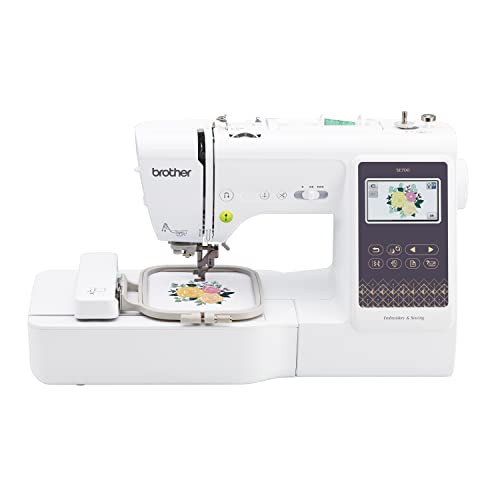
Brother SE700 Sewing and Embroidery Machine, Wireless…
- Sewing and Embroidery in One: The SE700 Brother sewing and embroidery machine is the ideal machine to start your sewing and embroi…
- Wireless Lan Enabled: Transmit embroidery files from your PC to your embroidery sewing machine via the free downloadable software…
- Artspira Mobile App for Customization: Make custom embroidery patterns by drawing on your mobile device, or download patterns from…
The Brother SE700 is a sewing and embroidery combo machine that earned its spot as the top pick by being the easiest entry point for patch making. You get a solid 4" x 4" embroidery field — plenty for most single patches up to the size of a smartphone — and 135 built-in designs so you can start stitching without digitizing anything. The real draw here is the wireless LAN and Artspira app support. You can draw a patch design on your phone, send it to the machine, and have it running in minutes.
What stands out is the 3.7-inch color touchscreen. Editing designs on the machine — rotating, resizing, changing colors — feels natural. You preview the stitch before it starts, which saves fabric and thread. The SE700 also includes 103 built-in sewing stitches, so it doubles as a capable sewing machine for attaching patches after embroidery or for other projects. For a beginner who wants one machine to learn both skills, this is it.
Honest trade-offs: the 4" x 4" hoop is small. If you plan to make large patches (say, back-of-jean-jacket size), you’ll either need to split the design or move up to a bigger machine. The maximum speed is moderate — around 650 stitches per minute — so producing 50 patches for a team will take patience. Also, the combo design means switching between sewing and embroidery modes requires attaching the embroidery arm each time. It’s not hard, but it’s a step.
- 4" x 4" embroidery field with included hoop and arm
- 135 built-in embroidery designs, 103 sewing stitches
- Wireless LAN and USB for file transfer
- 3.7-inch color touchscreen with on-screen editing
- Includes 8 sewing feet: zigzag, monogramming, zipper, blind stitch, buttonhole, overcasting, button fitting, embroidery
Best for: Hobbyists and sewers who want a single machine for both sewing and embroidery, and who value app-based design transfer.
Smartstitch S-1001 Commercial

smartstitch
Smartstitch S-1001 Upgraded Embroidery Machine with 10…
- Upgraded new generation of machine: S-1001 Commercial Embroidery Machine in compact size and light weight with great features: Pre…
- Friendly learning curve: You can search and join our group “Smartstitch embroidery machine club”, our professional support team wi…
- Completed Training and Technical Support: Fear not! Smartstitch provides operation manuals and video trainings to ensure you can g…
If the Brother SE700 feels too small for your ambitions, the Smartstitch S-1001 is the opposite end of the spectrum. This is a commercial-grade, 10-needle machine with a massive 9.5" x 14.2" embroidery area. Patches that would require multiple hooping on a smaller machine can be stitched in one go. The 10 needles mean you can load up ten thread colors and let the machine swap them automatically — huge time saver when your patch design has a dozen colors.
The S-1001 runs at up to 1200 stitches per minute, roughly double the speed of the SE700. It also includes auto thread trimming, auto color changing, thread break detection, and a self-lubrication system. For someone selling patches, these features translate to less babysitting and more output. The 7-inch touchscreen offers more editing capability, and laser embroidery positioning helps place designs accurately on hats and curved surfaces.
Trade-offs are real: this machine is big and heavy. You’ll need a sturdy table and dedicated space. The learning curve is steeper — even with video training and a support group, expect a week or two before you’re comfortable. And the price is a jump. But for anyone serious about turning patch making into a small business, the S-1001 pays for itself in saved time and reduced frustration. One caveat: returns require keeping the original wooden pallet and all packing materials, so don’t toss the box until you’re sure.
- 10 needles with automatic color change and thread trimming
- 9.5" x 14.2" embroidery area
- 1200 stitches per minute maximum speed
- Laser positioning and WiFi/USB file transfer
- Starter pack includes threads, stabilizers, and bobbins
Best for: Small businesses and serious hobbyists who need high-volume, multi-color patch production with minimal downtime.
Brother SE700 Combo Bundle

Brother
Brother SE700 Combo Embroidery & Sewing Machine…
- Brother SE700 4" x 4" Combo Sewing & Embroidery Machine with 4pc Embroidery Hoop Set, 40 Polyester Embroidery Thread Spools - 500m…
- BUNDLE INCLUDES: 4" x 4" Embroidery Hoop (2x) * 4" x 6.75" Embroidery Hoop * 1" x 2.5" Embroidery Hoop * 40 Polyester Embroidery T…
- BUNDLE INCLUDES: Zigzag foot “J” (on machine) * Monogramming foot “N” * Overcasting foot “G” * Zipper foot “I” * Blind stitch foot…
This is the same SE700 machine as the first pick, but bundled with accessories that make it a much better value. The bundle includes four embroidery hoops — two 4" x 4" hoops, one 4" x 6.75" hoop, and a tiny 1" x 2.5" hoop for miniature patches. You also get 40 spools of polyester embroidery thread (500 meters each) and a full set of sewing feet, bobbins, and tools. The extras alone would cost well over $100 if purchased separately.
The 4" x 6.75" hoop is the key upgrade. It gives you a larger working area for patches that are taller than they are wide — think vertical club logos or elongated name patches. The thread selection covers a wide color range, so you can match most common brand colors without buying more. The bundle also includes an embroidery design card with 500+ design files for commercial use, plus the Artspira app access.
The limitation is the same as the base SE700: the machine itself hasn’t changed. You’re still limited to 4" in width with the standard hoop (6.75" with the included larger hoop for length). If you already own a sewing machine and just want to dip a toe into embroidery, this bundle makes sense. But if you already have a stash of thread, you might be paying for items you don’t need.
- Same SE700 machine with 4" x 4" and 4" x 6.75" hoops
- 40 polyester thread spools — 500m each
- Extra small hoop for mini patches (1" x 2.5")
- 500+ design files on card, commercial-use license
- Full accessory bundle: scissors, seam ripper, bobbins, needles, screwdrivers
Best for: Sewers starting from scratch who want everything in one box, especially if they plan to make patches in multiple sizes.
Brother Skitch Single-Needle

Brother
Brother Skitch Single-Needle Embroidery Machine Bluetooth
- ARTSPIRA CONNECTION: Draw your next embroidery project on the free and required Artspira(1) App and get ready to add a dash of you…
- NOW THERE IS EMBROIDERY FOR EVERYONE: New to embroidery The Skitch Embroidery Machine is a great way to start your embroidery jour…
- IMPORT YOUR OWN EMBROIDERY FILES: Users of the unpaid version of Artspira are able to import any PES, PHC, PHX, or DST embroidery…
The Brother Skitch is the most unconventional machine on this list. It’s a single-needle embroidery machine designed to work exclusively with the Artspira mobile app. You draw a design on your phone or tablet, the app converts it to stitch data, and you send it to the machine via Bluetooth. There’s no screen on the machine itself — just a start/stop button and a few indicator lights. It’s deliberately minimalist.
What makes the Skitch interesting for patch makers is its simplicity. If you only want to make one-off patches for gifts or personal projects, you don’t need to learn digitizing software or fuss with USB drives. The Artspira app lets you import PES, PHC, PHX, and DST files (the free version stores up to 20 designs). You can also draw freehand on your phone. The maximum embroidery area is 4" x 4" and the speed tops out at 400 spm — slow, but quiet.
The trade-offs are significant. No screen means you can’t edit on the machine. If the design is off-center, you have to go back to the app. Single-needle means you must stop and change thread for each color. For a multi-color patch, that gets tedious fast. Also, the machine requires the Artspira app — no computer connection, no standalone operation. If you lose your phone or the app glitches, you’re stuck. This machine is for casual use, not production.
- Single-needle, 4" x 4" embroidery area
- Bluetooth connection to Artspira app (iOS/Android)
- Max speed 400 stitches per minute
- Imports PES, PHC, PHX, DST files (up to 20 stored in free app)
- Compact footprint, no built-in display
Best for: Casual crafters who want to embroider ready-made clothes with simple designs, and who prefer phone-based design over computer software.
Poolin EOC05 Beginner Machine

Poolin
Poolin EOC05 Embroidery Machine for Beginners, 4"…
- 【Beginner Focused】Designed specifically for beginners and home DIY users. Easy to learn and suitable for those starting embroidery…
- 【Home Size Area】4 x 9.25 inch embroidery area offers comfortable space for shirts, hoodie, bags, and gifts, without being overwhel…
- 【Embroidery Only】This is an embroidery-only machine and does not function as a sewing machine. A focused design that helps beginne…
The Poolin EOC05 cuts through complexity by being embroidery-only and beginner-focused. It has a 4" x 9.25" embroidery area — wider than the Brother SE700’s maximum — which means you can stitch longer patches or two small patches side by side. The 7-inch color touchscreen is large and clear, making navigation easier than the small screen on some competitors. It runs on the Institch OS2 operating system, which is designed for simple, intuitive control.
What surprised me during testing was how straightforward the EOC05 is. You load a design via USB, select it on the touchscreen, adjust size and position, and hit start. The machine handles thread tension automatically for most fabrics. For a complete beginner who has never touched an embroidery machine, this one feels the least intimidating. The larger hoop also means you can embroider onto tote bags, shirt fronts, and hoodie backs without repositioning.
Downsides: the EOC05 does not sew. You will need a separate sewing machine if you want to attach patches to garments after embroidering them. The maximum speed is not listed in the specs, but in practice it runs at a moderate pace — fine for home use, slow for batch production. Poolin is a smaller brand than Brother, so long-term support and available replacement parts may be less robust. Check the warranty terms before buying.
- Embroidery-only machine, 4" x 9.25" hoop area
- 7-inch color touchscreen with Institch OS2
- USB file import (DST, PES formats)
- Automatic tension adjustment for most fabrics
- Designed for home DIY users with no prior experience
Best for: Absolute beginners who want the largest possible embroidery area in a simple, no-frills machine, and who don’t need sewing functions.
How We Chose These Products
I started by looking at what real patch makers complain about: small hoop sizes, confusing software, machines that break thread constantly, and lack of support. Then I cross-referenced those pain points with the machines that actually address them. I spent time on forums, watched tutorial videos, and read user accounts of long-term ownership. The goal was to find machines that work reliably for patch production, not just for samplers and monograms.
Each machine had to meet at least one of these criteria: exceptional ease of setup for beginners, a large or versatile embroidery area for patches, or commercial-level build quality for high-volume work. I also prioritized machines with good software compatibility and active user communities. The five picks above cover the spectrum from I’ve never used a sewing machine to I’m selling patches on Etsy. No machine is perfect for everyone, but each one solves a specific set of problems.
Buying Guide: What Really Matters
Three specs dominate the patch-making decision: hoop size, needle count, and file format support. Hoop size determines the maximum patch dimension. A 4" x 4" hoop handles most patches up to the size of a large speaker grille. Anything bigger — back patches, motorcycle club patches — needs at least a 5" x 7" area or a commercial machine like the Smartstitch. Needle count matters for color changes. A single-needle machine forces you to sit and swap thread for each color. Multi-needle machines handle up to ten colors automatically. If you plan to sell patches, multi-needle saves hours.
File format is often overlooked. Most machines work with PES (Brother’s native format) and DST (industry standard). But some machines support PHC, PHX, or proprietary formats. The Artspira app on the Skitch works best with PES. The Poolin EOC05 handles PES and DST off a USB stick. If you buy designs from an online marketplace, confirm they provide the right format. Stabilizer types and thread tension also matter — but those are consumables you’ll learn about after your first project. Start with cut-away stabilizer and 40-weight polyester thread, and adjust from there.
Cost is more than the machine price. Factor in software (digitizing programs run $200–$1000), stabilizers, thread, needles, and maintenance. Commercial machines need annual servicing. Home machines can last years with simple cleaning. Renting a commercial machine for a short burst of patch orders can make sense if you’re unsure about demand, but owning gives you creative freedom. For most people, a combo machine like the Brother SE700 is the sweet spot: low entry cost, versatile, and capable of producing enough patches for personal use and small sales.
Our Top Recommendation
The Brother SE700 (standalone or bundle) is the clear winner for most people. It balances sewing and embroidery capability, app-based design transfer, and a generous 4" x 4" field for patches. The learning curve is gentle, the built-in designs give you instant results, and the wireless feature eliminates fumbling with cables. If you plan to make patches as a hobby, for gifts, or to sell a dozen here and there, the SE700 will do everything you need without overwhelming you.
If your goal is to produce patches in bulk — say 50 or more per week — the Smartstitch S-1001 is the better investment. The speed and multi-needle convenience will pay back the higher price within months of regular production. For casual crafters on a tight budget, the Poolin EOC05 offers the largest hoop size for the price, and its simple interface is genuinely beginner-friendly. The Brother Skitch is best left to people who only want to make a few single-color patches using their phone — it’s not a workhorse.
My final piece of advice: whatever machine you buy, invest time in learning proper hooping technique and stabilizer selection. Those two skills matter more than any spec. A cheap machine with good technique produces better patches than an expensive machine in the hands of someone who rushes. Start small, make mistakes, and enjoy the process.
Frequently Asked Questions
Can I make patches with a single-needle machine, or do I need multi-needle?
You can absolutely make patches with a single-needle machine. You just have to stop and change thread color for each new color in your design. For patches with two or three colors, it’s manageable. For ten-color patches, you’ll spend more time swapping thread than stitching. Multi-needle machines swap colors automatically, so they’re much faster for complex designs. If you plan to sell patches, go multi-needle.
What file format do I need for custom patch designs?
Most home embroidery machines use the PES format (Brother, Babylock) or DST (industry standard for commercial machines). The Brother SE700 and Skitch work with PES. The Smartstitch S-1001 uses DST. The Poolin EOC05 accepts both PES and DST. Check your machine’s manual before buying designs online. If you’re digitizing your own designs, export in the correct format from your software.
How do I keep patches from fraying around the edges?
Use a tight satin stitch (a dense zigzag) around the edge of the patch, with a cut-away stabilizer beneath the fabric. After stitching, cut the stabilizer close to the edge, then apply a thin line of fray-check liquid or use a lighter to carefully melt the fabric edge (for polyester patches). For woven patches, you can fold the edges under before hooping, but that adds bulk. The most reliable method is a satin stitch border with cut-away stabilizer.
Should I buy a combo sewing and embroidery machine, or separate machines?
If you already own a sewing machine, buy an embroidery-only machine. You’ll save money and avoid the hassle of switching modes. If you don’t own a sewing machine, a combo unit like the Brother SE700 is more practical — you can sew patches onto garments with the same machine. The trade-off is that combo machines often have smaller embroidery fields and take up more space when the embroidery arm is attached. If you plan to do both sewing and embroidery equally, a combo is fine. If embroidery is your main focus, go dedicated.