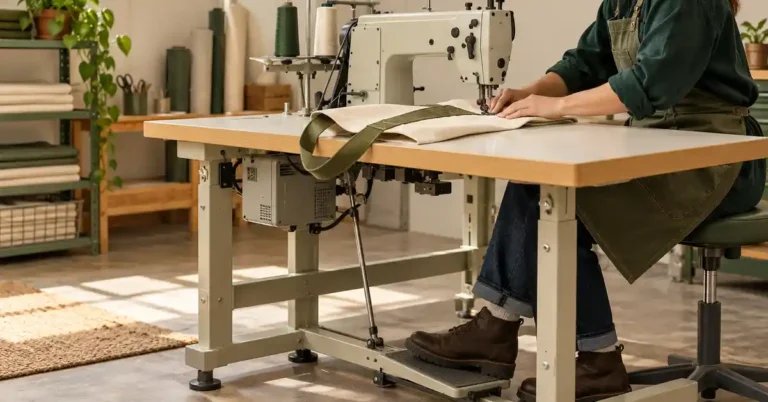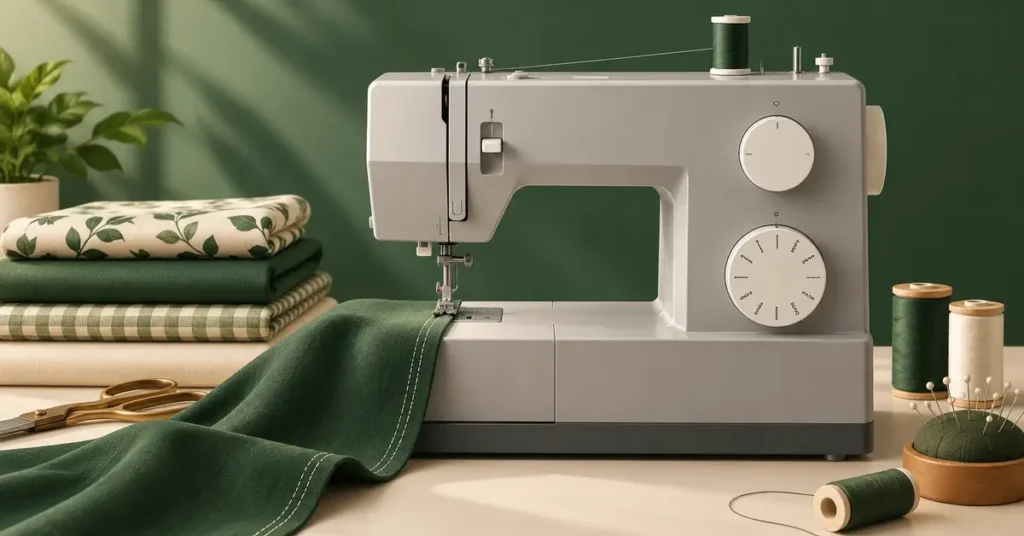
The Singer 9960 Quantum Stylist combines computerized sewing, a broad decorative menu, and convenience features that can support varied household projects. Its stitch count should not decide the purchase by itself. This review explains practical garment and quilting uses, lettering limits, accessory checks, and useful alternatives so you can judge whether the complete package suits your routine rather than assuming a larger feature list automatically creates better results on fabric.
As an Amazon Associate, Practical Textile earns from qualifying purchases. Product links may earn us a commission.
Quick Answer
Compare the 9960 when its thread cutting, speed control, needle positioning, and exact accessory package address tasks you repeat. Its decorative patterns and lettering are ordinary sewing functions, not imported hoop embroidery. Evaluate a real project sample and compare the whole offer with the Juki F600 or a more focused household option.
This guide compares published specifications and project fit; it does not report hands-on testing.
Singer Quantum Stylist 9960

Confirm the complete package, condition, and seller support.
Check Price on AmazonThis offer bundles the Singer 9960 with a SteamCraft Plus 2.0 iron. Other 9960 offers may not include the iron.
Juki HZL-F600

Compare actual controls and project results with the same sample.
Check Price on AmazonThis is a specific HZL-F600 bundle. Confirm the seller’s included equipment and warranty.
Brother XR9550
Consider whether a smaller feature set already covers your work.
Who Should Compare the Quantum Stylist 9960?
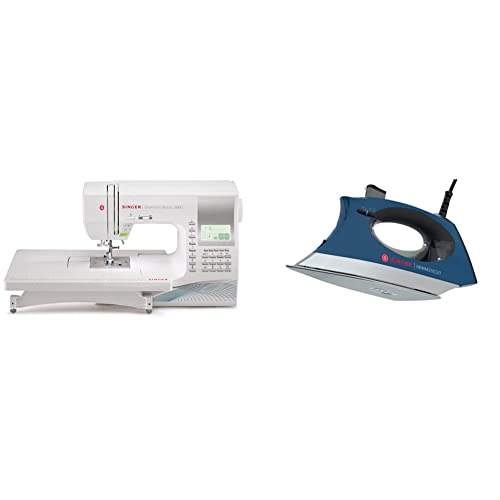
The 9960 is relevant to someone who wants a general household sewing machine with computerized conveniences and a broad decorative menu. It can be compared for suitable garment construction, home accessories, and quilting operations. The best reason to choose it is a useful match between those functions and your recurring projects.
It is a less convincing purchase if the main motivation is simply having the largest number of stitches. Many practical projects use a small set of utility operations. A machine with more patterns does not correct inaccurate cutting, replace fitting, or make an unsuitable material stack appropriate.
This review is based on documented features and original project-selection analysis, not a hands-on performance test. Current price and seller terms belong to the exact offer. The AAWP boxes identify the actual models being compared and should be checked before purchasing.
600 Built-In Stitches Is Different From 1,172 Applications
Singer describes 600 built-in stitches and a larger number of stitch applications for the 9960. An application is a way to use a stitch, not an additional independent pattern. Do not compare an application count on one machine with a pattern count on another as though both numbers measure the same thing.
The useful menu is the part your work will use. Make a short list: straight seams, buttonholes, suitable stretch stitches, a particular edge finish, and any decorative sequence your designs require. Compare that list with the model’s manual before letting the headline total influence the budget.
| Buying motivation | Feature area to evaluate | Practical sample |
|---|---|---|
| Garment construction | Utility stitches, buttonholes, needle placement | Actual fabric with interfacing and a closure |
| Decorative detail | Pattern sequencing, lettering, compatible adjustments | The planned layout at its intended scale |
| Quilting | Feet, support table, speed and needle control | Piecing unit and actual quilt sandwich |
| Convenient operation | Thread cutting and interface | A complete start, stop, cut, and restart sequence |
Convenience Features Need a Deliberate Trial
The 9960 provides speed control, needle up/down, and automatic thread trimming. Those functions can reduce interruptions in a suitable workflow. They should be tested as part of the operation rather than treated as automatic improvements to every project.
Set a manageable pace, sew toward a marked corner, stop, and use the needle-position function according to the manual. Continue around the corner and inspect the result. This reveals whether the controls fit the way you work, while the actual seam still depends on accurate guidance.
Practice thread cutting on an appropriate sample and check how the next seam begins. Follow the machine’s instructions for suitable threads and operations. A cutter is a convenience with a defined use, not a reason to abandon understanding of thread tails and seam security.
Garment Sewing: Closures Are a Useful Test
Bring the fabric and interfacing from a representative garment. Test a straight seam, a curved section, and a suitable folded intersection. Inspect both faces and the material around the seam. Puckering or distortion may involve preparation, needle, thread, support, or settings rather than the absence of another decorative pattern.
Singer lists 13 one-step buttonhole styles. Evaluate the style appropriate to your closure using the actual button and stack. Check length, placement, and the opening before cutting. A convenient mechanism does not decide spacing or compensate for a poorly prepared placket.
For zippers and narrow edges, confirm the correct compatible foot and needle position. Turn through the clearance checks required by the instructions before powered sewing. An attachment that fits physically does not make every stitch width or position appropriate.
Lettering and Decorative Sequences Are Ordinary Sewing
The available alphabets and pattern combinations can be useful for labels and decorative details. Test the intended size and material. Readability, spacing, support, and the direction of sewing affect whether a particular layout is suitable for the project.
These features are not the same as loading a logo file into a hoop embroidery system. If you want arbitrary imported artwork stitched automatically, compare a machine with that actual capability. A decorative stitch total should not become an embroidery claim.
Our sewing-and-embroidery guide explains a genuine combination role. Our dedicated embroidery comparison shows another category. Those purchases introduce field size and design-file requirements beyond the 9960’s ordinary sewing functions.
Quilting: Test the Stage You Plan to Perform
A piecing test should evaluate the finished seam allowance and the accuracy of the resulting unit after pressing. Use the relevant compatible foot and needle position. Small differences in cutting, seam guidance, thread, and pressing can accumulate across a quilt.
A layered-stitching test needs the actual fabrics and batting. Check the top and underside and whether layers move relative to one another. An extension table helps support suitable work but does not enlarge the machine’s throat or eliminate the need for surrounding support.
For free-motion work, follow the exact model and accessory setup and practice coordinated movement on a small sandwich. A darning or quilting foot does not automatically regulate stitch length or move the quilt. Choose a larger or different station only when a demonstrated handling limitation requires it.
Check the Exact Accessory Package
Singer’s model information describes an extension table, a hard cover, and a broad foot selection. A particular seller’s offer still needs its own inventory. Confirm the parts that support your projects rather than relying on a photograph or a general statement that accessories are included.
Compare the supplied feet with the pattern instructions you actually use. A walking foot, quarter-inch foot, narrow hem foot, and zipper foot serve different tasks. Each requires appropriate attachment and clearance. Buy additional tools only when they solve a defined requirement.
Keep compatible bobbins and needles identified separately from parts used in other machines. Similar appearance does not prove compatibility. Retain the manual, model information, and purchase documents so service and replacement-part questions can be answered accurately later.
Alternative One: Juki HZL-F600
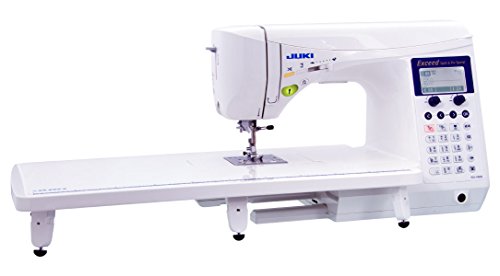
The F600 is a useful comparison if you want another computerized household model with utility and decorative sewing roles. Try the same materials and operations on both machines where possible. Compare controls, supplied tools, and support rather than assuming a brand name establishes a better result.
Ask to perform threading, a controlled seam, a relevant buttonhole, and the decorative or quilting operation that motivates the purchase. The difference that matters is the one you can connect to your projects. A larger menu in either direction may be irrelevant if the same small set of operations meets the work.
Give service and instruction weight alongside the hardware. A seller who can explain the exact setup and support the model may contribute more to successful ownership than a small difference in the advertised package value.
Alternative Two: Brother XR9550
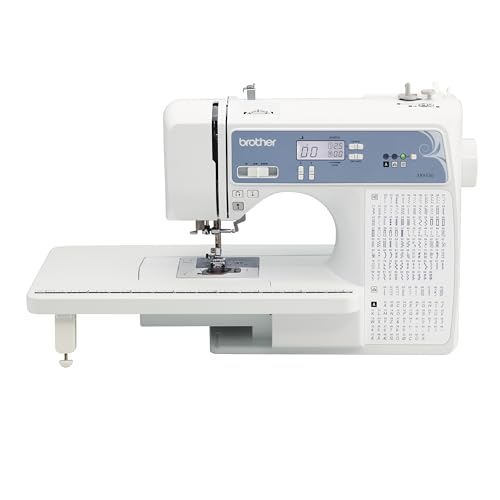

The XR9550 is worth comparing when a more focused household feature set is sufficient. It offers a computerized role and independent speed control, but you should not assume it duplicates every 9960 convenience. Compare the functions individually and decide which you will use.
Our Brother guide separates general sewing from specialist and embroidery roles. If the XR9550 already supports the required utility work, spending more mainly for unused decoration may not improve the finished projects.
For mechanical alternatives, our Singer 4423 review and 4432 comparison provide context. Mechanical operation is another control preference, not automatically a lower skill level or a universal heavy-material solution.
Five Reasons to Consider the 9960
- A varied computerized household sewing role.
- Speed and needle-position controls for deliberate operation.
- Thread trimming for suitable workflows.
- Decorative sequencing and lettering when the designs use them.
- A potentially useful table and foot package, subject to the exact offer.
Two Limits
- Decorative sewing is not imported hoop embroidery.
- More stitches do not establish greater material capacity or better fit and preparation.
Evaluate Ownership, Not Only the First Demonstration
Confirm the exact condition, warranty, return process, and service route. If the machine is used or refurbished, request a complete demonstration and identify missing parts before estimating value. A low asking price can change substantially when essential accessories or service are needed.
Set up a stable table with suitable lighting, pedal placement, and fabric support. Large panels and quilts need room to move without dragging or catching. Plan how the machine and accessories will be stored or transported if the station is not permanent.
Our interface comparison helps assess operating preference, while the computerized beginner guide provides a useful learning approach. Follow the exact 9960 manual for maintenance and operating steps rather than transferring instructions from another model.
Two Buyers Can Reach Different Sensible Decisions
Consider a maker who sews ordinary woven shirts and repairs family clothing. If the required utility stitches and buttonholes are already covered by a simpler suitable machine, the decorative menu may add little. That buyer can prioritize comfortable controls, instruction, and service instead of paying mainly for functions that never enter the project plan.
Another maker may repeatedly create decorative borders and sewn labels while also constructing garments. Pattern sequencing and a useful accessory set can have a clearer purpose there. The distinction is the planned operation, not experience or ambition. Write down the first three projects and identify the actual 9960 functions each one uses before making the final comparison.
A Project Check Before You Commit
Try navigating to the utility stitches you expect to use weekly, then adjust their length and width within the permitted range. Check how easily you can recognize the selected pattern and return to the previous setting. This is a better usability test than scrolling through the entire decorative collection once.
For lettering or a decorative sequence, sew the exact combination on matching supported fabric. Inspect spacing and texture at the final size. A broad stitch library offers choices, but it does not guarantee that every selection suits a soft garment or a narrow project area. Save a successful example with its settings rather than expecting the screen preview alone to predict the finished appearance.
Frequently Asked Questions
Does the 9960 have 1,172 built-in stitch patterns?
No. Singer distinguishes the built-in stitch count from the larger application count. Applications describe uses of available stitches and should not be counted as separate patterns when comparing machines.
Can it stitch imported embroidery designs?
It is not a computerized hoop embroidery machine. Decorative patterns, alphabets, and sewing sequences are different from importing arbitrary artwork for automatic hoop embroidery.
Are all 9960 seller packages identical?
Do not assume so. Confirm the exact accessories, condition, seller, warranty, and return terms. Check the tools essential to your work rather than relying on a general product photograph.
Is it better than a simpler machine for every beginner?
No. Choose according to controls, instruction, projects, and the functions you will use. A simpler suitable machine can be a better fit when the broader decorative and convenience features would remain unused.
What should I test before deciding?
Try complete setup, controlled starts and stops, an appropriate buttonhole, and the project operation that motivates the purchase. Inspect both sides and confirm which feet and accessories were used.
Final Recommendation
Choose the 9960 when its actual controls and complete package contribute to the garments, decorative work, and quilting you plan to repeat. Compare the F600 and XR9550 through the same samples and support questions. The right purchase should improve an understood sewing routine, not simply replace a smaller number of stitches with a larger one.