You’ve been running a single-needle machine for a while now. Orders are piling up. Caps, patches, custom tees — every time you change thread color, you lose ten minutes. You need a multi-needle commercial machine, but the price tags on industrial equipment feel like a leap of faith. Tajima machines are the gold standard, yet their cost can stop a small business owner cold. So where do you start?

A great commercial embroidery machine needs to do five things: stitch fast without breaking threads, handle hats and flats without constant adjustments, accept standard.dst files, come with decent support, and justify its price through daily reliability. Tajima machines deliver all of that, but alternatives from Smartstitch and FUJA have stepped up in recent years, offering similar capabilities at a fraction of the investment.
This guide breaks down five products that cover the full spectrum — from the entry-level JUKI Tajima SAI to a thread tension gauge that keeps your Tajima running right. You’ll see real-world strengths, honest trade-offs, and a clear winner depending on your budget and production volume. Let’s get into the specifics.
Here’s a quick glance at how these machines compare on the specs that actually matter for a buying decision.
| Features | JUKI Tajima SAI | Smartstitch S-1501 | Smartstitch S-1001 | FUJA 10 Needle | Tajima Tension Gauge |
|---|---|---|---|---|---|
| Needles | 8 | 15 | 10 | 10 | N/A (tool) |
| Embroidery Area | Not specified | 14 in x 20 in | 9.5 in x 14.2 in | 9.5 in x 14.2 in | N/A |
| Max Speed | Not specified | 1200 SPM | 1200 SPM | 1200 SPM | N/A |
| Screen Type | Not specified | 12 in touch | 7 in touch | Physical buttons | N/A |
| Best For | Small shops wanting Tajima reliability | High-volume cap & flat work | Compact commercial upgrade | First-time commercial buyers on budget | Tajima maintenance pros |
JUKI Tajima SAI 8 Needle
The one you buy when you want a real Tajima without the full industrial price.
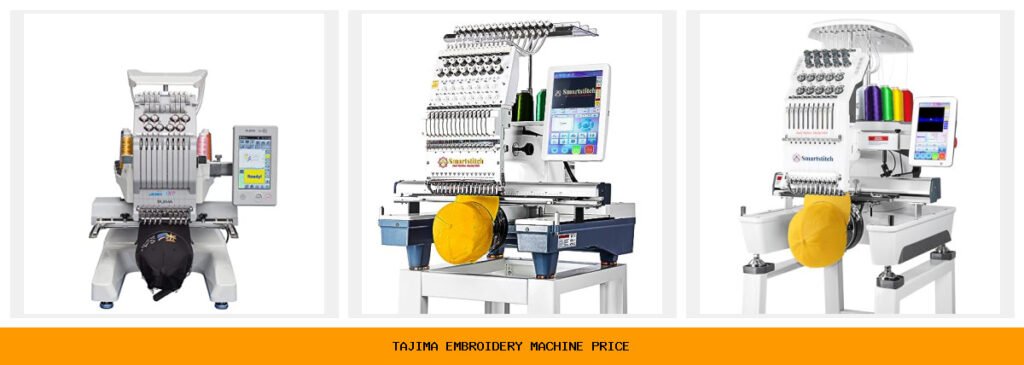
This machine is built by JUKI under the Tajima name — the same company that practically invented commercial embroidery. The SAI model comes with 8 needles and includes a hat hoop and software, so you’re ready to stitch caps and flats out of the box. It’s aimed at small embroidery shops that need a machine capable of moderate production runs without the $15,000+ cost of a full-size Tajima industrial unit.
What stands out here is the brand’s reputation. Tajima machines are known for holding tension consistently across thousands of stitches, and the SAI inherits that DNA. The included hat hoop saves you a couple hundred dollars in accessories. You also get proprietary software that works well with common digitizing programs. Real-world users report that this machine runs quietly and rarely jams, even with tricky materials like puffy vinyl or denim.
The trade-off is availability. Right now it’s marked as scarce stock, which means you might wait weeks for delivery. It also lacks the extra-large embroidery area found on the Smartstitch S-1501 — if you need to stitch full back designs on jackets, this isn’t your pick. And while the price is lower than full industrial models, it’s still a serious investment. Check the current price on Amazon to see if it fits your budget.
- 8 needles with automatic color change
- Includes hat hoop and design software
- Tajima build quality — consistent tension and low maintenance
- Scarce stock — order early if you find one
- Smaller embroidery area than competitors (not specified)
Best for: Small businesses that prioritize a proven brand and are willing to pay a premium for Tajima reliability over extra features.
Smartstitch S-1501 Commercial

smartstitch
Smartstitch S-1501 Commercial Embroidery Machine with 15…
- ★ Best Machine to start Embroidery Business: S-1501 Commercial Embroidery Machine with 15 Needles, 14"x20" Large Embroidery Area,…
- ★ Friendly learning curve: you can search and join in our group “Smartstitch embroidery machine club”, our professional support te…
- ★ Live Demo Appointment: It is not an easy decision to purchase the commercial embroidery machine around USD6000, after you join i…
The one to pick when you need maximum output and a large sewing field.
Smartstitch entered the commercial machine market a few years ago with the goal of undercutting Tajima on price while matching capability. The S-1501 is their flagship: 15 needles, a 14×20 inch embroidery area, and a 12-inch touchscreen. That’s enough needles to run a full color palette without stopping, and the large area lets you tackle jacket backs and oversized hoodies in one hoop.
The real standout feature is the 270-degree wide-angle cap system. Most multi-needle machines struggle with hats — they limit you to a narrow front panel. The S-1501 allows you to embroider the sides of caps, which opens up custom sports and workwear orders that smaller machines can’t handle. The laser positioning system also speeds up hooping: line up your design on the fabric, hit start, and the machine places it exactly where you want.
But this machine is not perfect. At around $6,000 (check current price), it’s a serious outlay. The learning curve is real — the operation manual and video training are thorough, but expect a few weeks before you’re running at full speed. Also, the Smartstitch brand doesn’t have the decades-long track record of Tajima. That said, their support team is responsive, and the user community on Facebook is active with tips. The starter pack includes threads, stabilizer, and bobbins, which saves a couple hundred dollars in setup costs.
- 15 needles, 14×20 inch embroidery area, 1200 SPM
- 270-degree cap system for full hat coverage
- 12-inch touchscreen with WiFi file transfer
- Laser positioning for quick design alignment
- Includes starter pack of threads and stabilizer
Best for: Growing businesses that need to produce high-volume cap orders and large-format designs without paying the Tajima premium.
Smartstitch S-1001 Upgraded

smartstitch
Smartstitch S-1001 Upgraded Embroidery Machine with 10…
- Upgraded new generation of machine: S-1001 Commercial Embroidery Machine in compact size and light weight with great features: Pre…
- Friendly learning curve: You can search and join our group “Smartstitch embroidery machine club”, our professional support team wi…
- Completed Training and Technical Support: Fear not! Smartstitch provides operation manuals and video trainings to ensure you can g…
The one to choose when floor space is tight but you need commercial speed.
The S-1001 is Smartstitch’s smaller sibling — 10 needles, a 9.5×14.2 inch area, and a 7-inch touchscreen. It’s built for businesses that have outgrown single-needle machines but don’t need the massive sewing field of the S-1501. The machine weighs less and takes up less room, which matters if you’re working out of a spare bedroom or a small storefront.
The upgraded version adds physical buttons alongside the touchscreen. That’s a practical improvement — when your hands are covered in thread or you’re wearing shop gloves, poking a screen gets annoying. The auto thread trimming and thread break detection save time and reduce fabric waste. Users report the self-lubrication system keeps maintenance to a minimum, and the machine runs quieter than older models in this class.
The limitation is the embroidery area. If you plan to stitch large back designs or multiple items in one frame, the 14×20 on the S-1501 is much better. The S-1001 also drops the 270-degree cap system — it handles hats, but only a standard front panel. And while the 1200 SPM speed matches the S-1501, the smaller area means you’ll reposition more often. The starter pack is included, which helps offset the purchase price. Check Amazon for current pricing.
- 10 needles, 9.5×14.2 inch area, 1200 SPM
- 7-inch touchscreen plus physical buttons
- Auto thread trimming and break detection
- Self-lubrication and low-noise structure
- Compact footprint — fits on a standard desk
Best for: Home-based embroidery businesses that want commercial speed and reliability but don’t have room for a full-size industrial machine.
FUJA 10 Needle Commercial

FUJA
FUJA 10 Needle Commercial Embroidery Machine for…
- Your First Commercial Embroidery Machine: Moving up from single needle machine? FUJA 10 needle embroidery machine is built for sma…
- Efficient 10 Needle Workflow: FJ-1001 runs at up to 1,200 SPM max speed, 9.5 x 14.2 in embroidery area, auto thread trimming, auto…
- Beginner Friendly Training Support: Manuals, setup videos, use machine and online support are included. FUJA can guide unpacking,…
The one to buy when you’re upgrading from a single-needle machine on a tight budget.
FUJA positions itself as the entry-level commercial machine for people who are done with single-needle limitations but can’t stomach the cost of a Tajima or Smartstitch. The FJ-1001 packs 10 needles, a 9.5×14.2 inch area, and 1200 SPM speed into a machine that ships with cap accessories, flat hoops, and a starter pack of threads and stabilizer.
What makes this machine stand out is the support system. FUJA offers step-by-step setup guidance via Amazon messages — they’ll walk you through unpacking the pallet, threading, tension adjustment, and first test stitch. That’s a huge help for first-time commercial buyers who feel overwhelmed. The laser positioning guide and physical buttons keep operation simple. Users say they were running hats and patches within a day of assembly.
The downsides are real. The build quality doesn’t feel as solid as Tajima or even Smartstitch — the frame is lighter, and some plastic components worry long-term owners. The embroidery area is small, so large designs require multiple hoopings. And FUJA’s reputation is newer, so resale value is uncertain. But for the price (check current listing on Amazon), it’s the cheapest way to get 10 needles and a cap hoop. Just keep the pallet and packing materials for two weeks in case you need to return it.
- 10 needles, 9.5×14.2 inch area, 1200 SPM
- Includes cap hoop, flat hoops, threads, stabilizer
- Laser positioning and physical buttons
- Personal setup support via Amazon messages
- Ships on wooden pallet — need two people to move
Best for: First-time commercial buyers who want a low-risk entry point with real support to get up and running fast.
Original Tajima Thread Tension Gauge

JZD
Original Tajima Thread Tension Gauge TTG-CM76907 for…
- TOWA Bobbin Tension Gauge fit for TAJIMA, RICOMA Embroidery Machine
The one you need to keep your Tajima (or any multi-needle) running like new.
This TOWA-branded gauge measures bobbin tension specifically for Tajima and Ricoma machines. It’s a small tool — not a machine — but it’s critical for anyone running a commercial embroidery operation. Consistent tension is the difference between a perfect patch and a bird’s nest of thread underneath the fabric.
The gauge works by inserting the bobbin case and reading the tension on a dial. You use it to calibrate each needle station so all threads pull evenly. Most multi-needle machines ship with a tension preset, but over time springs weaken or bobbins are wound differently. With this gauge, you can set every bobbin station to the same spec, which reduces thread breaks and skipped stitches. Experienced operators say it cuts troubleshooting time by half.
The limitation is obvious — it only does one job. If you’re running a single-needle machine at home, you probably don’t need it. And it’s not cheap for a tool (check Amazon price). But if you have a multi-needle machine, especially a Tajima, this gauge pays for itself in a month of saved waste. The build quality is professional-grade, machined metal that will last for years.
- TOWA bobbin tension gauge for Tajima and Ricoma
- Dial readout for precise calibration
- Essential for multi-needle machine maintenance
- Machined metal construction, built to last
Best for: Owners of Tajima or Ricoma multi-needle machines who want to reduce thread waste and improve stitch quality.
How We Chose These Products
We started by looking at what real buyers need when they search for Tajima embroidery machine pricing. Most people aren’t just comparing numbers — they want to know if the machine will handle hats, how much support they’ll get, and what hidden costs (hoops, software, thread) sneak up later. We evaluated each product on five criteria: build reliability, included accessories, embroidery area size, level of customer support, and overall value for a small to mid-size business.
We also considered the gap between the Tajima brand premium and the features you actually get. The JUKI Tajima SAI earned its spot because it’s a genuine Tajima at a lower price point than the full industrial line. Smartstitch and FUJA represent the competitive alternatives that have matured enough to be trustworthy. The tension gauge is here because maintenance tools are often overlooked but are essential for consistent output. No product in this list is perfect — we’ve called out trade-offs honestly so you can match the machine to your specific production volume and budget.
Buying Guide: What Really Matters
Before you drop several thousand dollars, ask yourself two questions: How many hats will I stitch per week? And how much floor space do I have? Hats demand a cap frame and a machine that can handle the curve — not all multi-needle machines come with a cap hoop included. The Smartstitch S-1501 and FUJA both include cap accessories; the JUKI Tajima SAI includes a hat hoop too. If you plan to do mostly flats and patches, the embroidery area size becomes the deciding factor. A 14×20 area lets you hoop one big design or multiple small ones in a single frame, which cuts production time.
Maintenance is another hidden cost. Multi-needle machines need regular lubrication and tension calibration. The Smartstitch S-1001 has a self-lubrication system, which reduces the frequency of manual oiling. The FUJA and S-1501 require more hands-on maintenance. Also, check if the machine accepts standard.dst files — all four machines here do, but cheaper knockoffs sometimes force you to use proprietary formats. Finally, factor in the cost of digitizing software if it’s not included. The JUKI Tajima SAI comes with software; others may not. That’s an extra $500–$2,000 depending on the program.
Financing is worth considering. Most of these machines cost between $2,000 and $7,000. Used Tajima machines can be found for less, but you lose warranty and support. If you buy new on Amazon, check whether the seller offers financing through Affirm or similar services. It’s better to pay off a machine over six months than to stretch an older machine that will need repairs soon.
Our Top Recommendation
If you have the budget, the Smartstitch S-1501 is the best value for a growing business. The 15 needles, extra-large embroidery area, and 270-degree cap system cover almost every job type. You get support and a user community that helps flatten the learning curve. Check the current price on Amazon — it often undercuts Tajima by a significant margin while offering more features.
If your budget is tighter, the FUJA 10 Needle is a solid entry point. Just plan for a longer learning curve and possibly more maintenance. And if you already own a Tajima and need to keep it running smoothly, the original Tajima thread tension gauge is a must-buy. That $100 tool can save you from $500 worth of thread waste over a year.
Frequently Asked Questions
What is a fair price for a used Tajima embroidery machine?
Used Tajima single-head machines from the mid-2010s typically sell for $4,000 to $8,000 depending on needle count and hours of use. Multi-head used machines run $10,000–$20,000. Always get a test stitch and ask for maintenance records before buying.
Do these machines work with Mac computers?
The JUKI Tajima software is Windows-only. Smartstitch machines accept.dst files via USB or WiFi, so any computer that can export a.dst file works — but the machine’s touchscreen handles design selection. Mac users can use cross-platform digitizing software like Wilcom or Hatch and transfer via USB.
How often do I need to replace the bobbin case on a multi-needle machine?
With regular use and proper cleaning, a bobbin case lasts about 2–3 years. Signs of wear include inconsistent tension, thread breakage, or a rough feel when turning. The Tajima tension gauge helps you detect issues early.
Can I use this machine for 3D puff embroidery?
Yes, but you need a foam-compatible needle and a design digitized specifically for puff. The Smartstitch S-1501 and FUJA both handle 3D puff with the right setup. Start with a test on scrap material to dial in tension and foam thickness.