
Singer Heavy Duty 8832 Review: Understand the Costco Edition Before Buying
The Singer Heavy Duty 8832 is a special-edition household machine whose package and seller terms deserve more attention than its color. Singer.

This guide has Amazon links. If you buy through them we may earn a small commission, at no extra cost to you.
The Singer Heavy Duty 8832 is a special-edition household machine whose package and seller terms deserve more attention than its color. Singer identifies it as a Costco edition related to the 4432. This review explains that relationship, practical sewing limits, accessory checks, and a useful demonstration process so you can compare the actual offer with familiar alternatives without assuming a different model number creates a different class of sewing equipment.
As an Amazon Associate, Practical Textile earns from qualifying purchases. Product links may earn us a commission.
What’s in this article18 sections
Quick Answer
Compare the 8832 as a special-edition relative of the 4432, not as an industrial upgrade. Verify the exact warehouse offer and accessories. The Amazon product boxes here are clearly identified alternatives; a 4432 listing should never be presented as an exact 8832 purchase.
This guide compares published specifications and project fit; it does not report hands-on testing.
Singer Heavy Duty 4432

A named alternative; this box is not a listing for the Costco 8832.
Singer Heavy Duty 4423
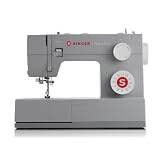
Compare the household role and exact package.
Brother ST371HD

Evaluate operating feel and support with the same prepared sample.
Documented features and important limits
| Item | Documented detail |
|---|---|
| Model relationship | Special edition of the 4432, according to Singer support |
| Built-in stitches | 32 |
| Stitch applications | 110 |
| Buttonhole | One-step |
| Bobbin class | Singer Class 15 transparent |
| Distribution | Membership warehouse exclusive in the reviewed listing |
Confirm the exact model’s features and accessories in the manufacturer information.
Why the model relationship matters
Singer support identifies the 8832 as a special edition of the 4432 sold at Costco. That makes the comparison more concrete: inspect the package, appearance, seller terms, and supplied accessories instead of assuming a higher-looking number signifies greater sewing capacity.
Look at the rating label and model number on the actual machine. A seller using a generic Heavy Duty photograph has not demonstrated that the photographed accessories belong to the 8832 package. If buying secondhand, ask for images of the machine label, foot control, bobbin area, and accessory tray before traveling to collect it.
Compare the relevant equipment categories using the sewing machine buying guide.
What to compare in a warehouse offer
A warehouse purchase may have its own membership and return conditions. Read the applicable terms at the time of purchase, particularly for a machine bought from a reseller rather than the warehouse itself. Do not assume that one seller’s policy transfers to a different transaction.
Count the feet you will use, and consider where you will obtain instruction and service. A bundled accessory set can save money, but a local demonstration may be worth more to a first-time sewist. Compare the complete ownership arrangement, including any service transport, rather than only the ticket price.
For related sewing preparation and problem-solving, see the sewing techniques and troubleshooting.
A practical test for the black special edition
Use the same test you would apply to a domestic machine for your project. Sew a flat seam, then a curved line, then the thickest junction you expect to encounter. Check low-speed response and whether you can stop accurately at a corner. Attractive appearance is a valid preference, but it does not establish seam performance.
If you are buying it for denim or canvas, include the folded join that caused difficulty on your old machine. A thin promotional sample will not resolve that question. Keep the work supported and stop if feeding becomes irregular or the needle bends under load.
Explore accessory categories in our sewing machine parts and accessories; use the exact manufacturer manual for compatibility and maintenance.
Do not buy a mismatched Amazon listing
The exact 8832 Amazon machine listing was not verified for this research. The comparison link below, where used, is explicitly for the grey Singer 4432. It is an alternative model, not the 8832 in a different color.
This distinction is especially important with marketplace product families that combine multiple model numbers. Confirm the selected variation before adding anything to a cart. If the warehouse package is what you want, obtain that exact package from a seller who clearly identifies it, rather than relying on a similar product image.
Five advantages and two limitations
Advantages
- The documented 4432 relationship simplifies comparison.
- The black edition offers a distinct appearance.
- A one-step buttonhole supports repeated garment openings.
- A built-in threader provides a setup convenience.
- The warehouse package may suit buyers who value its actual included items.
Limitations
- The warehouse-exclusive distribution narrows buying options.
- There is no verified exact-model Amazon listing in this draft.
Buying and demonstration checklist
| Step | What to check |
|---|---|
| 1 | Confirm the label reads 8832. |
| 2 | Check the actual warehouse package contents. |
| 3 | Read the seller-specific purchase conditions. |
| 4 | Compare the same fabric sample with a 4432 if possible. |
Named alternatives to compare
Singer 4432 is a separate comparison model. The link below is not represented as the reviewed machine.
A related Singer model can be a useful comparison, but check its identity separately from the warehouse edition. Keep the model number and exact included inventory in your purchase notes so future accessory or service questions can be answered accurately.
Build a Demonstration Around the Actual Warehouse Purchase
Bring a sample that resembles the work you expect to do after buying the machine. A plain cotton seam is useful for learning the controls, but a curtain heading, lined bag edge, or folded trouser hem creates a different demand. Include the real interfacing, lining, and folded allowances where they meet.
Begin on the ordinary section, cross a suitable intersection, and finish near a marked point. Check whether you can start and stop comfortably without pulling the fabric or forcing the machine. The result should be assessed on both sides. An attractive top row can hide loops or poor balance underneath.
If the machine is not available for an in-store demonstration, understand the applicable return process and evaluate it promptly after purchase. Do not assume that a display machine, a photographed package, and the unit in the sealed box include identical extras. Retain the model information and purchase documents needed for support.
Use the Machine According to the Seam, Not the Edition Name
The useful sewing question is whether the complete construction is appropriate for the machine. A fabric name by itself does not answer that. Dense canvas, lofty upholstery, and multiple folded denim layers can create different resistance and feeding problems. The black finish or warehouse-specific model number cannot establish suitability.
Plan a construction sequence that avoids unnecessary access problems. Some pockets, handles, or decorative operations are easier while the fabric is flat. That does not justify removing required reinforcement merely to fit a smaller machine. The intended use and sound construction should determine the design.
Support heavy panels around the machine so their weight does not pull against the feed system. A project dragging from a table can produce an inconsistent seam even when the flat sample worked. Good support is part of the workstation, not an optional correction after the machine has begun struggling.
Learn What Pressure Adjustment Can and Cannot Change
Adjustable presser-foot pressure provides a setting to evaluate on appropriate fabrics. It does not increase the machine’s working space, add a powered upper feed, or change the needle system. Make small, documented changes according to the manual and compare the samples rather than treating one pressure setting as universally correct.
Do not confuse pressure with thread tension. Pressure concerns how the foot interacts with the material, while tension affects stitch formation. A feeding problem caused by unsupported fabric should not trigger random changes to every thread adjustment. Begin with threading, needle condition, fabric support, and a clear description of the symptom.
For buyers comparing the control style, our mechanical versus computerized guide explains the interface distinction. An independent speed slider on another model is a separate feature from foot-pressure adjustment.
Check Closures and Utility Sewing Before Buying
A household machine is often expected to do more than its first heavy-looking project. Test a relevant buttonhole and a zipper-foot operation if clothing repairs or dressmaking are part of the plan. The right selection should support those recurring jobs as well as the occasional thicker seam.
Prepare buttonhole samples with the actual fabric and interfacing. Inspect the result before opening it, and check fit with the intended button. A one-step mechanism is a convenience; it does not select the best placement or compensate for an uneven garment edge.
Our Singer 4411 comparison helps distinguish simpler mechanical options. Our 4423 guide adds another familiar model role. Compare useful operations and the exact package instead of counting marketing applications as separate stitch patterns.
Make a Short Evaluation Plan After Purchase
Read the manual before threading, identify the correct bobbin and needle system, and practice replacing both. A machine that arrives threaded still requires you to understand its setup. Keep the instructions and accessory inventory together so future troubleshooting does not begin with uncertain parts.
Sew several representative samples rather than judging the machine from one successful seam. Record what needle, thread, foot, and settings worked. Examine results after pressing or handling as appropriate to the material. This reveals whether a setup is repeatable and whether the finish meets the project’s purpose.
Confirm where service is provided and what the exact seller terms cover. Avoid assuming that warehouse purchase terms and manufacturer service arrangements are the same question. The right ownership decision includes both a satisfactory sewing sample and a clear support path.
For additional alternatives, our Brother machine comparison separates mechanical, computerized, and specialist roles. Our Janome guide offers another brand perspective when the 8832 package is not the best fit.
Keep a Record of the Exact Package
Photograph the model label and keep a written inventory of the accessories supplied with your own unit. This can be useful when requesting support or purchasing a compatible replacement foot later. A general description of the special edition is less useful than knowing exactly which machine and parts you received.
Compare any optional carrying case with the machine dimensions and the case instructions. A soft dust cover is not equivalent to protective transport equipment. If classes are part of the plan, assess the whole packed kit and how you will move it safely, rather than assuming that a built-in handle makes every carrying arrangement appropriate.
A Project Check Before You Commit
Check the actual 8832 bundle when comparing a warehouse-club offer with another Singer package. Model-specific accessories, return handling, and any purchase eligibility can change the usable value. Keep the written inventory and purchase terms; a large promotional savings figure is not a substitute for knowing which feet and essentials arrive with the machine.
For the acceptance test, make a short project containing ordinary seams and the densest realistic crossing you expect. Practice controlled starts, reverse, and a buttonhole using appropriate fabric support. Inspect the work away from the machine so a tightly held sample does not hide distortion. Record settings and compare results at comfortable speeds. The model’s heavy-duty branding should lead to a realistic task test rather than an attempt to force unsuitable material through the mechanism.
If a supplied accessory differs from the advertised inventory, resolve the discrepancy before the return window closes. Keep the order description and photographs together so the seller can identify exactly which part or package requires attention.
Frequently Asked Questions
Is the 8832 the same family as the 4432?
Singer’s support article calls it a special edition of the 4432. Compare exact packaging and accessories rather than assuming every listing is interchangeable.
Is the 8832 a Costco model?
Singer identifies it as sold only at Costco in the support information reviewed. Check current local availability directly.
Can I use a 4432 Amazon link to buy an 8832?
No. A 4432 link is a comparison option for a different model number, not a verified 8832 purchase link.
Does it have 110 different stitch patterns?
No. The manufacturer distinguishes 32 built-in stitches from 110 applications.
Will black paint improve sewing performance?
Appearance can influence your preference, but feeding and stitch control must be assessed through the actual machine and seam sample.
Final Recommendation
Choose the 8832 when the exact package, condition, seller terms, and demonstrated sewing behavior fit your projects. Compare a clearly identified 4432 or 4423 alternative if the offer is not suitable. The special-edition identity is a reason to check the purchase carefully, not a reason to assume unlimited sewing capacity.