
Singer Classic 44S Review: Check the Machine, Condition and Retailer Package
The Singer Heavy Duty 44S is worth considering when its exact retailer package suits ordinary household sewing. Similar appearance to other Singer.

This guide has Amazon links. If you buy through them we may earn a small commission, at no extra cost to you.
The Singer Heavy Duty 44S is worth considering when its exact retailer package suits ordinary household sewing. Similar appearance to other Singer models does not settle the buying decision. This review explains stitch selection, pressure adjustment, condition checks, fabric testing, and useful alternatives so you can compare the actual machine and support arrangement rather than buying from a familiar photograph or assuming that every store-exclusive offer includes the same extras.
As an Amazon Associate, Practical Textile earns from qualifying purchases. Product links may earn us a commission.
What’s in this article18 sections
Quick Answer
Evaluate the 44S as a mechanical household option, with the exact seller package and condition confirmed. Compare its useful sewing operations and controller feel with a clearly named alternative. The Amazon boxes here identify alternative models; a 4423 should not be represented as an exact 44S listing.
This guide compares published specifications and project fit; it does not report hands-on testing.
Singer Heavy Duty 4423
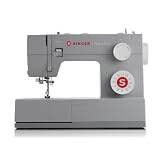
Compare the operation and bundle; this is not an exact 44S listing.
Singer Heavy Duty 4432

Evaluate whether the different stitch selection matters to your projects.
Brother GX37
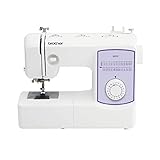
Try a different control layout and support arrangement.
Documented features and important limits
| Item | Documented detail |
|---|---|
| Built-in stitches | 23 |
| Stitch applications | 97 |
| Buttonhole | One-step |
| Threader | Built in |
| Presser-foot pressure | Adjustable |
| Distribution | Retail-store exclusive in the reviewed manufacturer listing |
Confirm the exact model’s features and accessories in the manufacturer information.
The package is more important than a similar photograph
Singer’s product information gives the 44S its own model identity. Similar styling to another Heavy Duty model does not establish that every accessory, warranty condition, or variation is identical. Ask the retailer to identify the exact item and its included kit in writing if the listing is unclear.
Condition also matters. Refurbished imagery on a page is not enough to determine the condition of the machine being sold. Confirm whether the offer is new, refurbished, open box, or used. That answer affects how you assess the return terms and what inspection you should expect before normal use.
Compare the relevant equipment categories using the sewing machine buying guide.
Does the stitch set suit garment work?
Choose representative operations from your patterns: a straight seam, a stretch seam where required, a zipper, and a buttonhole. Sewing the same sample on competing machines helps you compare more than specifications. Watch how the foot control behaves when you need a single careful stitch near a zipper edge.
Do not treat a decorative stitch menu as a replacement for seam construction knowledge. A neat garment also depends on suitable interfacing, pressing, and preparation. If your project involves mostly fine fabrics, evaluate gentle feeding as carefully as the ability to sew a thicker sample.
For related sewing preparation and problem-solving, see the sewing techniques and troubleshooting.
Pressure and thickness need separate decisions
The adjustable pressure control is useful when you understand the feeding problem you are trying to solve. It does not guarantee that an unsuitable thick stack becomes suitable. In a store demonstration, change pressure only after establishing a baseline seam and use the same sample for each comparison.
A bulky hem is a good challenge because it contains an actual change in height. Assess whether the stitches remain reasonably consistent across that change. If the machine struggles, avoid judging it by how easily the demonstrator can force the fabric through. A result that depends on forcing the work is not a reliable purchasing argument.
Explore accessory categories in our sewing machine parts and accessories; use the exact manufacturer manual for compatibility and maintenance.
When another category is more appropriate
Consider a computerized machine if independent speed limiting is central to your learning or detailed sewing. Consider an industrial feed system if your work consists mainly of repeated heavy upholstery seams. Those are changes in workflow and machine architecture, not simply upgrades in the stitch count.
For the 44S, the strongest purchase case is a realistic household workload, comfortable controls, a clear package, and convenient service. If the retailer cannot identify the machine condition or supplied items, resolve that uncertainty before comparing its price with a clearly documented alternative.
Five advantages and two limitations
Advantages
- A one-step buttonhole is relevant for clothing.
- A built-in threader offers setup assistance.
- Pressure is adjustable for the sewing task.
- Mechanical controls suit dial-oriented users.
- The free-arm format is useful for some cuffs and hems.
Limitations
- Store-exclusive distribution requires package-specific checking.
- No exact 44S Amazon machine ASIN was verified in this draft.
Buying and demonstration checklist
| Step | What to check |
|---|---|
| 1 | Confirm new or refurbished condition. |
| 2 | Match the model label to the retailer listing. |
| 3 | Try gentle sewing on your lightest intended fabric. |
| 4 | Compare a buttonhole strip with the grey 4423 alternative. |
Named alternatives to compare
Singer 4423 is a separate comparison model. The link below is not represented as the reviewed machine.
If a retailer offers a different machine as a substitute, compare its actual controls and package before accepting the change. A similar appearance does not establish identical accessories, operating details, condition, or purchase terms for the model you originally considered.
Use Three Samples to Test the Purchase
Prepare a stable woven sample for ordinary seams, a suitable lighter sample if delicate work matters, and the thickest complete seam you reasonably expect to sew. Include the real folded allowances rather than testing only flat scraps. The purpose is to learn how the particular machine and setup behave on your work.
On each sample, sew a straight line, stop near a mark, and inspect the underside. Use an appropriate stitch and needle for the material. If a sample needs a zipper or buttonhole, test that operation separately. A general demonstration should not substitute for the exact finish your project requires.
Stop if the machine strains, stitches fail repeatedly, or the material cannot feed normally. Helping the motor through an unsuitable stack is not a successful test. Reassess the needle, thread, setup, and equipment class rather than treating a heavy-duty label as permission to continue.
Compare Condition and Purchase Terms in Writing
A retailer-exclusive description and refurbished imagery can appear in the same broader product context. Verify whether the exact unit you are buying is new, refurbished, open-box, or used. Confirm which accessories and documents will arrive, and retain a record of the seller’s description.
Read the return terms for the exact offer and determine where warranty service would be handled. A favorable headline price should not hide missing parts or uncertainty about support. If the listing cannot identify the model and condition clearly, compare another offer before paying.
Do not assume that a machine with similar styling is an equivalent substitute. A seller might show a related model, a different package, or a stock photograph. Model identity matters for the manual, parts, accessory compatibility, and any future service request.
Assess the 44S as Part of a Clothing Workflow
For woven garments, useful operations include accurate seams, suitable buttonholes, zipper insertion, and the intended hem. A larger decorative menu is less relevant if those basic tasks account for most of your work. Choose by recurring operations instead of the largest number on the carton.
Prepare buttonhole tests with the actual interfacing and fabric stack. Check fit with the intended button and inspect the result before cutting the opening. A convenient buttonhole mechanism does not decide where the closure belongs or correct a poorly prepared placket.
For stretch materials, evaluate seam elasticity and fabric recovery. A flat seam that looks neat can still restrict movement or fail when the garment is worn. Choose a suitable needle and stitch and test normal extension. Ordinary sewing, serging, and coverstitch remain distinct operations.
Practice the Controller Before Judging Precision
Low-speed starting and stopping are central to careful household sewing. Try the controller yourself with a short marked seam and a gentle curve. A demonstrator sewing quickly through an easy strip does not establish how the controls will feel while you position a collar point or cross a folded hem.
Arrange the chair and pedal in a stable, comfortable position. An awkward posture can make a capable machine difficult to control. If you compare another model with an independent speed slider, treat that as a separate control feature rather than assuming every mechanical or computerized machine behaves alike.
Our control-system guide explains the distinction. A mechanical preference can be sensible, but it should follow a practical trial rather than a belief that a physical dial automatically produces better sewing.
Buy Accessories for the Operation You Need
Start with the exact supplied inventory and identify what your next project requires. A specialized zipper operation, an edge-finishing method, or a particular fabric-handling problem may justify another compatible foot. Buying a large generic assortment before confirming fit can create confusion instead of useful capability.
Check attachment method, needle clearance, and permitted stitches for each accessory. A foot that fastens to the machine is not necessarily safe for every stitch width or needle position. Follow the relevant instructions and perform the required clearance checks before powered sewing.
A walking-foot attachment may help certain layer-control problems within the machine’s limits. It does not transform a domestic machine into industrial compound-feed equipment. Likewise, a nonstick surface addresses friction rather than providing every kind of upper feeding.
Plan the First Week of Evaluation
Read the manual, identify correct bobbins and needles, and practice threading the machine from the beginning. Do not rely on an initial pre-threaded setup as proof that you can repeat it. Keep a short checklist until the sequence becomes familiar.
Complete several realistic samples while the purchase terms still allow an informed evaluation. Record the needle, thread, foot, fabric, and settings. Compare the results after appropriate pressing and handling, not only while the sample sits under the foot.
For model comparisons, read our Singer 4411 guide, 4423 review, and 4432 review. They help distinguish related household roles without treating their stitch counts as material-capacity ratings.
Our Brother comparison and Janome overview add alternatives if the exact 44S offer does not fit. The goal is a machine and ownership arrangement you can use confidently, not a purchase tied to one retailer label.
Keep the machine clean according to its own maintenance instructions. Lubricate only where the manual directs, and do not copy oiling advice from another model. If basic setup checks no longer restore a reliable stitch, contact model-specific support before attempting unfamiliar mechanical adjustments.
A Project Check Before You Commit
A used 44S should be evaluated as a complete working purchase. Ask for clear pictures of its controller, bobbin area, supplied feet, and model label. Have the seller demonstrate winding, threading, forward and reverse sewing, and a complete buttonhole. A light that turns on does not establish a functional sewing system, and a generic accessory photograph does not identify the parts included.
Compare the final cost after any missing cover, controller, foot, inspection, or shipping. Then compare that usable total with the supported alternative you would otherwise buy. If possible, bring the actual seam crossing from your work. Judge controlled feeding and stitch appearance, not merely whether the needle pierces a stack once. Keep the successful sample as a reference when the machine reaches your own sewing table.
Ask whether any repairs or modifications changed the supplied controller or other parts. A replacement should match the documented requirements. Include any needed inspection in the total purchase cost rather than treating a low untested price as the final sewing budget.
Frequently Asked Questions
How many stitches are in the 44S?
Singer lists 23 built-in stitches and 97 applications.
Is it a one-step buttonhole machine?
Yes, according to the manufacturer’s product specification.
Is it always sold refurbished?
Do not infer that from a photograph. Confirm the condition of the specific retailer offer.
Can I buy the exact 44S through the AAWP alternative link?
No. The named 4423 link is an alternative comparison, not an exact 44S listing.
Is the 44S suitable for all heavy materials?
No universal fabric-capacity claim is justified. Demonstrate the exact layers and seam junctions you plan to sew.
Final Recommendation
Choose the 44S after confirming the actual model, condition, accessories, and service terms, then testing representative construction. Compare a named 4423, 4432, or another mechanical machine when the offer is unclear. The purchase should make sense as a complete household sewing setup rather than as a color or retailer-label preference.